Bangladesh Catholic Bishops’ Conference (CBCB) has officially decided not to accept a government offer of a monthly allowance for priests.
The bishops thanked the government for including Catholic clergy in the monthly allowance program, which the government of recently elected Prime Minister Tarique Rahman announced on March 14, in fulfilment of a campaign promise.
The program provides for all clergy across religions and denominations in Bangladesh, a country of 180 million inhabitants, only some 600,000 of whom are Christian.
The allowance scheme is the first in the history of the south Asian country, and the decision of Catholic bishops not to participate did not diminish their gratitude to the government for the effort or for the consideration Catholic clerics received.
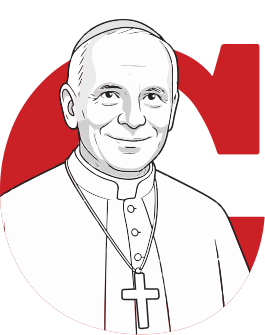
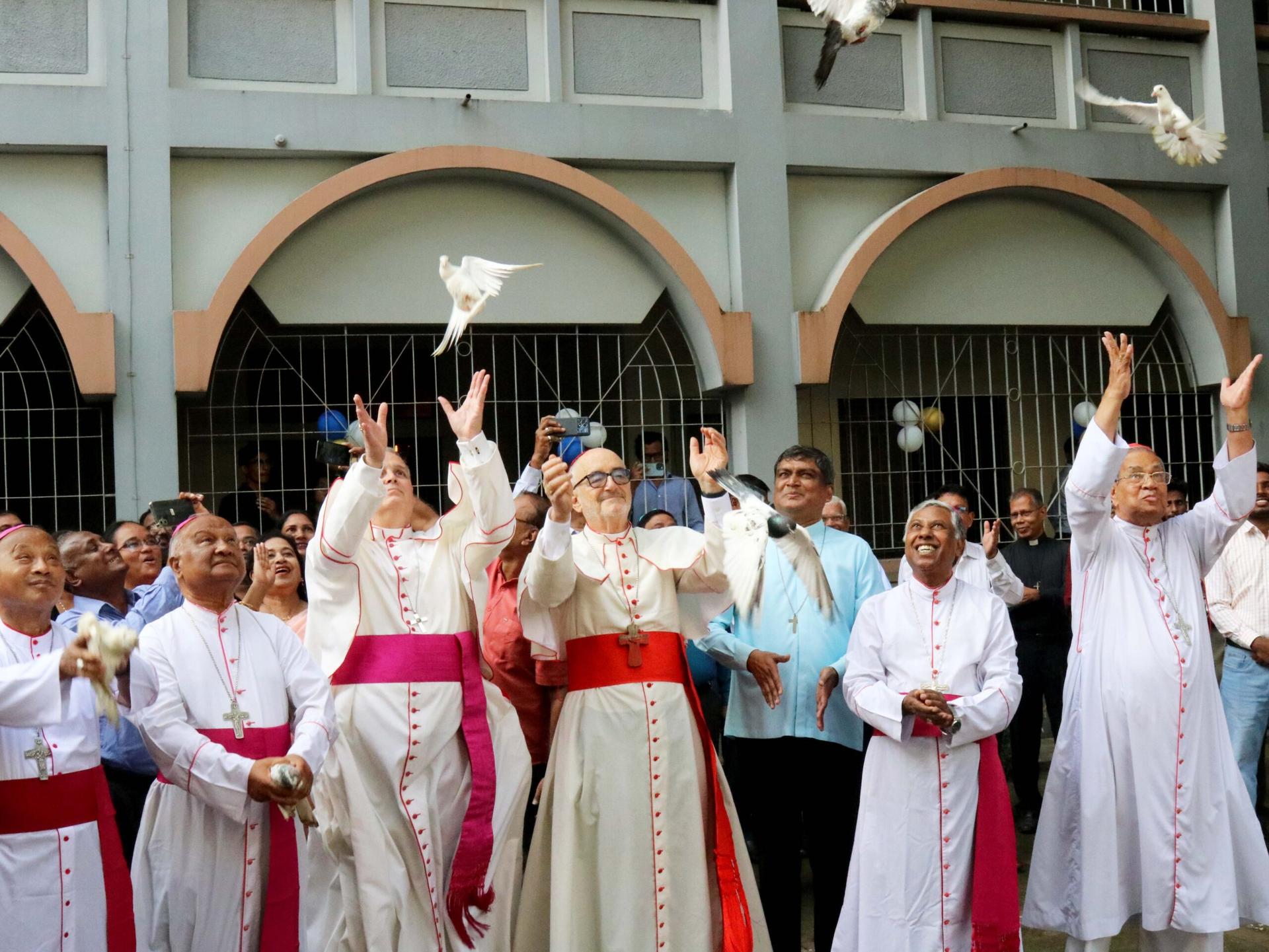
“We humbly decline to accept the proposed allowance for priests,” said Archbishop Bejoy D’ Cruze of Dhaka, president of the conference.
“However,” D’Cruze said in his statement at the weekend, “it is noted that if pastors of any other church outside the Catholic Church wish to accept this honorarium, we have no objection because many of them have homes and families.”
“Priests,” D’Cruze said, “freely dedicate their lives to preaching the Word of God and providing spiritual and pastoral services,” and rely on gifts and donations from the faithful, who in supporting their work “practice love and generosity towards God and towards us.”
D’ Cruze also proposed “that the Ministry of Religion or the Christian Religious Welfare Trust should assist in social activities beneficial to the Christian community.”
Among the initiatives D’Cruze mentioned were educational allowance for poor children, medical and health care for the poor, allowance for the elderly, widows and disabled, and assistance in the construction of worship spaces.
He also mentioned the establishment of new cemeteries and renovation of existing cemeteries, from which the Christian community could benefit.
According to the 2019 Bangladesh Catholic Directory, there are 119 parishes and 52 sub-parishes in country’s eight dioceses, serving a Catholic population of roughly 400,000 or two thirds of all Christians in the country.
The directory shows 233 diocesan priests and 176 missionary priests working in Bangladesh, but not all of them are dedicated primarily to parish work.
Many are involved in other activities including education, health, youth formation and other activities.
The archbishop told to prime minister in the program that, you have taken the initiative to honor the Imam, Muazzin, Khadem, Priest, Service, and Vihara Heads. I express my gratitude and gratitude for your great initiative, generous attitude, and help.
D’Cruze also expressed confidence “this government will work with dedication and wisdom to ensure the overall development of the country, social harmony, justice and equal dignity and rights of people of all religions,” and social groups.
“Although we Christians are few in number in Bangladesh,” D’Cruze said, “we have always made a special contribution to the development of the country and the world.
“Continuing that trend,” D’Cruze said, “we hope that our participation in good education, health care, development and constructive work and service to the poor and needy people will strengthen your hand.”
Under the defined allowance structure, mosques will receive a total of BDT 10,000 (US$82) per month, distributed as BDT 5,000 ($41) for the Imam, BDT 3,000 ($25) for the Muezzin, and BDT 2,000 ($16) for the Khadem.
For temples, Buddhist monasteries, and churches, the institutions will receive BDT 8,000($65) per month; for temples, this covers BDT 5,000 ($41) for the priest and BDT 3,000 ($25) for the Sebayet; for Buddhist monasteries, BDT 5,000($41) for the head monk and BDT 3,000 3,000 ($25) for the assistant monk; and for churches, BDT 5,000 ($41) for the pastor and BDT 3,000 ($25) for assistants.