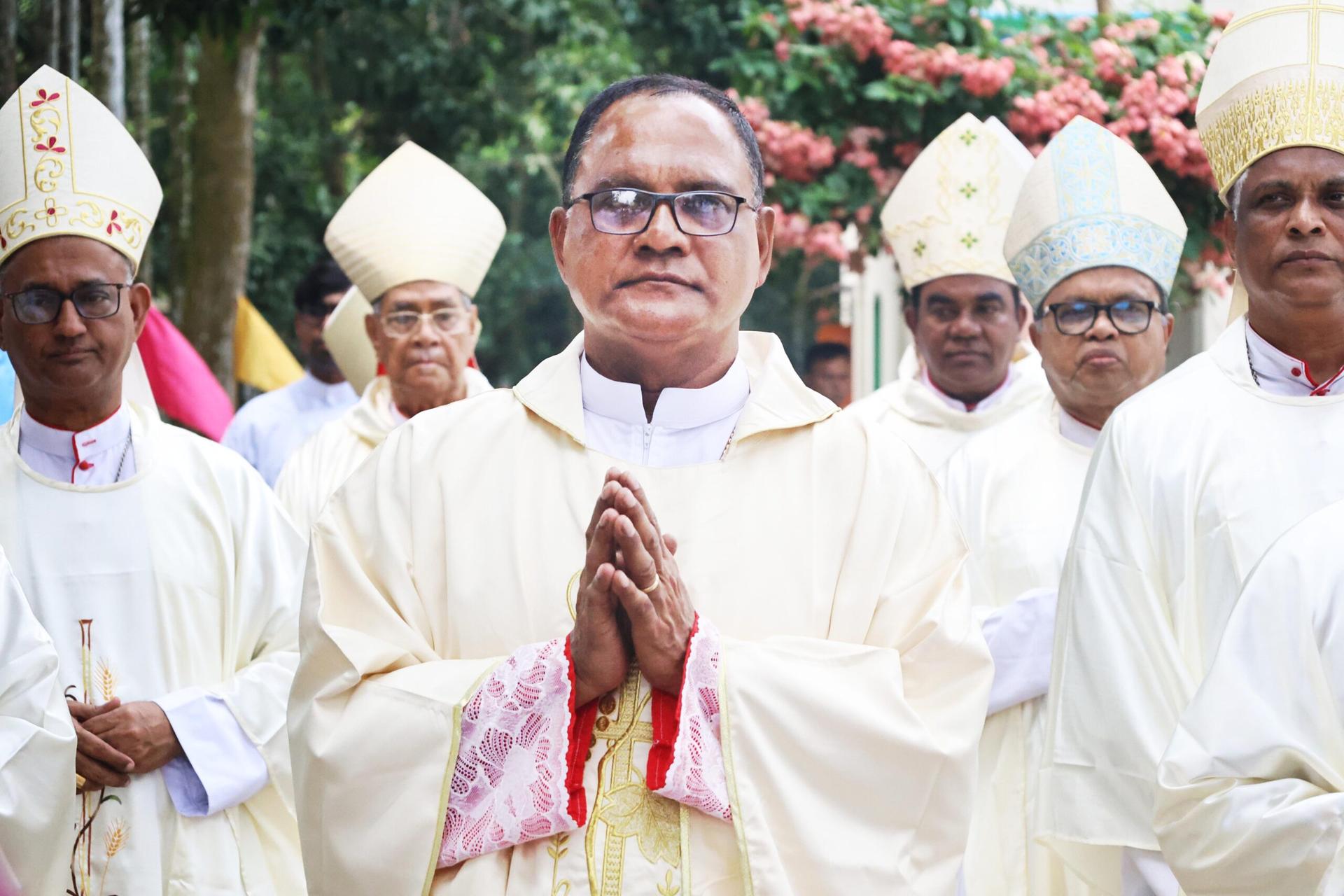
DHAKA, Bangladesh – Building a whole Catholic diocese almost from scratch is a daunting task, but the first bishop of Bangladesh’s ninth and newest Catholic diocese is game for the challenge.
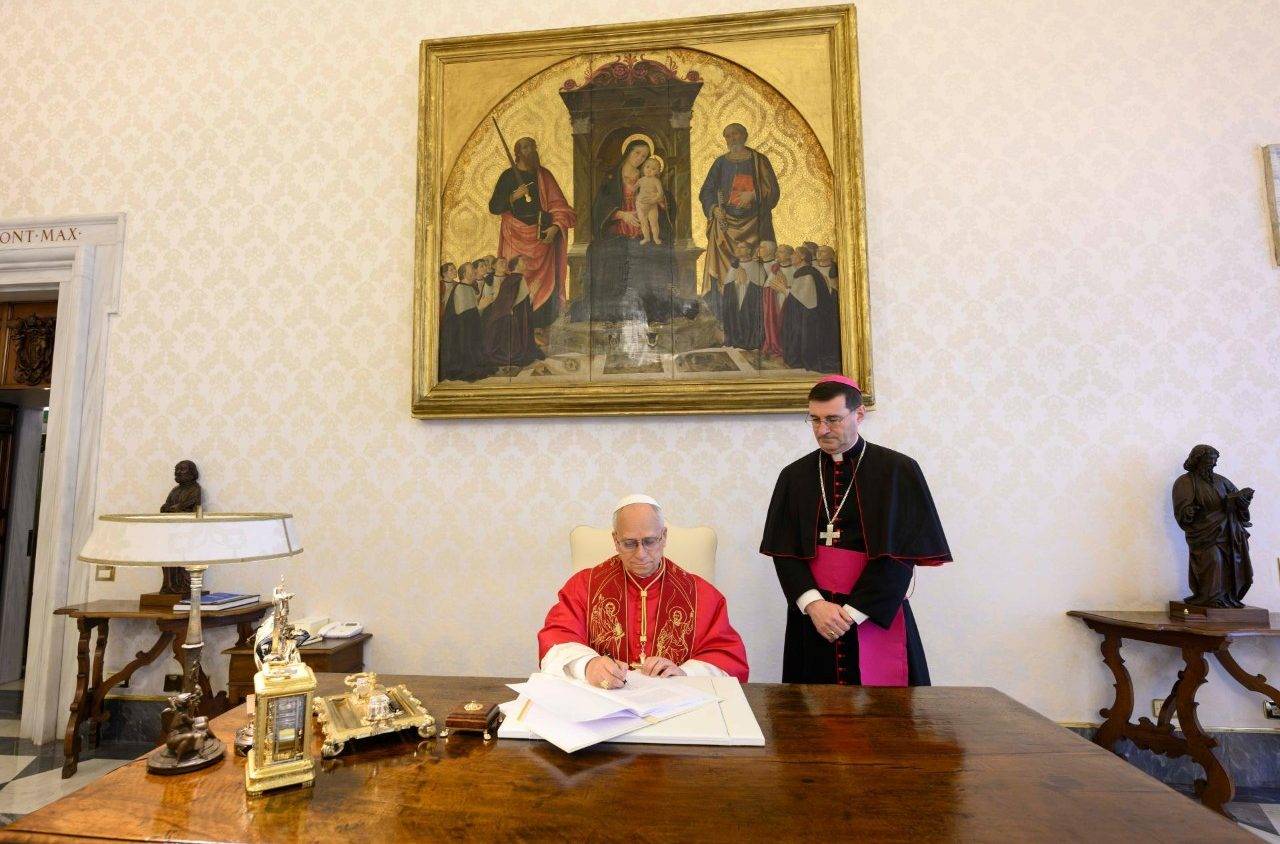
It was only in March of this year that Pope Leo XIV erected Joypurhat in the northern Bangladesh and appointed the 64-year-old Paul Gomes as bishop.
Gomes received consecration as bishop on June 5 at the Sacred Heart of Jesus Church in Beneedwar, with the papal nuncio on hand.
RELATED: New diocese, new bishop: local Christians have high expectations
Composed from territory taken from the diocese of Rajshahi and the diocese of Dinajpur, Joypurhat is a suffragan see under the capital archdiocese, Dhaka, with 11 parishes serving more than 24,000 Catholics.
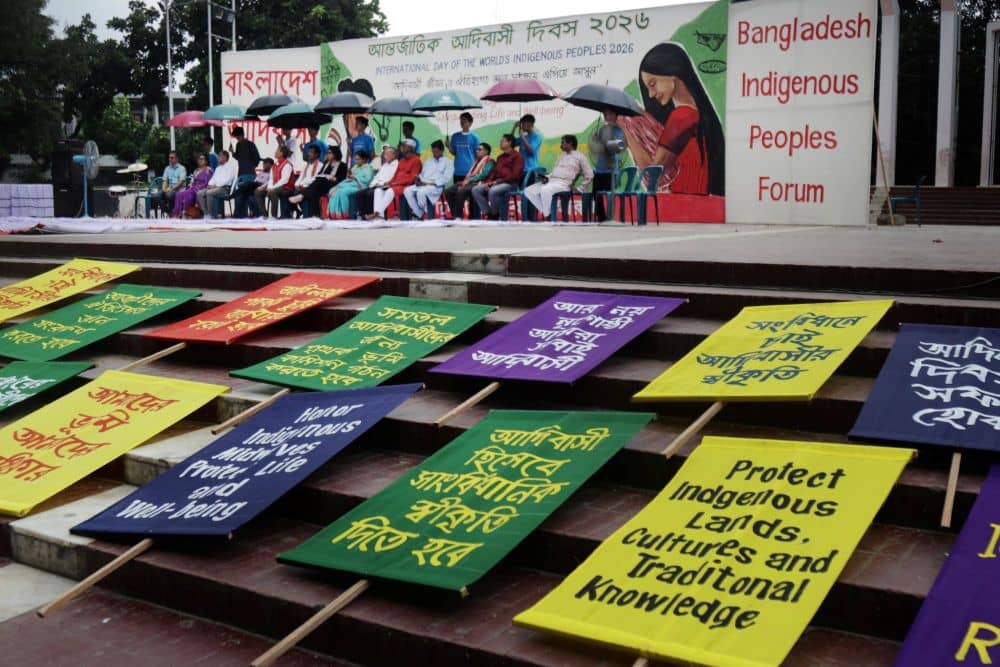
There are 15 priests serving in Joypurhat – eight diocesan and seven religious – and the territory of the diocese is inhabited primarily by indigenous minorities.
Bangladesh is a country of 180 million people, only 600,000 of whom are Christian, a tiny minority.
Education, healthcare, and justice for all people are the priorities for Gomes, who understands he has his work cut out for him.
He tells Crux Now he isn’t planning on making a go of it alone.
“My effort,” Gomes said in an exclusive interview with Crux Now, “will be to build a participatory church and diocese.”
Gomes knows something about the work and the territory and people he is serving, too.
Gomes was born on September 23, 1962, in St. Rita’s Parish, Pabna District in Rajshahi Diocese, northern Bangladesh, the third of six siblings. He entered the minor seminary in 1978 and was ordained a diocesan priest on December 29, 1992.
He has served in various parishes and has also served as a teacher and director of more than one house of formation.
“I hope to get everyone’s cooperation,” he said, but he understands that his is not the work of a day.
Gomes spoke in detail with CruxNow‘s Asian correspondent Stephan Uttom Rozario about the new diocese and his challenges as the first bishop and his future plans.
What follows is a transcript of their conversation, edited for length and clarity.
Crux Now: You have taken charge as the first bishop of the new diocese, what are your challenges in this situation?
Bishop Paul Gomes: As a new diocese, I have to start everything anew. I have to assign the priests of the diocese and discuss with those who are from the different religious congregations.
There are administrative and financial aspects to that, and to everything we must do.
Since a new diocese has been created from two dioceses, organizing its administration generally is a big challenge for me and it will take a lot of time.
Another thing is that I will have to take care of the Christians around whom I will work: Form their faith and build a good education system for them. It will take me perhaps three or four years, and may not be finished even then.
I will have to build and decorate the Bishop’s House, the Fathers’ House, the Cathedral parish, that is, the whole thing with new buildings.
Since the diocese is new and there is no infrastructure, how great is the financial challenge?
Challenging, for certain, and important – because I need a large amount of money to build these facilities – this is critical, certainly, and a big challenge for me.
I do not have my own residence. For now, the Salesian Don Bosco Fathers have built a separate residence in Khanjanpur parish with the help of the Rajshahi Diocese, where I am staying. I may be three or four years here.
There will be two more priests with me here, and arrangements have been made for them to stay here.
Could you tell us a little about the prospects of the diocese?
There are many possibilities in this diocese, but we will never proselytize. The Church in Bangladesh does not support that sort of thing. We will serve everyone, and if ever anyone should think of coming under the shadow of Christ, we welcome them.
How will the administrative aspects be managed here now?
The Pastoral Council will have to be formed. Again, I will have to form the seven-member Consultative Body that will be with me. Also, other responsibilities will have to be given and the right pastor will have to be chosen for that. I am moving in that direction slowly and hope to be able to do it with the help of everyone. I will do it within the church regulations.
My job will be to activate our youth groups, catechism classes, Saint Vincent de Paul, Credit Union, and all the other small and big organizations – and the work will be challenging.
In this way, we are trying to build local self-reliant churches. Here, we will contact various government departments and political figures. Various commissions of the diocese will have to be formed.
What are your ideas for educational development?
There are several educational institutions in various villages, and we will try to expand them further through discussions, so that we can do the work of building people through education, for everyone regardless of race, religion, caste.
We have already talked to various missionaries about how to increase the number of educational institutions and how to expand the existing ones.
I hope to get everyone’s cooperation, get cooperation from various donors, organizations. I will send projects to various places including the Vatican and I hope I will be successful.
I will implement safeguarding policy and child protection policy in line with the current era. I will try to shape people’s lives and develop the community. However, these will not happen in a day, I will need time.
I will visit the Catholic villages – the parishes in the villages – gradually, and get to know about their work plans. I will also share my plans with the priests and religious and the faithful.
What is your plan for development in the health system?
We have some dispensaries in health services; we will develop them further. Although I have plans to set up a health service institution, I cannot do them right now, because that requires a lot of money. Since there are health centers nearby, I will work on priority basis.
It is impossible to do everything at once.
We will move forward gradually.
That said, the financial challenge is critical, and a big headache for me now.
How are you thinking of overcoming it?
We will definitely need external grants.
It is not possible to build big infrastructure with local funds, for this we definitely need external grants. Because, as a new religious province, there is a pull in the hearts of the people and everyone will help.
Since this is an indigenous-dominated area and I will request that the missionaries already working here in the area of education crisis give special facilities to the locals for education.
You have taken charge of a diocese where almost 100% of the population is tribal and they are deprived and often oppressed by the government and the state in various ways. Land issues especially are a big problem for them. Can you speak to this?
Actually, there are Santals, Oraos, Mahalis, Mundari and several other ethnic groups here. Now that most of them live in the diocese, maybe we will be able to give them more opportunities. It is certain, however, that we in the Church have to be aware of the land issue.
I will definitely pay attention to how their just rights can be realized in the diocese. I will especially try to talk to the higher authorities of the government so that the tribals are not subjected to any kind of oppression.
Caritas tried to solve their land issue by doing big projects, but many people sold their land without informing us or Caritas.
However, I will be concerned about how this issue can be solved through government assistance.
It is not only in the Joypurhat diocese, I should say.
Tribal people are being oppressed in many dioceses. The Church is protesting and trying to find a solution as much as possible. Since we are a minority, however, many parts of our government ignore us.
They think that they have to survive as a minority.
But in all the places where I have worked, I have tried to explain to everyone that we are all human beings, and we will live with the rights of humans and that we should get those rights.
When I worked among the indigenous people, I did not look down on anyone. I respect everyone’s culture.
You have about 11 years until you reach the age at which Church law requires you to submit your resignation. Where do you see your diocese at the end of that time, and where do you see the Church in Bangladesh more broadly?
I will not say that I want to see the diocese as a model, but as the new and ninth diocese, my effort in the Catholic Church here in Bangladesh will be to build a participatory diocese that is part of a participatory Church.
I will build a participatory Church, and I will do this in discussions with other dioceses and the Catholic Bishops’ Conference of Bangladesh.
If, by God’s grace, no accident occurs in these 11 years, I will try to make this religious diocese a completely self-reliant diocese.
What do you think this will mean for you?
Wherever I have worked, the welfare of the people is paramount to me. I am ready to suffer, to make sacrifices, to give time for the welfare of the people.