The point man on human development for the Catholic bishops of Bangladesh says public safety and democratic process need to be top priorities for the country’s new president – but first, the country will need to choose a new leader.
“The biggest need among the people of Bangladesh now is security,” Father Hubert Liton Gomes, secretary of the Integral Human Development Commission of the Bangladesh Catholic Bishops’ Conference, told Crux Now.
“I want whoever the new president is, to give instructions to the government to ensure the safety of the people,” Gomes said.
Gomes hopes believes that the new president will work to maintain peace and order in the country, the welfare of the people and the sovereignty of the country.
“In Bangladesh, the president is loyal to the government that is in power, but I would like the new president to work for the people from above the political parties,” Gomes said.
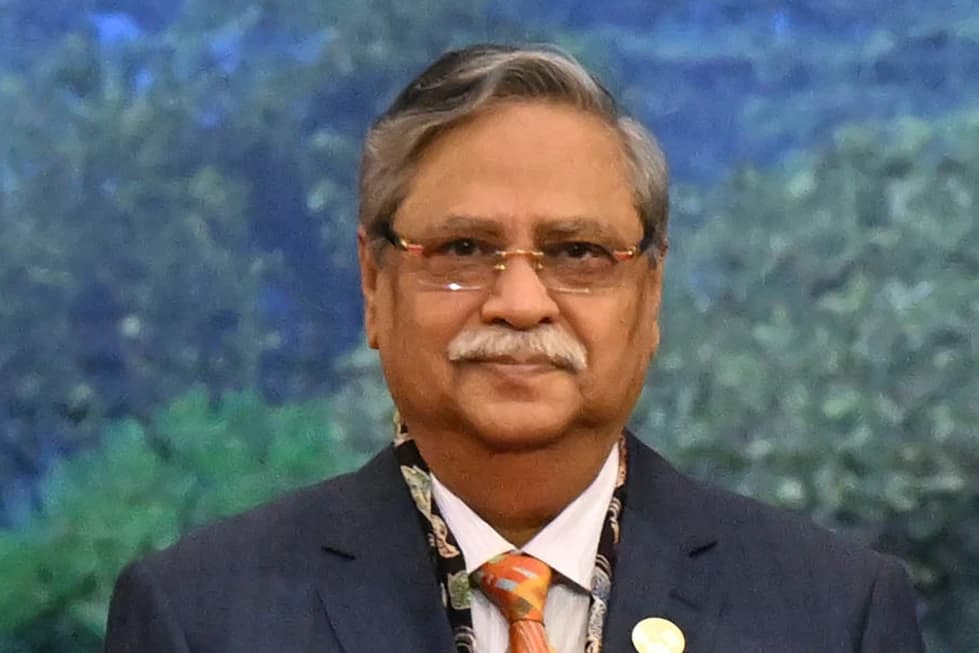
The concern comes amid yet more political uncertainty in the country of 178 million people, after Bangladeshi President Mohammed Shahabuddin resigned on Friday of last week.
There has been a great deal of movement in the country’s political arena and speculation in the press and among the people.
There have also been demands for the former president’s arrest from various quarters.
Adding to the uncertainty, Bangladesh’s ousted Prime Minister Sheikh Hasina on Wednesday reiterated her determination to return to her country by the end of this year, even though she could face arrest, imprisonment and even execution.
Uneasy transition 2024–present
Bangladesh is still working to achieve long-term stability in the wake of a student-led uprising that ousted the authoritarian Hasina in 2024 and banned her political party.
Hasina once led the Awami League, a long-standing party that played a pivotal role in Bangladesh’s pro-democracy movement and participated in government for decades but took an increasingly corrupt and authoritarian turn under Hasina after coming to power in 2009.
In November of last year, Hasina was tried and convicted in absentia on charges of ordering lethal force to be used against the student-led protestors who eventually forced her to resign the Prime Minister’s office and flee the country the year before.
Between 1,400 and 1,600 people were killed in the crackdown over three weeks in Bangladesh, from July 5 to August 15, 2024.
The UN High Commissioner for Human Rights found that the violence had been systematic, perpetrated by Bangladesh’s government security and intelligence services alongside elements associated with the Awami League party then attempting to cling to power.
After the collapse of the Awami League government in August of 2024, Hasina fled to India and many party leaders went into hiding. The properties and residences of prominent Awami League figures leaders were looted, vandalized, and burned.
Shahabuddin, who held the largely ceremonial presidential role until his resignation last week, had been Hasina’s political ally.
His resignation letter cited health complications.
The 77-year-old Shahabuddin took office for what was supposed to be a five-year term on April 24, 2023. He was elected President unopposed, on the nomination of the now-ousted and banned Awami League.
The President’s duties now
The Speaker of the National Parliament, Hafiz Uddin Ahmed, will perform the duties of the President until a new president is elected and assumes office.
In addition, Deputy Speaker Barrister Kaiser Kamal will serve as the Speaker of the National Parliament.
Hafiz will serve until a new president is chosen through elections in the National Assembly within the next 90 days.
Controversy over Shahabuddin
Akhtar Hossen, member secretary of the centrist National Citizens Party (NCP), formed by those who led the student uprising in 2024, has demanded that the recently resigned President Shahabuddin be arrested and brought to justice.
“We have been agitating and struggling for a long time to remove Shahabuddin from the post of President,” Hossen said at a July 24 press conference, “but we wanted him to be removed through impeachment in parliament.”
“[T]he government has given this fascist accomplice an opportunity to resign,” Hossain said, “instead of going through impeachment.”
Opposition leader Shafiqur Rahman of the far-right Bangladesh Jamaat Islami party also had strong words regarding the former president.
“A black shadow of tyranny has been lifted,” Rahman said. “We are not interested in the reason why he resigned,” he said, adding that the former president “didn’t utter a single word” against the violent crackdown.
Gomes told Crux Now the transition to fully functional democratic rule has not been easy.
On Wednesday, government authorities issued a ban on public demonstrations in the city of Habiganj, where rival rallies were scheduled to be held by the opposing NCP and ruling Bangladesh Nationalist Party (BNP).
Officials in Habiganj, roughly 90 miles northeast of the capital, Dhaka, cited public safety concerns including possible clashes.
The English edition of Bangladesh’s Prothom Alo news outlet said the order followed an attack on a convoy of leaders from the NCP attending a rally earlier in the week, for which the NCP blamed elements of the BNP.
Though the BNP is also covered under the Habiganj public safety order, Gomes said not allowing opposition parties to hold rallies or programs “is not the behavior of a democratic government.”