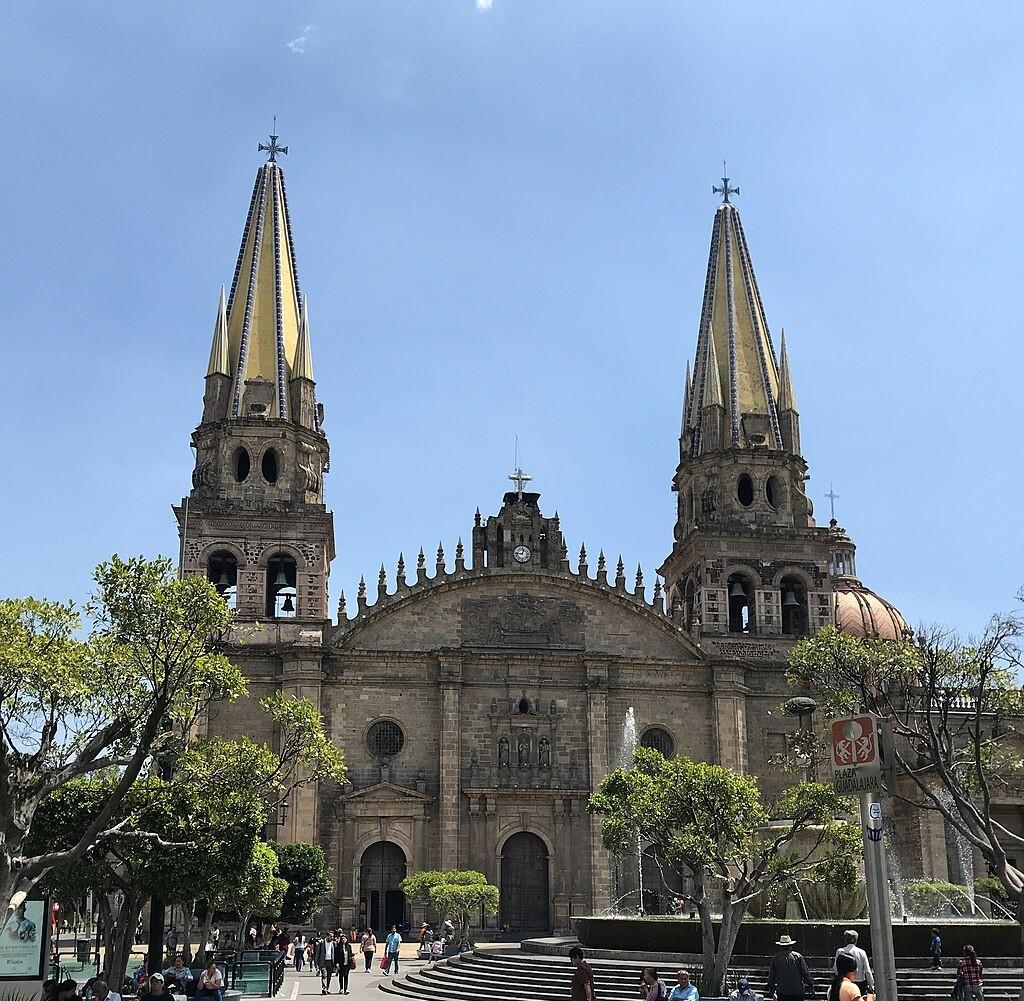
Cardinal Francisco Robles Ortega, the Archbishop of Guadalajara, Mexico, has criticized a priest who sent letters to a judge in the United States on behalf of a slain Mexican drug lord’s adult children, both of whom have been convicted of crimes related to their involvement in their father’s cartel operation.
Father José Dolores Aguayo, a priest in the city of Zapopan, Jalisco, sent two letters to a U.S. judge in which he asked for clemency for Rubén Oseguera and Jessica Johanna Oseguera, children of Nemesio Oseguera, alias El Mencho, who headed the Cartel Jalisco Nueva Generación (CJNG) and was killed by Mexican security forces on Feb. 22.
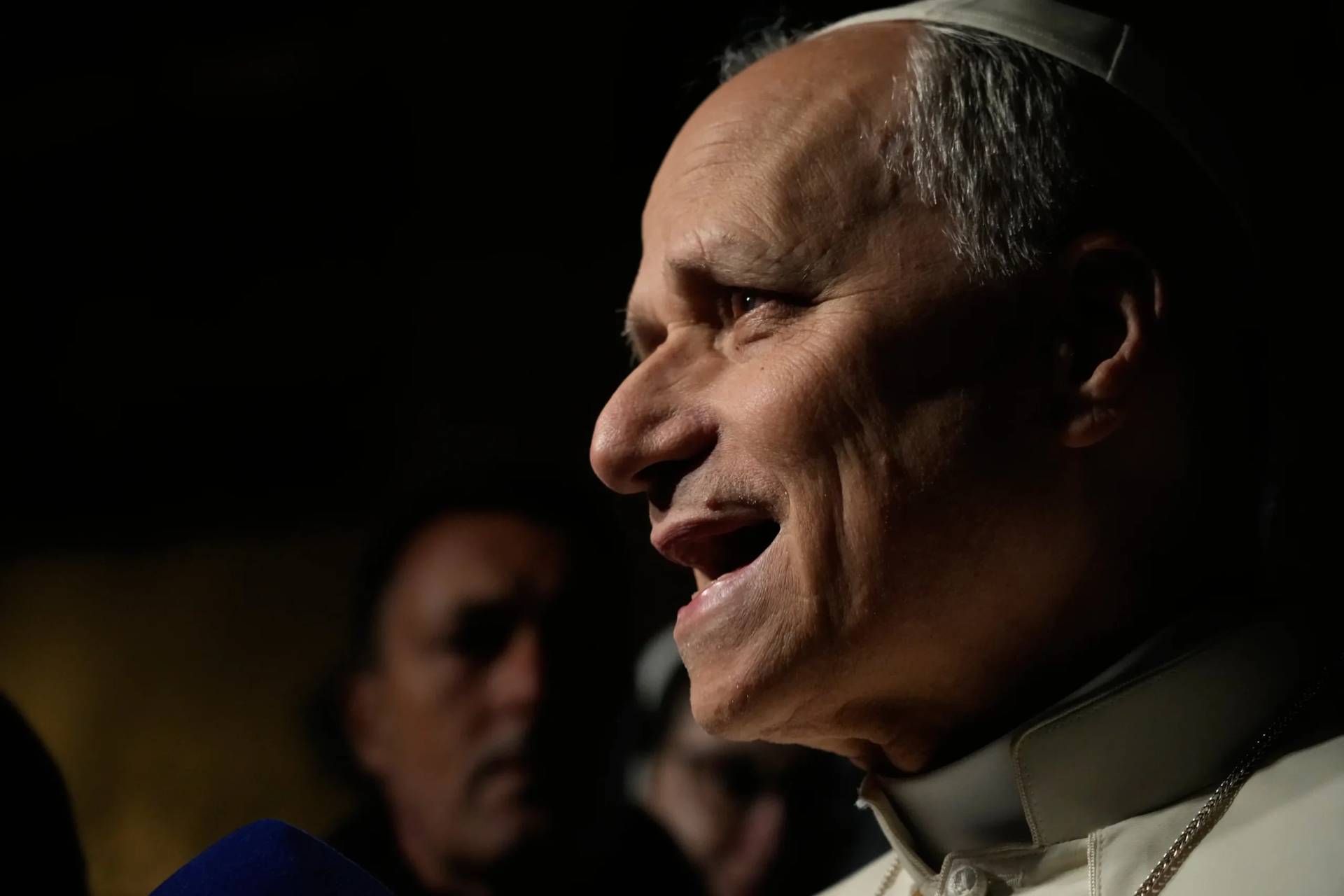
“The issue is far more complex and far broader than a matter of recklessness or inexperience on the part of a priest who wanted to act in good faith but, as we say colloquially, messed up,” Cardinal Robles told journalists earlier this week.
The letters, disclosed last week by journalist Laura Sánchez Ley, were sent to Judge Beryl A. Howell of the District of Columbia in 2021 and 2025 and show that Aguayo – also known as Padre Lolo – was deeply committed to securing the release of El Mencho’s children.
In the first letter, Aguayo said he had known Jessica Oseguera for five years and that he could provide an “evaluation of her that goes beyond the legal appraisal that has been made.”
“In the time I’ve known her, I invited her to take part in a group in which we study the Word of God and discuss matters of faith. She has always proved to be very interested. She is a very loving person, an excellent homemaker, a very philanthropic woman […],” Aguayo wrote, asking the judge to give Jessica “a chance to show who she really is.”
Jessica Oseguera, alias La Negra, was detained in Washington in Feb. 2020 while attending a hearing of her brother, Rubén Oseguera González, alias El Menchito, who is currently serving a life sentence for drug trafficking and violence in the U.S.
Jessica Oseguera entered a guilty plea on charges of money laundering and conspiracy for the CJNG in 2021 and was sentenced to 30 months in prison.
The priest sent the second letter in Jan. 2025. He referenced the previous letter and said he now wished to share his assessment of Rubén Oseguera González, to whom he had been providing spiritual direction over the past two and a half years.
“Through letters and phone calls, I have been in touch with him. He comes from a very devout Catholic family. He has reflected deeply on his future and has been reading Scripture. When a passage touches his heart, we share our thoughts about it,” Aguayo wrote, adding that despite his errors, El Menchito is a man touched by God’s mercy.
Aguayo’s letters came to public attention only a few days after Mexico’s armed forces killed El Mencho. The military operation took place in a forested area in Jalisco and triggered a wave of violence that resulted in dozens of deaths, including both suspected criminals and members of the security forces.
On Feb. 28, the Archdiocese of Guadalajara issued a statement concerning Aguayo’s letters, saying they had been sent at the request of the Oseguera family as a form of spiritual support. The assistance provided to El Menchito was of a pastoral nature, the statement said.
“However, those letters […] should not interfere with the administration of justice,” the Archdiocese of Guadalajara said.
“We believe that this priest failed to exercise prudence and sound judgment by not addressing this matter beforehand with the appropriate authority, given the nature of this relationship,” the statement continued.
Father José Filiberto Velázquez, who heads the Human Rights Center Minerva Bello in Guerrero state and has long promoted peace in Mexico, told Crux Now that “public gestures involving members of organized crime should be handled with particular care.”
“Providing spiritual accompaniment or even issuing letters of a testimonial nature does not automatically amount to a defense of the crime,” he said.
But it is also true that in contexts “such as ours, where organized crime has caused so much suffering, the Church has a moral responsibility not to create ambiguities that could be interpreted as closeness to or support for criminal structures,” Velázquez said.
He added that the Gospel calls Christians to accompany everyone, but not to justify evil – so mercy must not be mistaken for impunity.
“I myself have maintained that pastoral accompaniment can never become an instrument for whitewashing reputations or for sending messages of power or influence. The Gospel calls us to be close to everyone, but it also demands prophetic clarity in the face of evil,” Velázquez said.
In his view, the focus should be on the victims of violence, whose rights have not been duly respected by the Mexican state.
“Ultimately, the question is not whether we can recognize the humanity of those who are linked to crime – because that is part of Christianity –, but how to do so without betraying the victims or weakening our commitment to justice,” he said.
Velázquez, whose peace work has made him a target of organized criminals, is currently outside Mexico at an undisclosed location. From afar, he followed the operation that resulted in El Mencho’s death.
Regarding the operation, he said that “any action by the State must strictly adhere to the rule of law, respect for human rights, and the principle of proportionality.”
At the same time, such operations “must be accompanied by policies of prevention, the rebuilding of the social fabric, and support for victims.”
“True success is not the death of a criminal leader; true success will be achieved when our communities are able to live without fear,” he said.