SÃO PAULO, Brazil – After almost 20 years of socialist administrations that curtailed the Catholic Church’s role in public education, Bolivia now has a pro-market president aiming to reform the Andean country’s educational system – and the Bishops’ Conference has been invited to take part in the process.
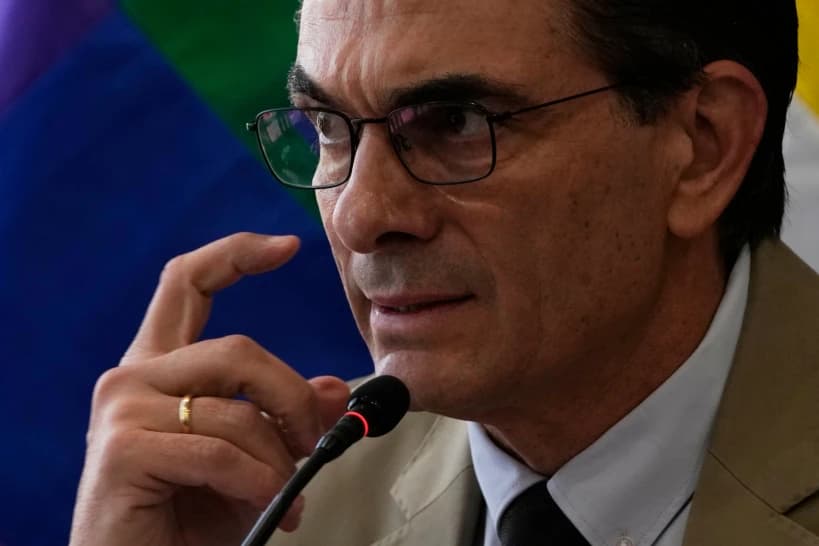
President Rodrigo Paz Pereira, who took office in November 2025, announced in February that his administration would undertake a sweeping education reform in Bolivia and pledged to invest US$50 million in the process.
“We have to tell the truth: Not all Bolivians have had the opportunity to receive an education, and many leave the educational system with extremely poor levels of training. To deny this is to live in a country of lies,” Paz said last month during a meeting with scholars and students, according to the Bolivian newspaper El Deber.
The process will include the participation of different sectors of Bolivian society connected to education, and the Catholic Church has been invited to share its views and proposals.
Paz, a center-right politician who previously served in the Senate, was elected last year on a platform that pledged “capitalism for all.”
His victory – made possible by his ability to attract the support of poor rural and urban workers who had traditionally backed the left – put an end to successive administrations of former President Evo Morales’s Movimiento al Socialismo (Movement Toward Socialism – MAS).
During the campaign, he repeatedly said that “ideology doesn’t put food on the table,” rejecting MAS’s statist stance and blaming it for Bolivia’s economic decline.
The country had been grappling with high inflation, a shortage of hard currency due to declining natural gas production, and a resulting shortage of fuel and many basic food items.
When Paz announced the education reform, he reiterated the idea, saying that “ideology doesn’t put food on the table” and that “education is what can bring us a better future.”
The invitation was received by the Church with a sense of relief and optimism. In Morales’s thorny relationship with the Bolivian clergy, one of the key milestones was the approval of an education reform in 2010 that greatly restricted the Catholic Church’s role in the country.
Act 070 established a “decolonial,” “revolutionary,” “anti-imperialist,” “liberationist,” and “anti-patriarchal” educational system. It changed the name of the subject Religion, Ethics and Morals to Values, Spiritualities and Religions, reducing the role of Christianity in education and increasing that of Andean and Indigenous belief systems. It also shut down Catholic and Adventist teacher-training schools.
“With the 2010 reform, Catholicism became just one religion among others in the school system. It created deep frustration among us, given that we wanted our children to be taught according to our beliefs. It was a very sensitive moment for the Church,” Jorge Fernández, executive secretary of the education department of the Bolivian Episcopal Conference, told Crux Now.
Fernández, who coordinates education-related matters alongside delegates from the country’s 17 ecclesiastical jurisdictions, argued that Act 070 “drove the country’s educational system toward political ideology.”
The Church resisted throughout those years. In Catholic schools, despite government pressure, it managed to continue teaching students according to its religious identity, Fernández said.
But those were not easy times. Astrid Rodríguez, who has been teaching Religion – now “Values” – in Cochabamba for 22 years, recalled how painful it was to see the Catholic teacher-training school being closed.
“It was an attack on our Catholic identity. Many people who studied in state teacher-training schools and graduated as teachers of Values in those years were atheists,” she told Crux Now.
She said Act 070 privileged “Pachamamismo,” traditional Andean cosmologies, and that such a focus was not necessarily negative.
“In fact, it seemed like something good and noble to work with Andean spiritualities. They have strong moral principles and teach, for instance, that people should not lie or steal,” Rodríguez said.
The problem, she argued, was that the entire educational project became intertwined with gender theory.
Now, with the reform discussions underway, she hopes that Andean beliefs will at least be placed on equal footing with Christianity.
“We need to rebuild values. Bolivia is now a country with too much violence, including within families. Jesus must be presented as our primary example,” she said.
Fernández explained that the Church currently has three main concerns regarding the reform.
“Catholic education must be supported, and we need to be fully free to operate in our own schools,” he said.
Catholics must also have the right to teach Catholicism as part of school curricula, the Church argues.
“And we want the Catholic teacher-training school to be reopened. The state is currently responsible for training all teachers. Without our school, the quality of our formation also declined,” he said.
Paz’s administration asked the Church to submit its proposal for a school curriculum – something that had not been possible during the administration of President Luis Arce (2020–2025) – and it was received with great interest, Fernández said.
“We believe we can reverse past decisions,” he added.
Today, the Bolivian Church runs 1,673 schools subsidized by the state, representing roughly 9 percent of the public system. It also operates 85 private schools. Ideally, they will enjoy greater autonomy from now on.
“This is a moment of expectation. I hope they will agree with us,” Rodríguez said.