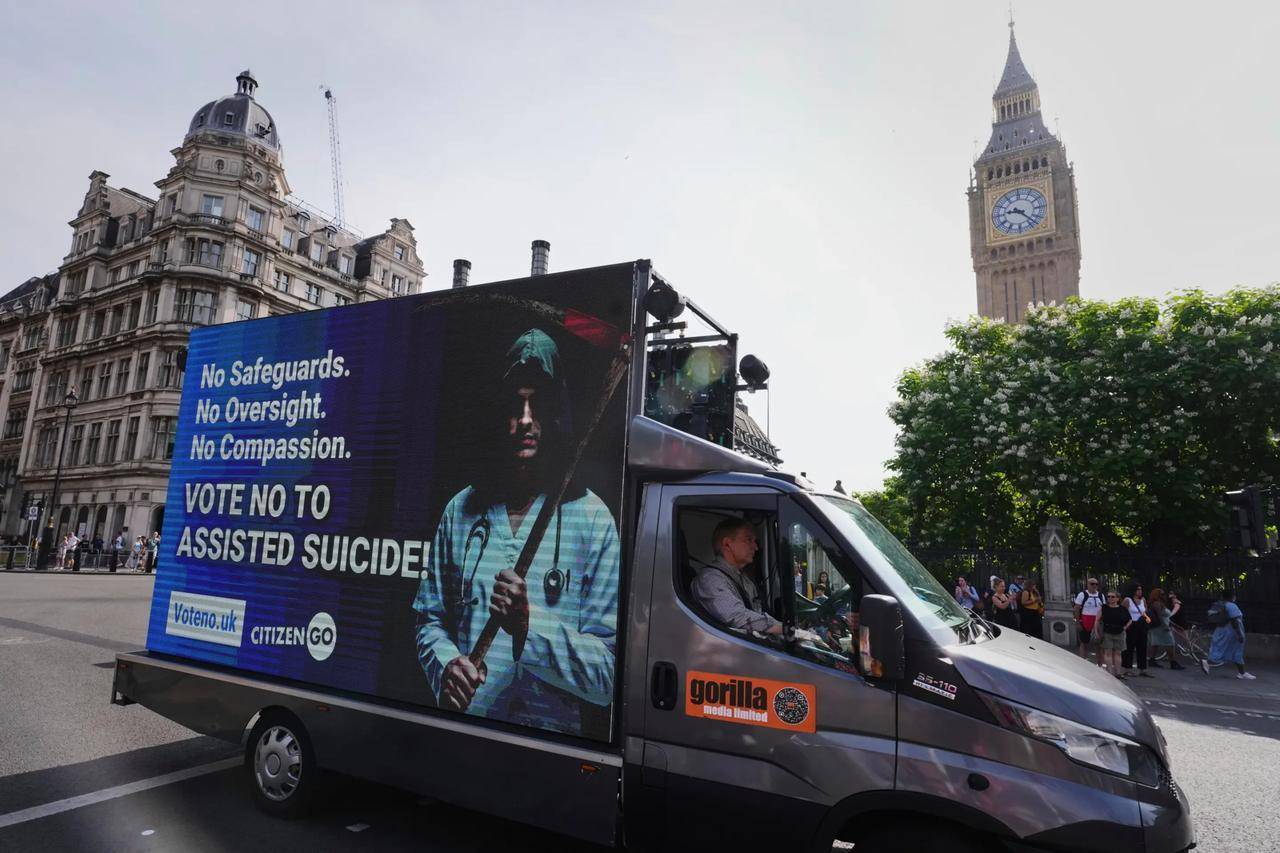
LEICESTER, United Kingdom – On Tuesday, the Scottish Parliament is scheduled to vote on a Bill that would legalize assisted suicide, something the Catholic Church in Scotland says would cause “a serious threat to vulnerable Scots.”
It is the final vote on the Assisted Dying for Terminally Ill Adults (Scotland) Bill—legislation that would permit for the first time physician-assisted suicide.
The Scottish bishops said on Monday that Members of the Scottish Parliament (MSPs) face a “binary choice” in the vote.
“This Bill is a serious threat to vulnerable Scots, including the elderly, disabled, those who suffer from poor mental health, and victims of domestic abuse. In a world that often prizes independence, those who are vulnerable can easily feel like a burden,” the bishops said in a statement.
“An amendment to the Bill that would have prevented doctors from being able to raise assisted suicide unprompted with patients, was rejected; a decision that, in one move, dismantles thousands of years of Hippocratic tradition of ‘first do no harm’,” says the statement signed by Bishop John Keenan, President of the Bishops’ Conference of Scotland.
RELATED: Scotland bishops say assisted suicide bill violates religious freedom
“This decision only adds to already significant concerns expressed by MSPs about the risk of coercion, demonstrating a keen awareness of their responsibility to protect vulnerable people from this threat,” the bishops add.
The Catholic leaders also note “crucial conscientious objection clauses” that offered protection to doctors have been stripped out of the Bill, which means MSPs will be asked to vote on an “incomplete Bill devoid of a key protection for healthcare workers.”
The rejection of the conscientious objection clauses has also moved the Royal College of Psychiatrists in Scotland and the Royal Pharmaceutical Society of Scotland to switch from a position of neutrality to one of opposition to the Bill.
The bishops pointed out without conscientious objection rules, Catholic hospices and care homes would be forced to close rather than provide assisted suicides “in a hammer blow to an already creaking palliative care system.”
“True compassion is not found in killing but in walking with those who suffer, ensuring they receive the medical, emotional, and spiritual care that affirms their inherent worth,” the statement says.
“Every person—regardless of age, illness, disability, or circumstance—is a gift from God. There is no such thing as a life without value. Our task as a society is not to eliminate suffering by eliminating the sufferer, but to surround every individual with love, support, and dignity until their natural end,” the bishops add.
“I understand how the choice before our MSPs is unenviable, because it is now a binary one; either they vote to allow some citizens a new autonomy, or they vote to protect thousands of vulnerable and fearful Scots who do not want this legislation and who will suffer most if this Bill passes. They cannot do both at the same time,” the statement says.
Anthony Horan, the Director of the Catholic Parliamentary Office, says there are insufficient protections in the Bill to protect those who may be subjected to coercion.
“This means that vulnerable individuals, including the elderly, the disabled, those who experience poor mental health, and victims of domestic abuse are at significant risk of being pressured to choose an assisted suicide,” he told Crux Now.
“No disability organization has come out in favor of the Bill and many are against. Tressa Burke, founding CEO of Glasgow Disability Alliance, has said that the Bill ‘lacks important safeguards’ and, as a person with MS, admitted that she is ‘terrified’ at the thought of the Bill passing,” Horan added.
He told Crux Now that Anni Donaldson, an expert in domestic abuse crimes at the University of Strathclyde described the rejection of amendments to strengthen the Bill on the issue of coercion as “both baffling and alarming”, admitting that she remains “deeply concerned that the legislation will make life more dangerous for vulnerable women.”
“The Association for Palliative Medicine has described the Bill as being ‘compromised by inadequate safeguards’ and they, as well as the Royal College of Psychiatrists and the Royal Pharmaceutical Society have recently moved from a position of neutrality to one of outright opposition to the Bill,” Horan continued.
He said many MSPs voted in favor of the Bill at Stage 1 to “continue the conversation.”
“We have had the conversation, and the verdict of experts is quite clear: This Bill is not safe and should be rejected,” he told Crux Now.
Horan said in opposing the legislation legalizing assisted suicide, the Bishops’ Conference of Scotland is “upholding the inviolable dignity of the human person and expressing the unwavering commitment of the Church to the poor and vulnerable.”
“True compassion is not found in killing but in walking with those who suffer, ensuring they receive the medical, emotional, and spiritual care that affirms their inherent worth,” he said, explaining it is not just a Catholic question.
“Whether one speaks from a religious angle or not, we can all agree that there is no such thing as a life without value,” Horan told Crux Now.
“Our task as a society is not to eliminate suffering by eliminating the sufferer, but to surround every individual with love, support, and dignity until their natural end. That is the Church’s appeal to MSPs as they consider their final vote on this Bill,” he said.
Follow Charles Collins on X: @CharlesinRome