ALGIERS – Pope Leo XIV began a dizzying 11-day tour of Africa as a titan for peace, declaring himself unafraid in the wake of a verbal assault from U.S. President Donald Trump and responding to the attacks with calls for dialogue and respect for international law.
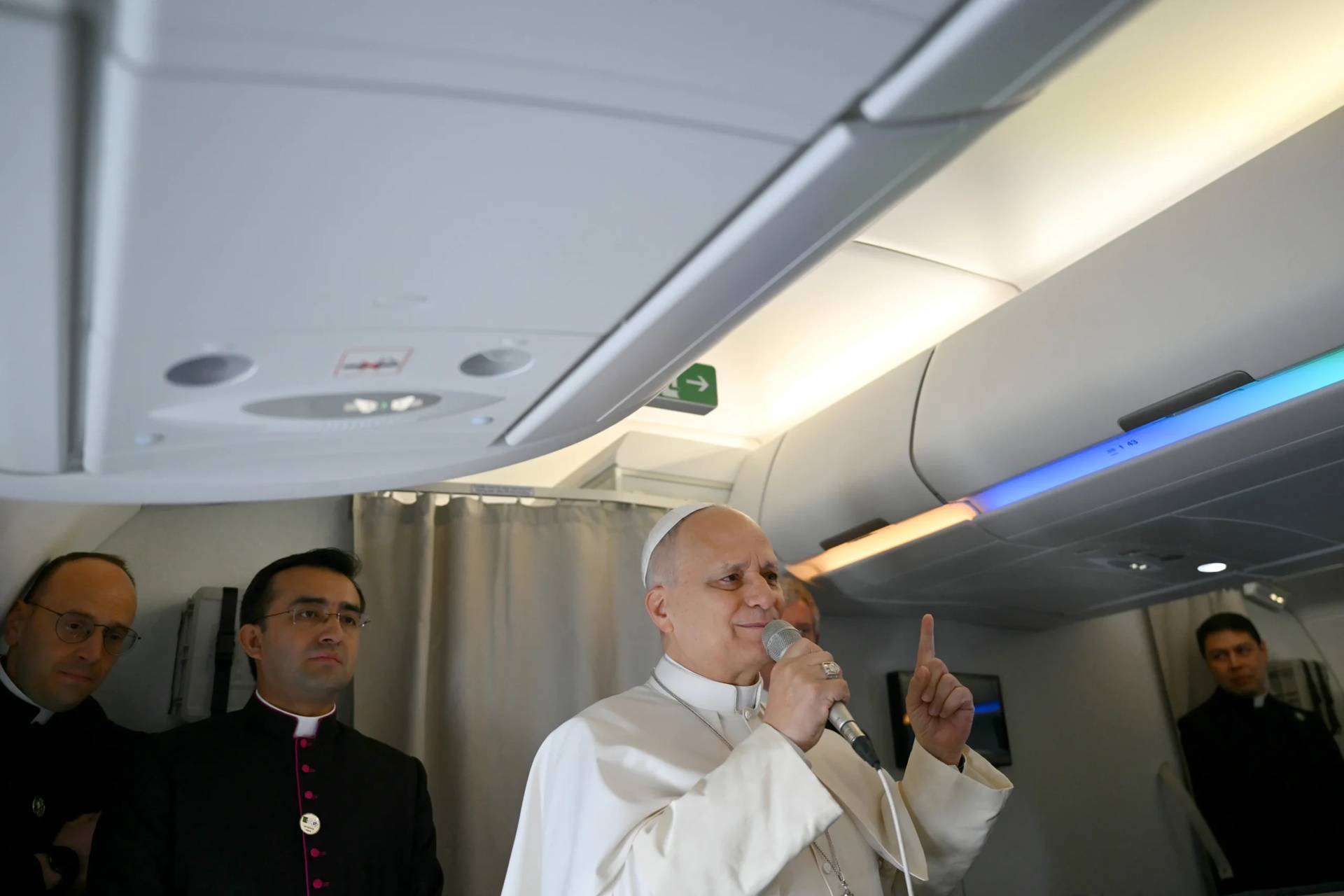
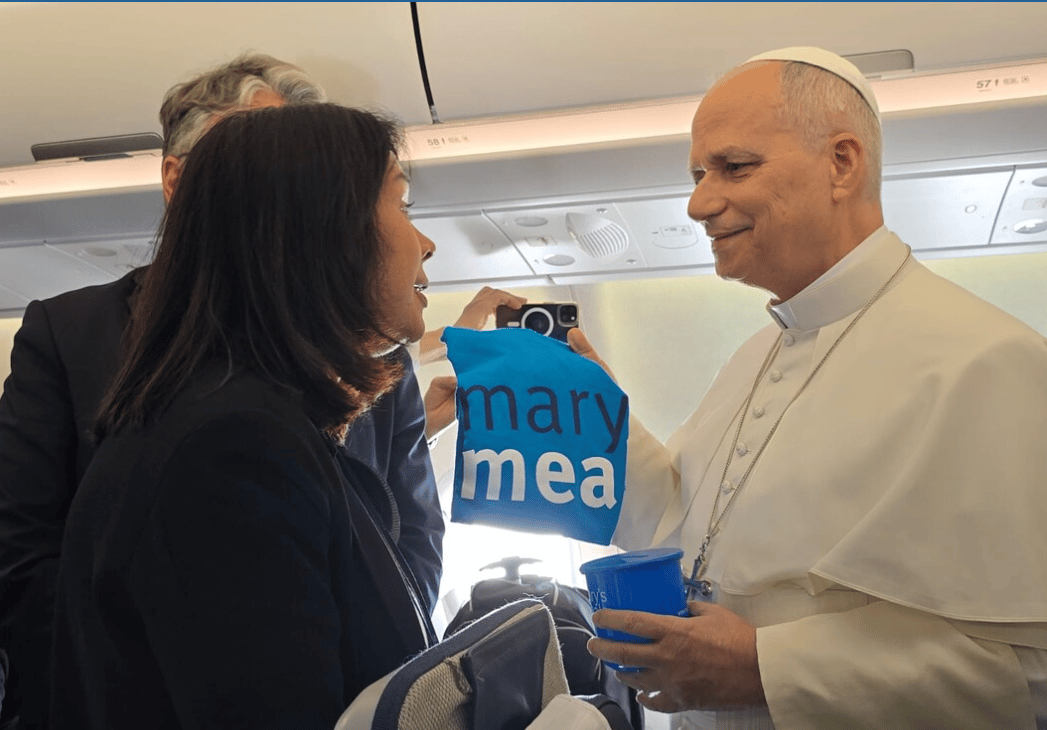
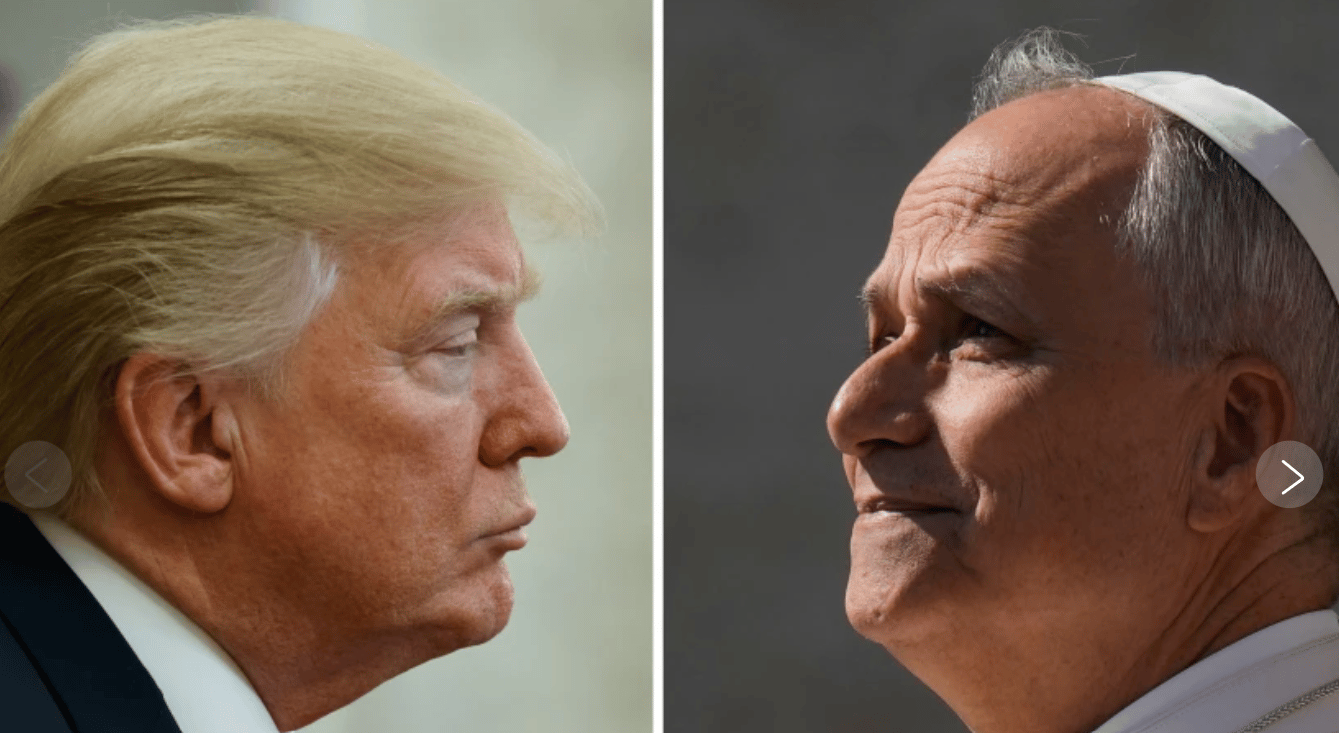
A pope who began his pontificate telling members of the international media to disarm words and reject the paradigm of war, Leo stepped on board his April 13 flight from Rome to Algiers saying he has “no fear of the Trump administration.”
Trump had aggressively attacked the pope in a shocking social media post overnight, calling him “weak on crime” and “terrible for foreign policy” over the pope’s condemnations of the U.S. military actions in Venezuela and Iran.
Leo also said he was unafraid of “speaking out loudly of the message of the Gospel,” which he said was clear: “Blessed are the peacemakers.”
RELATED: En route to Africa, pope says, ‘I don’t fear Trump administration’
He carried that message with him throughout his first day in Africa, which he told reporters en route was “very special,” as he’d wanted to visit Africa as his first-ever papal trip, but opted to visit Turkey and Lebanon first to complete the trip voyages that had already been largely planned during the reign of his predecessor, Pope Francis.
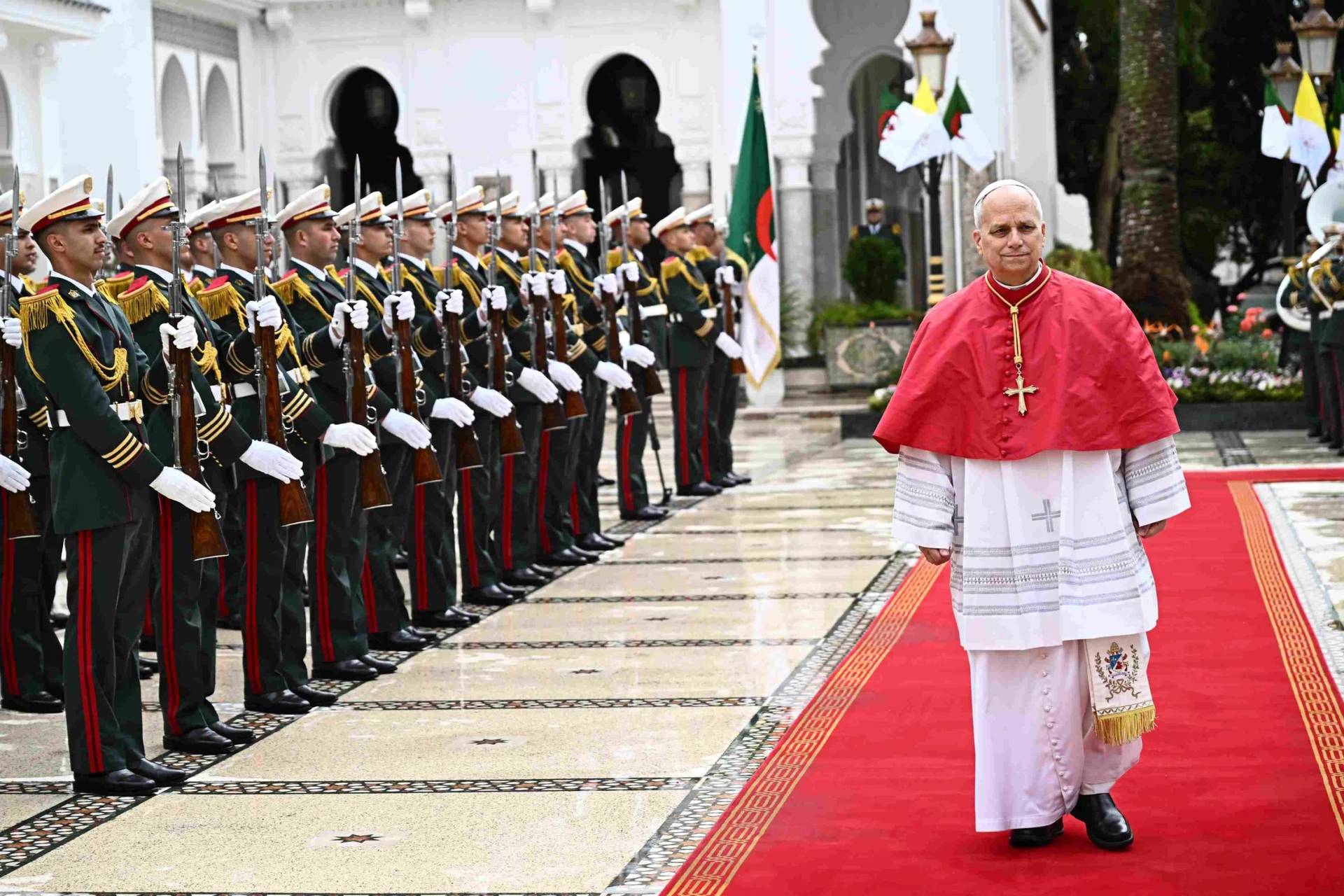
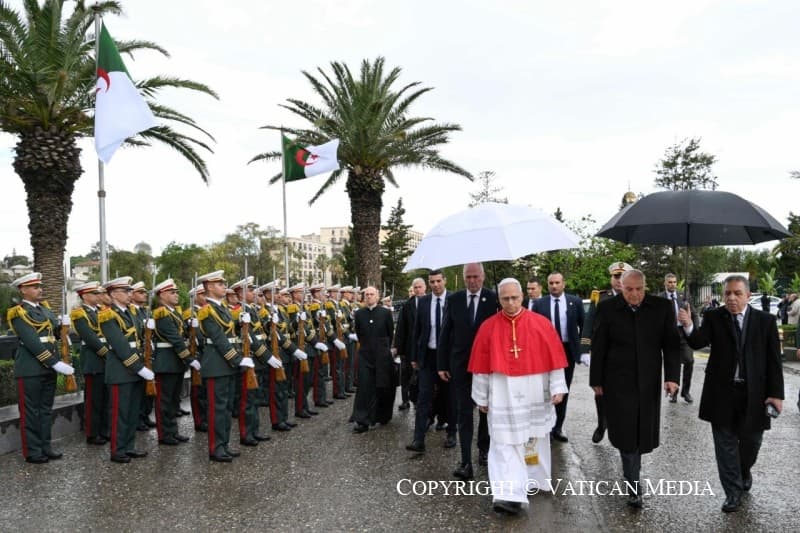
“God desires peace for every nation,” Leo declared in his very first speech at the Maqam Echahid Martyrs’ Monument commemorating Algeria’s fight for independence, which it gained in 1962, “a peace that is not merely an absence of conflict, but one that is an expression of justice and dignity.”
A Muslim-majority nation, Algeria still bears the scars of its most recent conflicts, including its war for independence and the “dirty war” of the 1990s, sometimes called the “Black Decade” in the country, during which the government fought against several Islamist rebel groups in a conflict that left from 100,000 to 200,000 people dead.
“As conflicts continue to multiply throughout the world, we cannot add resentment upon resentment, generation after generation,” he said, saying the future “belongs to men and women of peace.”
“In the end, justice will always triumph over injustice, just as violence, despite all appearances, will never have the last word,” he said.
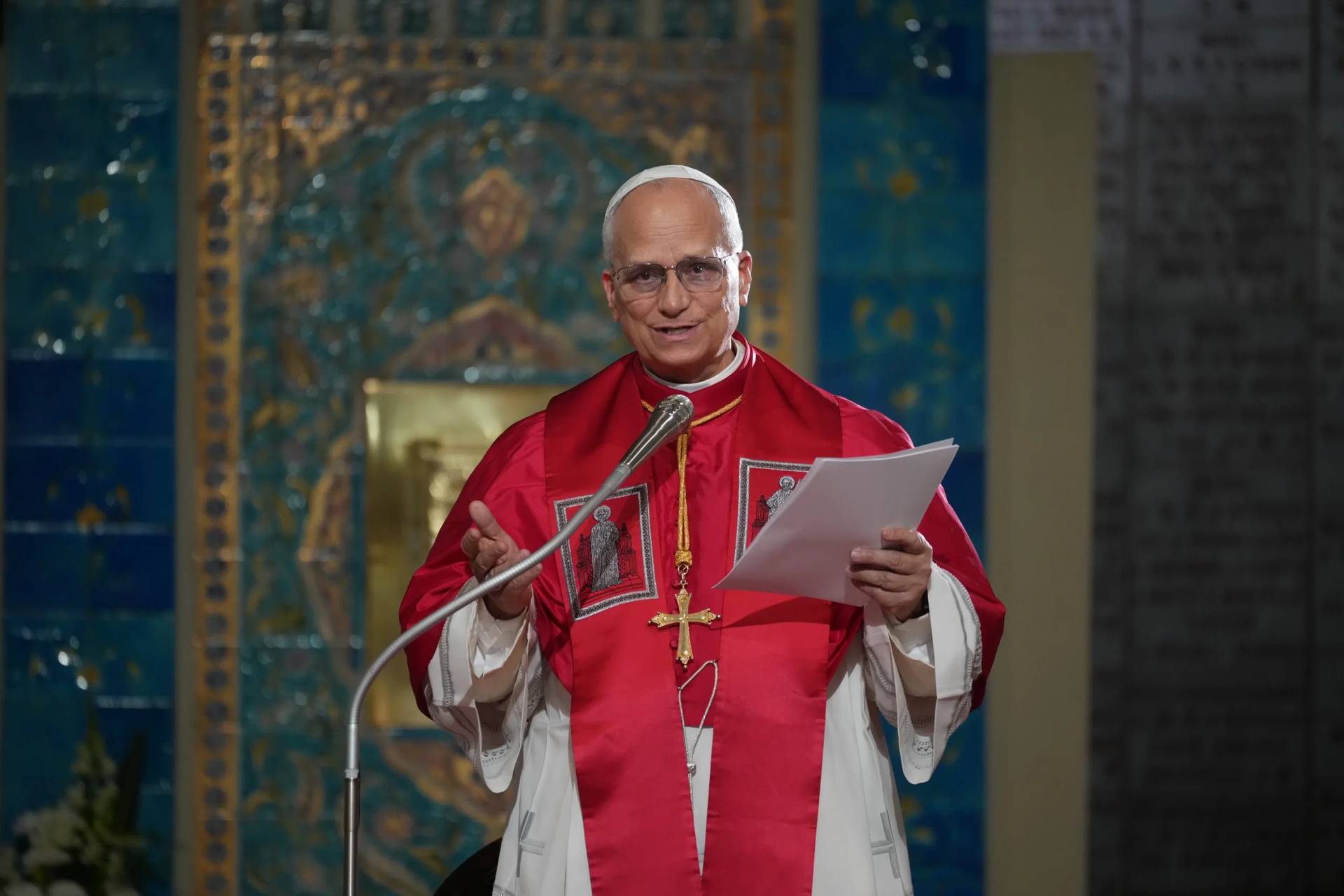
Leo listened to a speech by Algerian President Abdelmadjid Tebboune before taking the platform himself and declaring himself “a pilgrim of peace,” and saying Algeria, despite its recent conflicts, possesses “a culture of encounter and reconciliation.”
“In a world full of conflicts and misunderstandings, let us meet and strive for mutual understanding, recognizing that we are one family! Today, the simplicity of this awareness is the key to opening many doors that are closed,” he said.
He stressed the values of solidarity, hospitality and community in a society, saying, “the truly strong ones” in the world are those “who do not allow themselves to be blinded by power or wealth, and those who refuse to sacrifice the dignity of their fellow citizens for the sake of personal or collective gain.”
“The one who accumulates wealth and remains indifferent to others is unjust,” he said, stressing the need to see God in others.
This is necessary, he said, because “a religion without mercy and a society without solidarity are a scandal in God’s eyes. Yet many societies that consider themselves advanced are plunging ever deeper into inequality and exclusion.”
Alluding to the extractive practices of large corporations that pillage Africa’s abundance of natural resources but do not invest in its development, he said the continent “knows all too well that people and organizations that dominate others destroy the world.”
Algeria’s difficult past, he said, has given the nation “a particularly important perspective on the global balance of power.”
“If you are able to engage in dialogue regarding the concerns of all and show solidarity with the sufferings of so many countries near and far, then you will be able to contribute to both envisioning and bringing about greater justice among peoples,” he said.
Through respect for others and solidarity in their suffering, conflicts and misunderstandings can be reduced, he said, noting the urgency of the moment.
“Today,” Leo said, “this is more urgent than ever in the face of continuous violations of international law and neocolonial tendencies.”
To this end, Leo, who has often condemned the growing disparity between rich and poor, quoted Benedict XVI in saying that the processes of globalization allow the “possibility of large-scale redistribution of wealth on a world-wide scale.”
“If badly directed, however, they can lead to an increase in poverty and inequality, and could even trigger a global crisis,” he said.
A nation’s true strength, he said, is found in “the cooperation of everyone in pursuing the common good.”
National authorities “are called not to dominate, but to serve the people and foster their development,” the pope said, saying that in this vein, political action ought to be founded “in justice, without which there can be no authentic peace, and is expressed in the promotion of fair and dignified conditions for all.”
Referring to the innumerable African migrants who die in attempts to cross the Mediterranean or the Sahara, Pope Leo said both places have rich histories, which, “free from simplifications or ideologies, we discover immense treasures of humanity hidden there.”
“The sea and the desert have been places of mutual enrichment among peoples and cultures for millennia. Woe to us if we turn them into graveyards where hope also dies! Let us free these tremendous reservoirs of history and of the future from evil!” he said.
“Let us multiply oases of peace; let us denounce and remove the causes of despair; and let us oppose those who profit from the misfortune of others! For illicit are the gains of those who exploit human life, whose dignity is inviolable,” the pope said.
Leo referenced the checkered history of Islamic extremism in the 99 percent Muslim majority nation of Algeria, noting how, there as elsewhere, the temptation to fundamentalism is often matched by a trend toward secularization.
These opposing forces cause many people to lose their understanding of God, and consequently, “religious symbols and words can become, on the one hand, blasphemous languages of violence and oppression, or on the other, empty signs in the immense marketplace of consumption that does not satisfy us.”
Calling these tendencies “absurd polarizations,” he said “they must be confronted with intelligence.”
“We must educate people in critical thinking and freedom, in listening and dialogue, and in the trust that leads us to recognize in those who are different fellow travelers and not threats,” the pope said.
Pope Leo then paid a visit to the Great Mosque of Algiers before visiting a Welcome and Friendship Center run by Augustinian nuns, two of whose order were among the 19 religious killed during the civil war in the 1990s.
He recalled the lives of the two sisters who were killed, saying their sacrifice goes to the heart of what Augustinian mission is all about: namely, bearing witness and martyrdom.
“Your presence here means a great deal,” he said, and noting that Saint Augustine, who was born in Algeria, offered this area of the world the gift of “promoting respect for the dignity of each person” and “saying that it is possible to live in peace, valuing differences.”
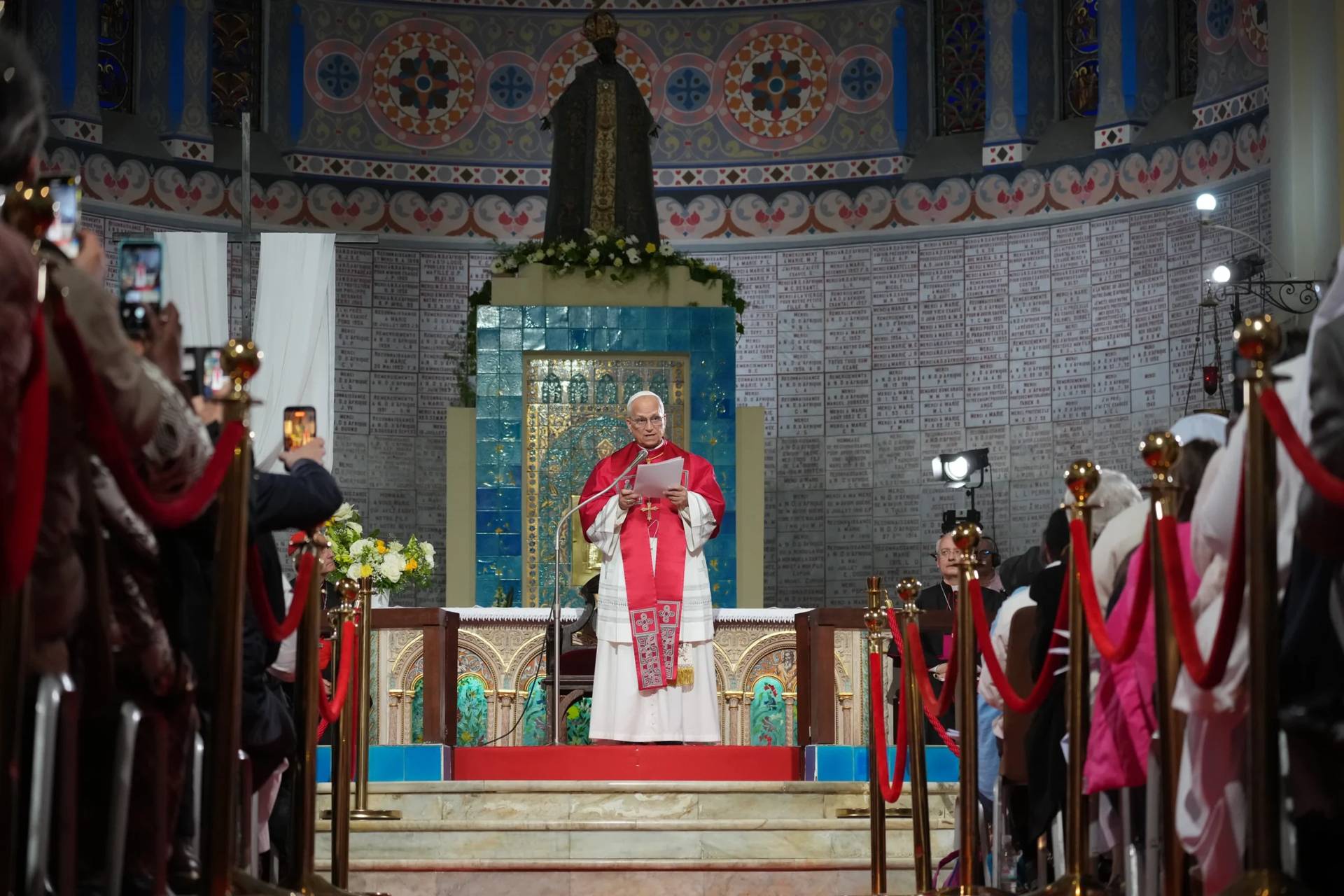
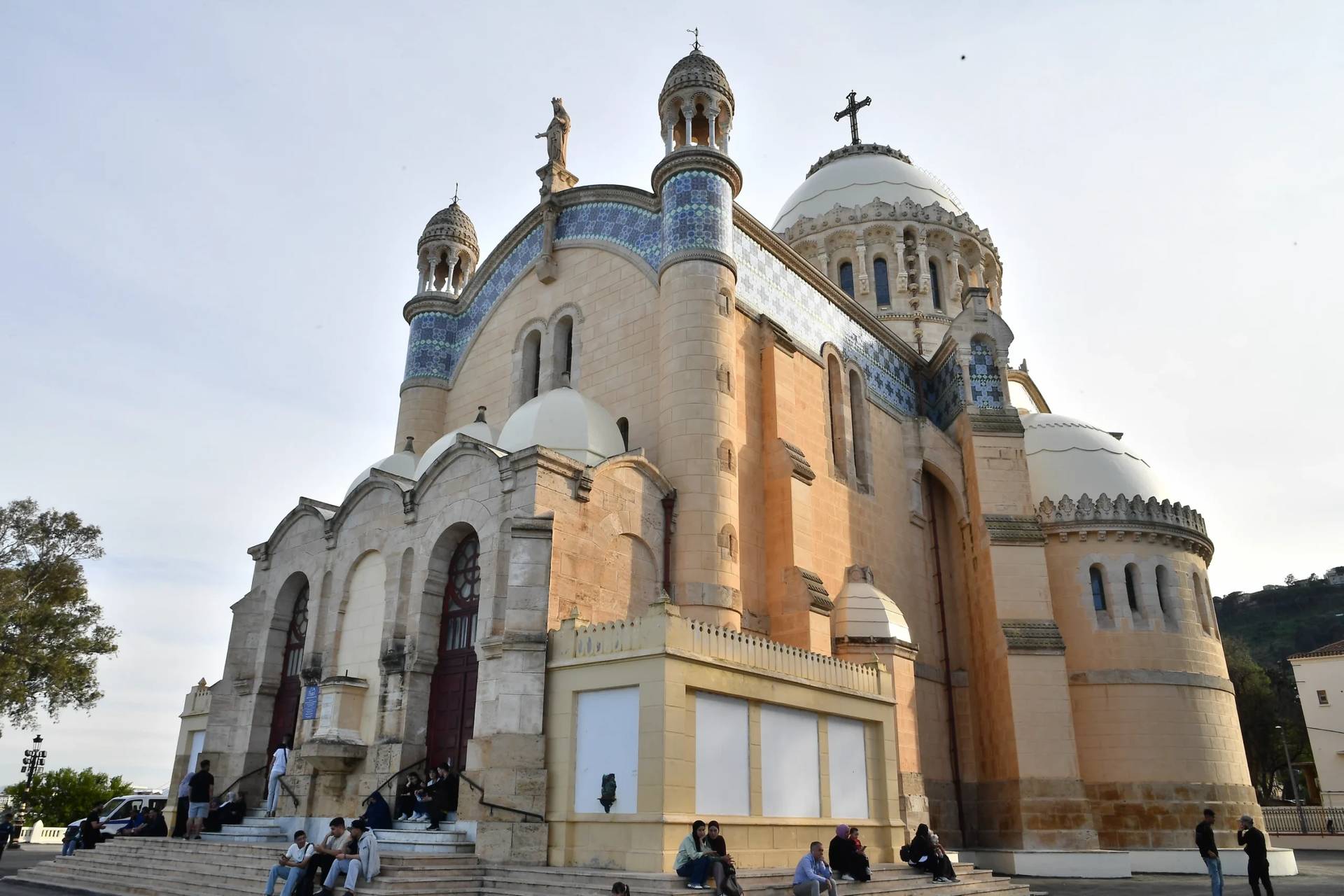
Pope Leo closed his first day by meeting with the Catholic community of Algeria in Algiers’ Basilica of Our Lady of Africa, invoking the church’s witness of faith in the land, including the 19 religious men and women who were killed during the country’s civil war.
As a missionary in a troubled Peru who faced the same choice, Leo applauded their decision to stay and “to stand alongside this people in its joys and sorrows.”
“Their blood is a living seed that never ceases to bear fruit,” Leo said.
He listened to testimonies and focused on the themes of prayer, charity and unity, saying dialogue with God is “indispensable,” not only for the church, but for each person individually.
“Prayer unites, humanizes, strengthens and purifies the heart,” he said, also underlining the importance of charity, saying “mercy and service are about more than just providing material help to the weakest among us.”
Acts of charity, he said, are opportunities “for grace, enabling everyone involved to grow and be enriched.”
As such, they create “bonds of trust, friendship and fellowship. Such an environment is life-giving and healing, and it is no surprise that those who suffer can find within it the resources they need to improve their health, while at the same time bringing joy to others,” he said.
“It is precisely love for their brothers and sisters that inspired the witness of the martyrs we have commemorated,” he said, saying also that they rejected hatred and violence and remained faithful to charity, “even to the point of sacrificing themselves.”
Leo also reflected on the value of peace and harmony, calling them “fundamental characteristics of the Christian community from its very beginnings in accordance with Jesus’ own desire, who said: ‘By this everyone will know that you are my disciples, if you have love for one another.’”
“This very basilica is a sign of our desire for peace and unity,” he said. “It symbolizes a Church of living stones,” Leo said, “where communion between Christians and Muslims takes shape under the mantle of Our Lady of Africa.”
He closed his address insisting that “faith does not isolate, but opens us up; it unites us, but does not create confusion; it brings us closer, without homogenizing, and fosters true fraternity.”
Pope Leo then had a private meeting with the bishops of Algeria as the last event on his busy first day.
Follow Elise Ann Allen on X: @eliseannallen