Minority communities in Bangladesh had a very hard time during the first half of the year, a new report shows.
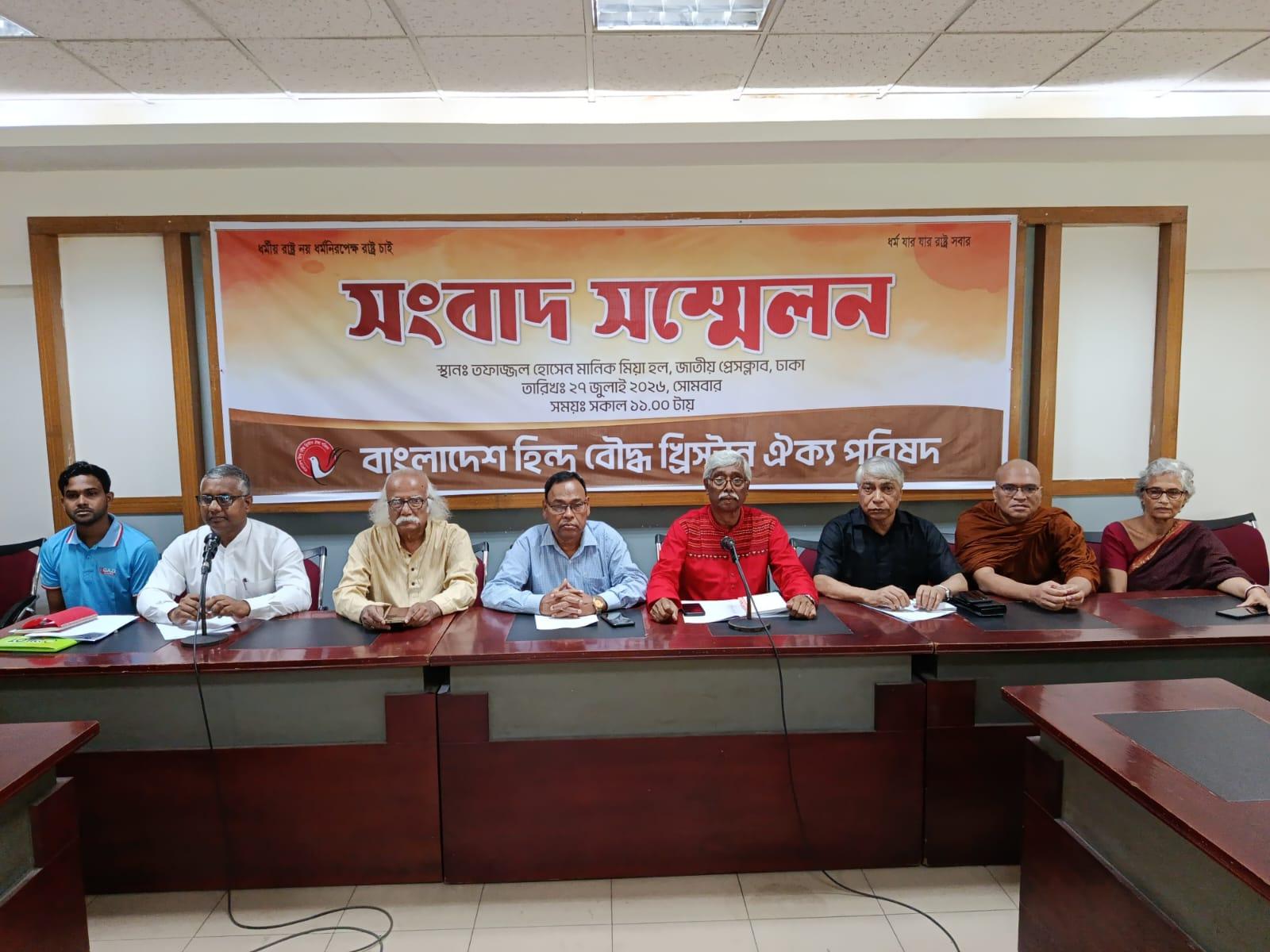
The Bangladesh Hindu-Buddhist Christian Unity Council presented a detailed report on the condition of religious minorities the Muslim-majority South Asian country last week in the capital, Dhaka.
The takeaway appeared to be that violence has transformed from mass attacks to targeted violence, a matter of serious concern for the security of the minority community.
The religious minorities of Bangladesh have been demanding a Minority Protection Act for a long time, but no government has acted on the issue yet.
Nirmol Rozario, President of the Bangladesh Christian Association and one of the leaders of the Hindu Buddhist Christian Unity Council, believes the persecution of minorities will not stop until the politics of religion is stopped in Bangladesh.
“If Bangladesh were completely secular and a liberal democratic country,” Rozario said, “then we would not need this Minority Protection Act, but since we have communal people in our country, we need protection of minorities through law.”
Gruesome details in report
During a conference at the National Press Club on July 27, Council leaders said 257 incidents of communal violence have occurred across the country from January 1 to June 30, including 44 people killed in 40 separate incidents, while others tortured and raped, kidnapped, or extorted.
In addition, 10 people were kidnapped and 62 were attacked in places of worship.
The report detailed episodes of vandalism and attempted seizure of worship spaces, looting and arson on houses and businesses, and arrests on charges of blasphemy and allegations of torture perpetrated against those being held on blasphemy charges.
The report also presents a review of trends from 2024 to 2026, showing a significant increase in the incidents of murder, violence against women, property seizure, and harassment of various kinds, despite a decrease in the total number of incidents over the last 18 months.
The level of violence in 2024 was more than four times higher than in 2025, a fact owing largely to the turmoil in which Bangladesh found itself in the wake of a violent suppression of student-led protests that eventually toppled the government.
RELATED: Bangladesh bishops’ development secretary cautious amid presidential resignation turmoil
The country has struggled to gain a stable democratic foothold while religious and ethnic minorities have continued to pay a steep price, even as Christians in the country – a tiny minority – continue to play an outsize role in society.
RELATED: Caritas, Catholic youth lead flood emergency response in Bangladesh
Christians of all denominations, and especially Catholics, provide education, healthcare, and emergency relief, even though Christians account for only 500 thousand–1 million people in the country of 187 million, and Catholics account for roughly 400 thousand of those.
Call for action
During the first six months of 2026, about 1 in every 10 incidents was an attack on a religious establishment.
The minority leaders are demanding that appropriate initiatives be taken immediately to ensure the overall security of the religious-ethnic minorities and indigenous communities and are renewing calls for a zero-tolerance policy toward communal violence, even as they work for stable and fully democratic institutions and political culture.
“It has been our long-standing demand to form a non-communal, secular, non-discriminatory and humane state,” said Manindra Kumar Nath, the General Secretary of the Bangladesh Hindu Buddhist Christian Unity Council.
Nath said the Council’s goal is “to protect the overall interests and rights of the religious-ethnic minorities, and indigenous communities and to create an inclusive society, participatory state system and democratic transition.”