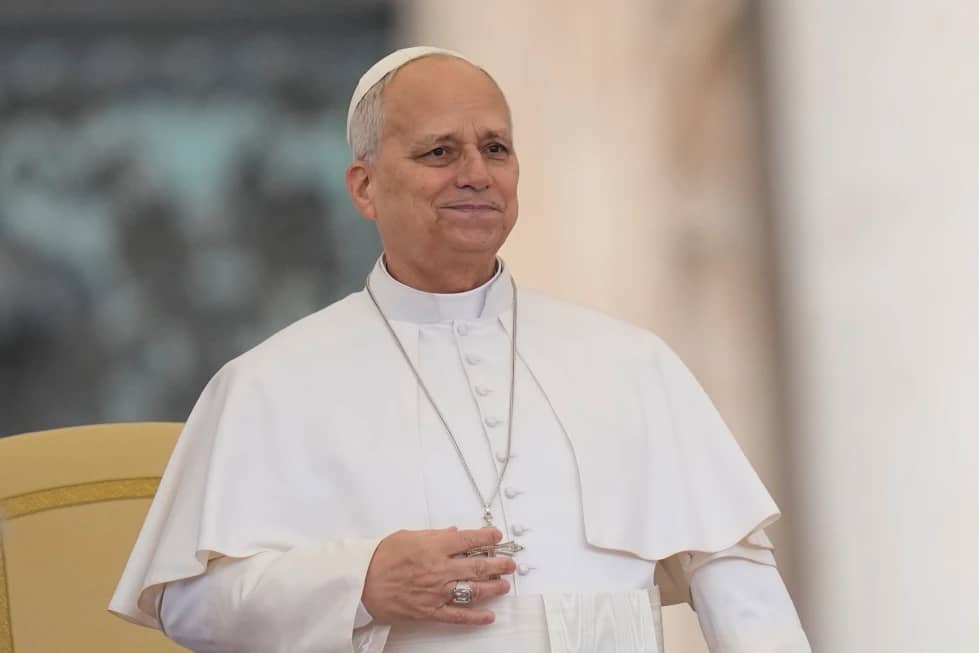
With Pope Leo XIV scheduled to be in the west-African nation of Cameroon in April, part of a four-leg tour of the continent, expectation is high for the visit.
Pope Leo XIV is scheduled to visit key Cameroonian locations including the capital city, Yaoundé, and Douala, the largest city and principal port. The pontiff is also to visit Bamenda, the chief city of Cameroon’s North-West Region, where a Anglophone separatist insurgency has been underway for a decade.
Cameroon is a country of some 30 million people, roughly 60 percent Christian (a slight majority of whom are Catholic) and 30 percent Muslim, with a rich diversity of indigenous religious practices represented among the small minorities who are neither Christian nor Muslim.
Both French and English are official languages, with roughly 70 percent of Cameroonians speaking French and 30 percent speaking English primarily.
The so-called Anglophone crisis turned violent in 2017, when Anglophone separatists in the majority-English-speaking North-West and South-West Regions undertook a guerilla campaign in response to suppression of protests.
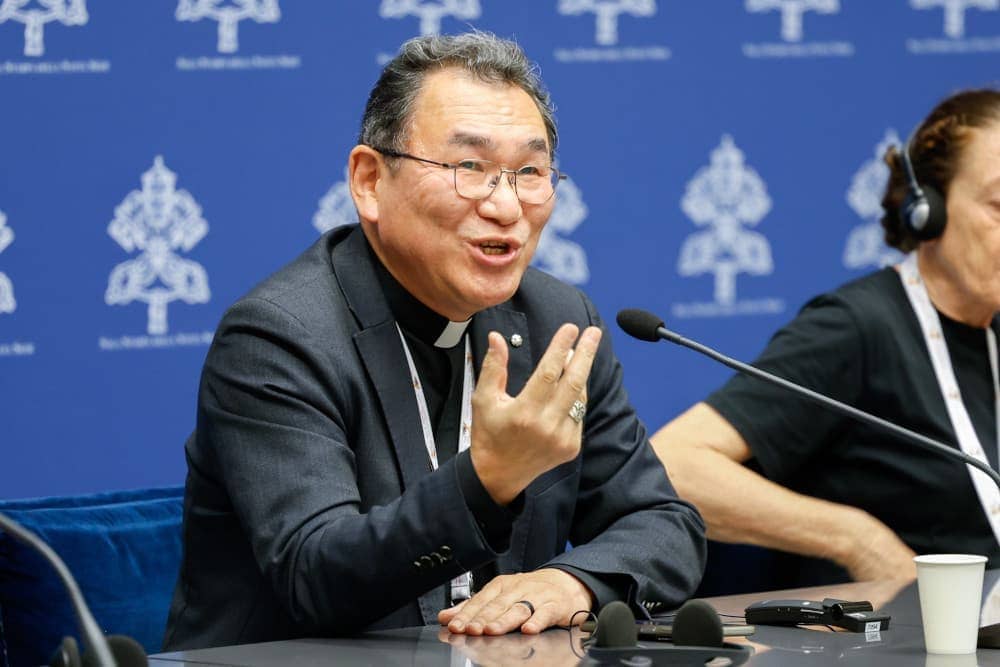
Bishop George Nkuo of Kumbo Diocese in Cameroon’s war-ravaged North-West Region has offered a stark assessment of Cameroon’s separatist conflict, saying it has evolved from a political war into a brutal fight for “survival and personal gain.”
Now in its 10th year, the conflict has led to the deaths of at least 6500 people and the displacement of hundreds of thousands of civilians.
In an exclusive interview with Crux Now, Bishop Nkuo says both separatists and military elements now exploit the chaos for their own benefit, terrorizing the very communities they once claimed to protect, with ordinary people as the real victims.
Yet, amid this profound trauma, Bishop Nkuo testifies that his diocese is “waxing strong,” with a vibrant and resilient faith that endures.
The Church’s role, he said is not just to preach but to provide a concrete “presence” of hope, offering counseling and navigating the polarization by meeting with all parties—fighters and soldiers alike—and reminding them they are all “brothers and sisters.”
Refusing to apportion blame, the bishop’s focus remains on dialogue and reconciliation, seeking to heal a community where even neighbors have become sources of fear.
Below, you will find Crux Now‘s interview with Bishop Nkuo, edited for length and clarity.
CruxNow: What is the health of the diocese of Kumbo today?
Bishop George Nkuo: Kumbo Diocese is waxing strong. I am just coming now from a pastoral visit where I went to one of the parishes. The turnout, the response, the reactions of the people shows that their faith is solid. Although they have been living through a very difficult time, I am absolutely amazed at how vibrant and how resilient the people of Kumbo are. They are full of life, despite everything.
Kumbo is a flashpoint of the separatist violence. Has it affected the faith of the people in any way?
Of course! The people’s faith has been shaken, especially when some tragic events occur. The people start asking, “Is God really alive?” If you are living with a neighbor and very soon you discover that it was your neighbor who is pointing you out to the boys [separatists fighters] to kidnap you, to harass you, it challenges the faith. That is why the church has always been there at those moments to reassure them, to give them hope. Yes, it’s not a perfect situation, but we are there because Christ died on the cross and he resurrected.
Is that the message you usually put out there to people who are affected by this crisis-the message of resurrection?
It’s not just to have a message. It’s a message plus a presence: a presence that reassures the people; that convinces the people that their faith is not something that is not real. So it’s a message, but also a concrete presence of assurance, of giving them hope, of accompanying them through those moments. That is why in our diocese we have had some counseling sessions where people who have been traumatized, who have gone through very difficult moments, are accompanied. So we want to do something concrete to reassure them, to help them to come to terms with what they have lived through.
As a pastor, as a bishop, how do you manage to speak the truth in a very polarized society without giving the appearance of supporting one side or the other?
It’s quite simple, really. The truth is that everyone involved in this conflict—on every side—is my people, my Christians. I see them as a family, and in a family, you don’t single out one child to shame them in front of the others. For instance, when I meet one of the young fighters, I don’t condemn him outright. I’ll simply say, ‘You know, killing is not the way.’ He might look at me with suspicion, but then I explain why it’s not the way, sometimes, that message gets through; other times, it doesn’t.
I take the same approach with the military, reminding them that this region isn’t just populated by enemies. It’s filled with ordinary people—brothers and sisters who have flesh and blood, just like them. So don’t treat everybody as if it’s a criminal. So we meet them all, and we try to make them feel that we are all brothers and sisters, and if there is a problem, we should not rudely handle it as if we are treating people from the moon. So that’s the way we do it.
Who is more responsible for the killings in your area? Is it the separatists or the military?
It’s not my place to apportion blame to anybody. That’s not my story to tell. My focus is on reaching out to all key stakeholders, reminding them that the only path forward is through dialogue and reconciliation. While I avoid pointing fingers, when terrible things happen, we must push for concrete action to resolve the issue and begin to heal the pain and confusion this crisis has caused. It’s a deeply complex situation, and you simply can’t lay the responsibility at the feet of one person or one group.
Beyond the military and the separatists, it’s worth asking if other people are involved in this crisis?
I believe we have moved far beyond purely political goals. The conflict has evolved; it now has clear economic drivers. People have turned this into a means of survival by taking advantage of the situation. I can say this about both sides. If the separatists were truly fighting for the people, they would not be the same ones kidnapping, beating, and traumatizing their own communities. Yet, that is happening.
At the same time, the military often fails to act with the restraint it should. Perhaps some are tired or disgruntled, but they act on impulse, and the consequences are severe. So let me be categorical: where I live, this is no longer a war for liberation. It is a fight for survival and personal gain, where the war is simply an excuse to terrorize. The real victims are the common people. I can say this anywhere because I live with them.
I see what happens on the roads, I see the people brought to camps, and I know this is not for a political cause—it is for survival.
You speak very boldly about this crisis: Do you sometimes feel threatened or feel unsafe?
I have reason to feel unsafe, as there have been ongoing threats. But I continue to preach the Good News, just as the apostles did—though I must admit, I don’t wish to be killed as a martyr. I want to be clear that I’m not targeting any particular person. I’m simply preaching the gospel.
While I don’t live in fear as such, I sincerely hope I’m not stepping on anyone’s toes. I preach with all my heart and with all the grace I’ve received. If at the end of the day, some people think I shouldn’t live, well, God is there to take control of my life.