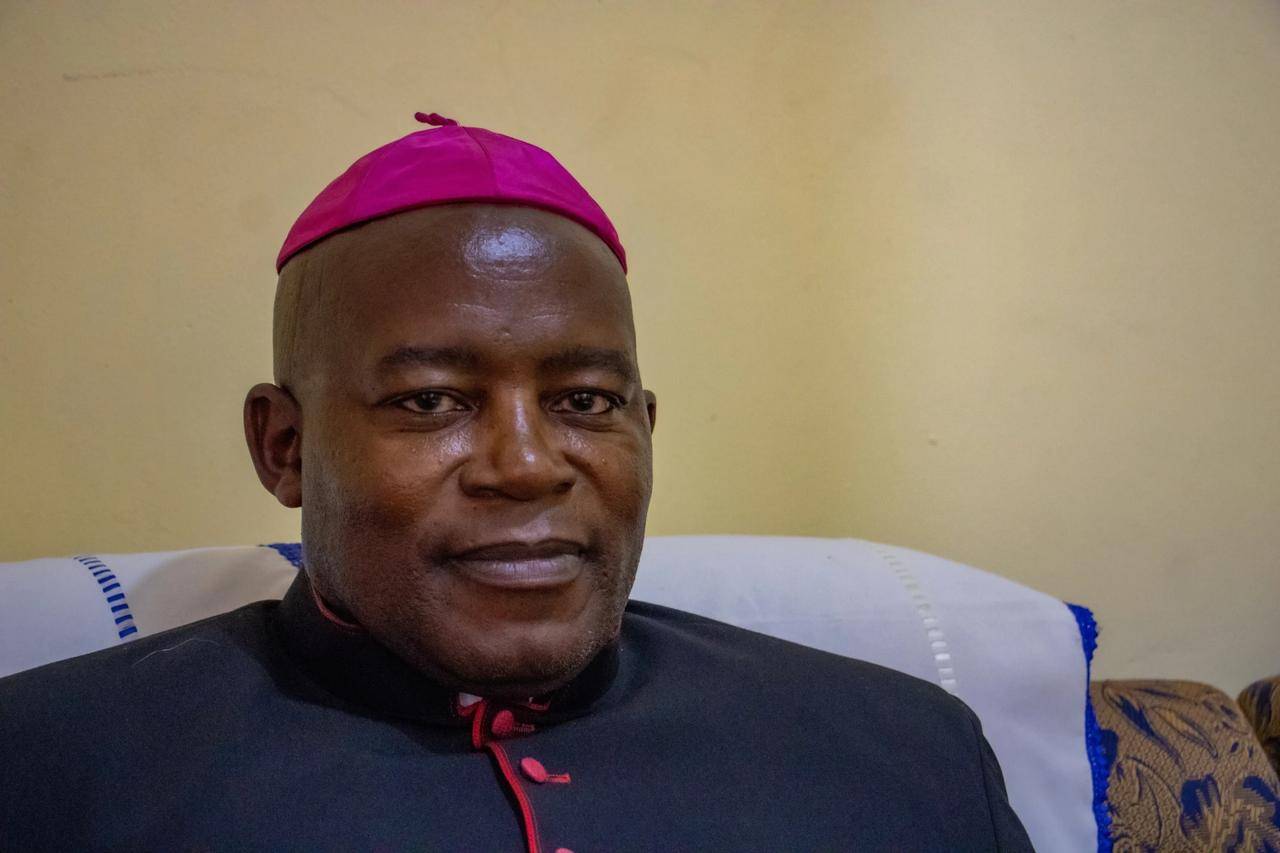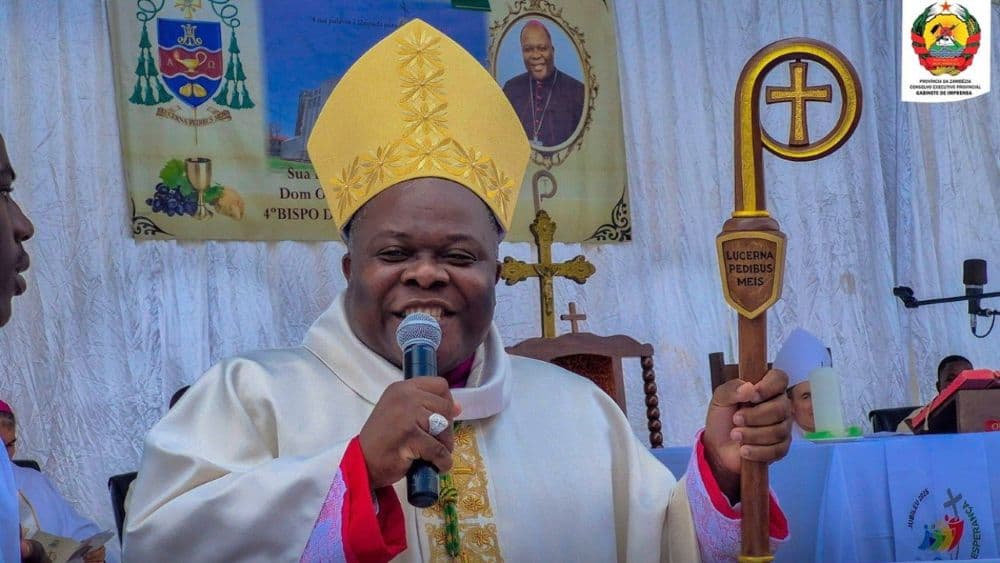
Catholic bishops in Africa say they are shocked at the news of the violent killing of Bishop Osório Afonso, the bishop of Mozambique’s Diocese of Quelimane and Apostolic Administrator of the Archdiocese of Beira.
He was shot dead in the early hours of Saturday. Information provided by the country’s National Criminal Investigation Service suggests that the attackers scaled the walls of the bishop’s residence, disabled the security system and fired shots using an AK-M assault rifle.
The killing was confirmed by the Archdiocese of Beira, which said in a statement that it was “with deep sorrow and consternation” that it was announcing “the sudden passing of His Excellency Bishop Osório Citora Afonso, IMC, Bishop of Quelimane, to the eternal Father, which occurred on the morning of 6 June 2026 at the Bishop’s Residence.”
RELATED: Murder of Mozambique bishop highlights Christian persecution as Pope Leo visits Spain
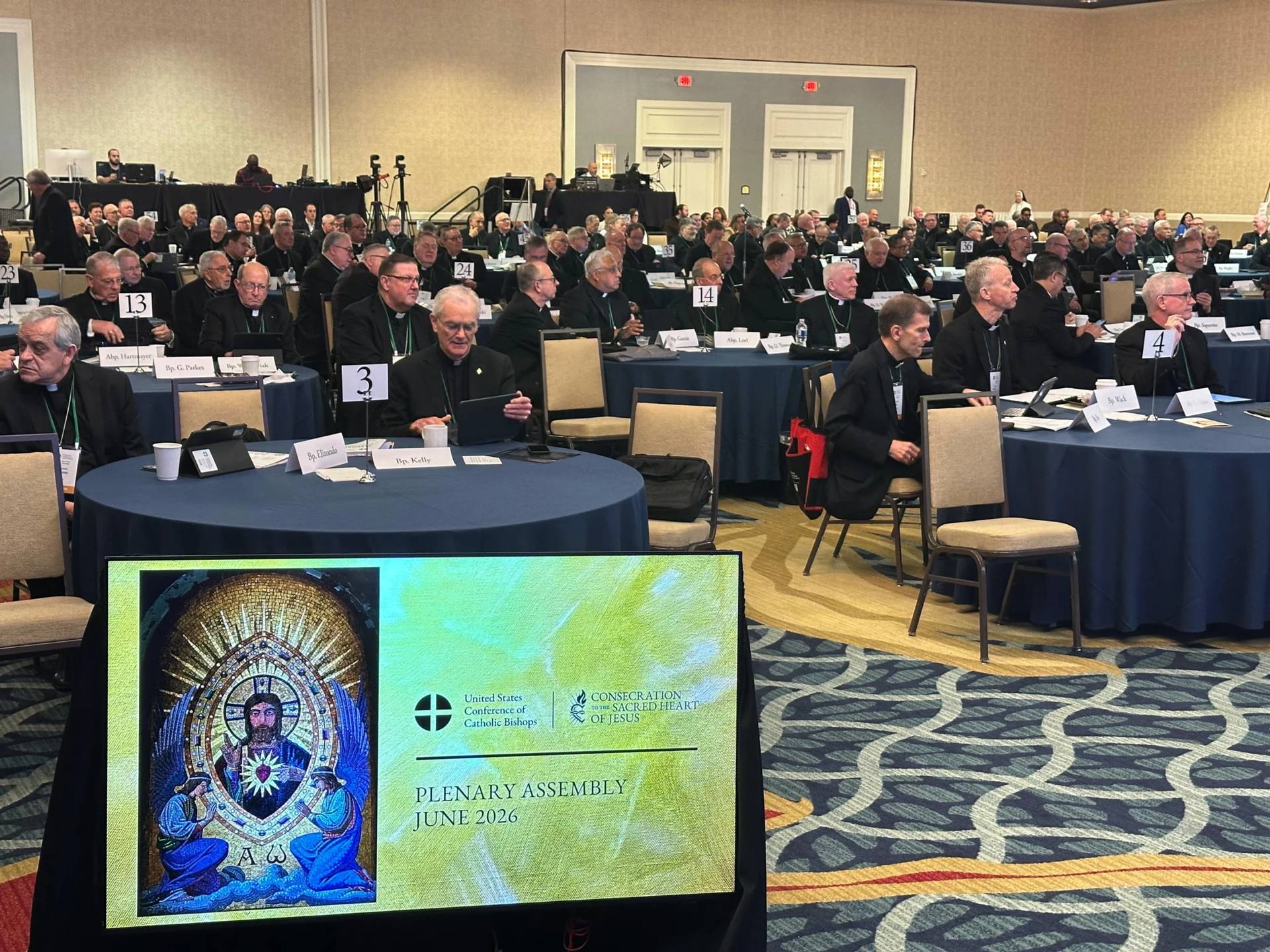
Archbishop Inácio Saúre of Nampula, the president of the bishops’ conference of Mozambique said in a statement that Citora’s body was found “lifeless and in strange circumstances that have yet to be clarified.”
The archbishop appealed for “the serenity of faith and fraternal solidarity” from all in the face of this “sad event.”
Mozambique’s president, Daniel Chapo, also issued a statement expressing “deep sorrow and consternation” at the news of the bishop’s murder.
In a statement June 6, Catholic Bishops in Africa under the umbrella name, Episcopal Conference of Africa and Madagascar (SECAM) said they had received the news of the violent killing of Osório Afonso “with profound shock, sorrow, and indignation.”
“This heinous act, perpetrated against a shepherd of God’s people, constitutes not only an attack on the life and dignity of a devoted servant of the Gospel but also an assault on the values of peace, justice, human dignity, and religious freedom that are essential for the flourishing of every society,” SECAM said in the statement signed by its president, Cardinal Fridolin Ambongo of the DRC.
“We strongly and unequivocally condemn this barbaric crime. No religious leader, regardless of faith or denomination, should ever become the target of violence,” the statement reads. “Those who dedicate their lives to serving God and promoting reconciliation, solidarity, education, charity, and the common good deserve protection and respect, not persecution and death.”
The Congolese cardinal urged the Government of the Republic of Mozambique and all competent authorities to undertake “an immediate, thorough, transparent, and independent investigation into this crime. “
“We urge that all those responsible, whether direct perpetrators, accomplices, or masterminds, be identified, prosecuted, and brought to justice without delay,” he said, noting that the people of Mozambique, the Catholic Church, and the international community deserve the truth.
“We further call upon the Mozambican authorities to strengthen measures guaranteeing the protection and security of religious leaders, places of worship, and all persons engaged in pastoral and humanitarian service,”Ambongo said, explaining that religious freedom is a fundamental human right and a cornerstone of every democratic and peaceful society.
He added the State bears a solemn responsibility to ensure that all citizens can practice their faith freely and safely, without fear of intimidation, violence, or persecution.
“At this painful moment, we express our deepest condolences and spiritual closeness to the Catholic Bishops’ Conference of Mozambique, the clergy, religious, and lay faithful of the Diocese of Quelimane and Archdiocese of Beira the members of Bishop Osório Afonso’s religious congregation, his biological family, relatives, and loved ones and to all those whose lives were touched by his pastoral ministry and witness,” the SECAM statement reads.
“We join them in mourning the loss of a faithful pastor whose life was dedicated to the service of Christ and His Church. We pray that the Lord of Life may grant him eternal rest, reward his faithful ministry, and comfort all who grieve his passing,” it continues. “May this tragic event become a renewed call for justice, peace, respect for human life, and the protection of religious freedom throughout Mozambique and across our continent.”
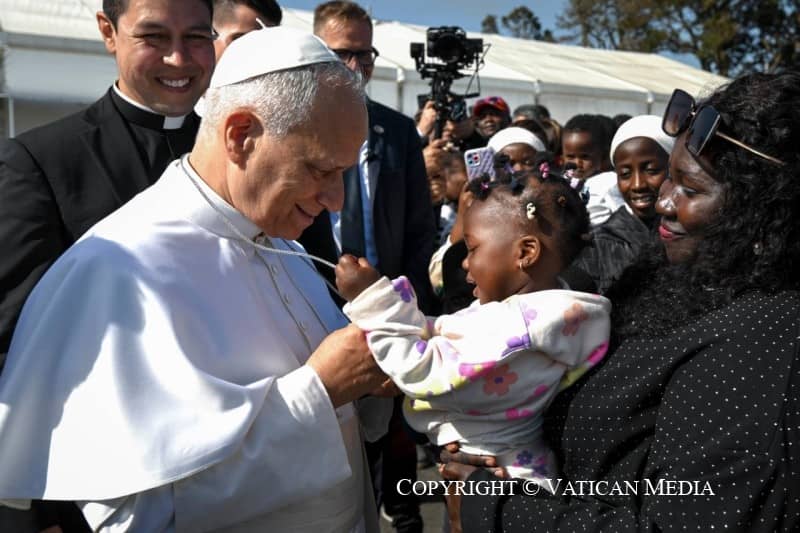
The Holy See Press Office’s Telegram channel said in a statement that Pope Leo XIV “learned with sorrow of the serious act of violence” committed against the Mozambiquan Bishop.
The statement said further that the pope “joins in prayer with the people of the dioceses and of Mozambique in this time of bewilderment, asking the Lord to grant them consolation, to keep every man and woman in His love, and to stay the hand of the violent.”
In August 2025, Osório Citora assumed leadership of the Diocese of Quelimane, filling a vacancy that had existed since the departure of Bishop Hilário da Cruz Massinga (now Bishop of Inhambane) in 2023. In conjunction with this new role, Osório Citora was also appointed Apostolic Administrator of the Archdiocese of Beira.
Prior to these appointments, he maintained close ties with the Vatican, having served as an official at the Dicastery for Evangelization—specifically within the Section for First Evangelization and the New Particular Churches—from 2017 to 2023.
Born on May 6, 1972, in Ribaue, Nampula, Mozambique, Osório Citora pursued his early education at the Christ the King Seminary in Matola. He went on to study philosophy at the St. Augustine Philosophical Seminary of Matola and theology at the Institut Saint-Eugène de Mazenod in Kinshasa, Democratic Republic of the Congo (DRC). He professed his solemn vows on June 17, 2001, at the Consolata Missionary Institute in Kinshasa and was ordained a priest for the Consolata Missionaries on November 3, 2002.
Following his ordination, Osório Citora began his ministry in Kinshasa, serving as parish vicar and bursar of St. Hilaire parish (2002–2005) and as a regional counsellor for the DRC (2005–2006). He subsequently advanced his academic career, obtaining a licentiate in Sacred Scripture from the Pontifical Biblical Institute in Rome (2006–2010). During this period, he also studied at the Hebrew University of Jerusalem (2008–2009) and L’École Biblique et Archéologique of Jerusalem (2010–2011).
Over the course of his priesthood, Osório Citora held numerous administrative and formative roles across Europe and Africa. His service included: Membership on the Board of the General House in Rome (2008–2010); serving as a local collaborator at the apostolic nunciature in Kinshasa (2011–2013); and acting as formator and bursar at the Theological Seminary of Kinshasa (2011–2013).
Later, while serving as regional counsellor for Italy – Treviso, Veneto (2016–2017), he held the positions of superior of the Missionary Centre of the Diocese of Vittorio Veneto and superior of Casa Mialico in Treviso (2014–2016). He also served as a formator at the International Theological Seminary of Bravetta in Rome (2016–2017) before joining the Dicastery for Evangelization in 2017.
Osório Citora is also widely recognized for his dedication to the causes of sainthood, particularly regarding the “Martyrs of Guiúa.” He has championed the canonization of these lay Mozambican catechists and their families who were killed on March 22, 1992, during a persecution of the Church while participating in a formation course at the Guiúa Catechetical Center, which was managed by the Consolata Missionaries.