TENERIFE – Pope Leo XIV issued a forceful condemnation of human trafficking and a call to repent Friday, saying those who exploit and profit from the desperation of others will have to answer to God for their actions.
Speaking on his final day in Spain, to those engaged in integration efforts for migrants, the pope said he had a clear message for human traffickers: “Stop. Repent.”
The line drew intense applause from his audience.
“Repent while there is still time,” the pontiff said, “for God’s mercy can reach even the most hardened sinner, but it enters only through the narrow gate of truth, justice and conversion.”
Leo said his stark admonition was for all “who take advantage of people’s desperation, to those who organize death routes, traffic in human beings, withhold documents, exploit workers, threaten women, deceive families and turn the suffering of others into a business.”
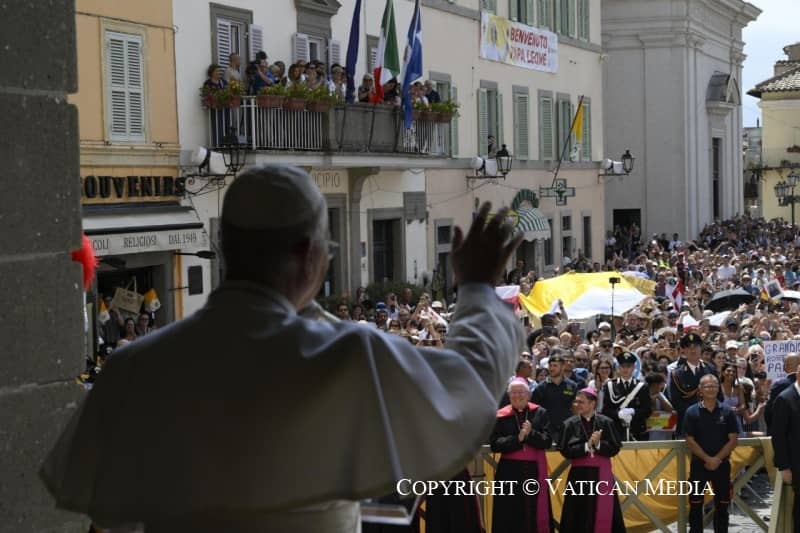
Speaking June 12 from the Plaza del Cristo de La Laguna on the island of Tenerife, Leo condemned the corruption driving human trafficking rings, saying, “The money wrested from the vulnerability of the poor will bring neither peace, nor honor, nor a future.”
“For every life lost, every family deceived, every body subjugated, every woman threatened, every worker exploited, you will have to appear before divine justice,” he said.
He issued a clarion call for traffickers and those in organized crime rings exploiting migrants to “break those chains and free those you hold in bondage” and to “return what has been taken and make amends as much as you can.”
Pope Leo XIV issued his warning of impending divine justice on his last day in Spain, having traveled to Madrid, Barcelona, and Las Palmas in the Canary Islands before visiting Tenerife, where he met with migrants and spoke to organizations engage in their integration.
The Canary Islands are a popular entry point for migrants smuggled into Europe from West Africa.
In 2020, the crisis had become so dire that the port of Arguineguín in Las Palmas briefly garnered the “dock of shame” due to the staggering number of incoming migrants, and the treatment they received upon arrival, until Spain’s ombudsman ordered the government to dismantle a makeshift camp set up there and relocate migrants.
However, the flow of migrants has slowed in recent years. Peaking at nearly 47,000 in 2024, new migrant arrivals have fallen to just over 2,000 in the beginning of 2026.
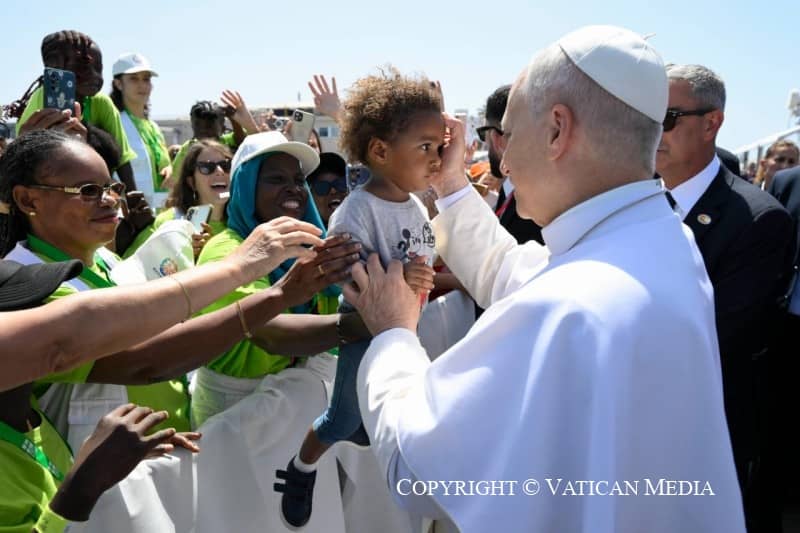
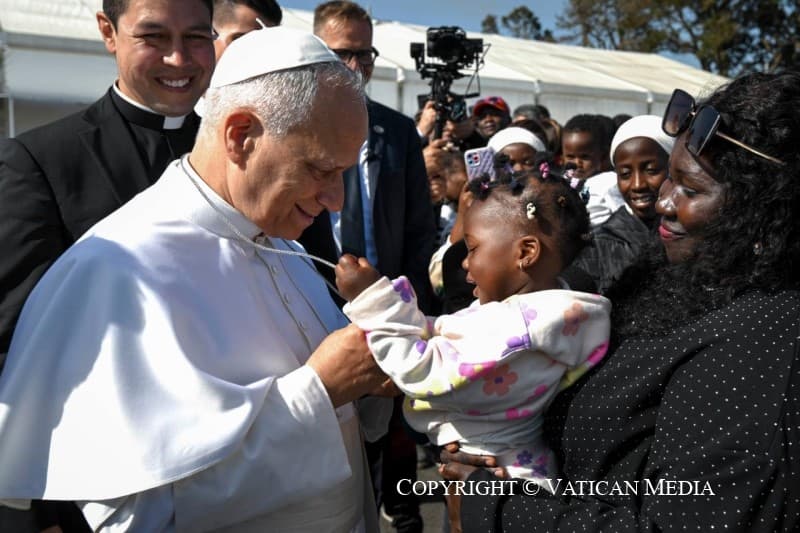
Leo landed in Tenerife Friday morning, and went straight to the “Las Raíces Center” of welcome center, where he met with migrants, heard various testimonies from migrants recounting the difficulties of their journeys, and their gratitude to him for coming.
One young man, Aliu Ceesay, 16, arrived in the Canary Islands a month ago, traveling from Gambia by boat in search of work to help his family.
Speaking to the press about the pope’s visit, he said, “I have been following him on the internet and wanted to see him. He is so kind, so good. He doesn’t care if we are black or white, Muslim or Christian. He wants to help us.”
During his visit to the “Las Raíces Center” in Tenerife, Leo offered a greeting to migrants in French and English, which was met with loud applause, before delivering his speech in French.
So far, the pope has spoken Spanish, Catalan, and French during his visit to Spain, using the latter specifically for his address to migrants Friday morning.
One migrant who delivered a testimony to the pope at the center said she had one request from countries that receive them: “Dignity.”
“We ask that borders not become walls of indifference. That we not be seen merely as migrants, numbers, or documents, but as people with histories, dreams, families, and hope. Our humanity must always take precedence over any legal status,” she said, and thanked the church for treating them with respect and welcome.
In his address to the migrants and officials gathered for the occasion, including the Minister of Inclusion, Social Security and Migration, the pontiff stressed the importance of placing human dignity before anything else.
“No matter where we come from, God’s love knows no borders, makes no distinctions, is given to all and brings us together in unity,” he said.
Migration, he said, will play a significant role in shaping the future of the world, as it “can become an opportunity for encounter and mutual enrichment among peoples.”
He urged the Church and society to “help make this journey more humane for everyone by contributing in whatever way we can.”
In a separate meeting with organizations engaged in the integration and welcome of migrants, Leo heard several other testimonies and stressed the importance of integration efforts, saying, “they turn a face into a number, a story into a file and a difference into distance.”
Integration, he said, “does not mean erasing the history of those who arrive or demanding that they leave behind everything that is part of their memory.”
Neither does it mean creating “parallel worlds, closed off from one another, where people live side by side without truly encountering one another,” he said.
The process of integration entails a commitment from both sides, both those who migrate and the society that welcomes them, the pope said.
Leo urged host nations to welcome and care for migrants, and he urged migrants who come to a new country “to learn its language, to respect its laws, to get to know its customs, to participate in communal life and to offer your gifts with gratitude.”
Speaking directly to migrants, Pope Leo told them that despite their circumstances, “your life is not a waste; your suffering is not invisible; your dignity has not been washed away in the waters you have crossed.”
What migrants need from society, he said, is “a concrete possibility to start over, to learn, work, serve, participate and not to remain forever trapped in the role of victims.”
Christians have a special role to play in this regard, Pope Leo said, saying the Christian conscience “cannot remain indifferent in the face of these graveyards of the sea, to the victims of shipwrecks and the lack of aid.”
“Every life lost on these routes is a failure for the human family,” he said.
He condemned the “silent shipwreck” that can happen after arriving, of “being left alone in a city, without a voice, without ties, work or a sense of security, and exposed to those who take advantage of vulnerability.”
“Integration means preventing that second shipwreck,” and means helping those who migrant to “get back on their feet” and offer a real and valuable contribution to society, he said.
“Fear, indifference and the violence of those who trade in human life must not have the final word,” Leo said.
“That belongs to Christ, who identifies with the stranger, touches the wounds of humanity and calls us to recognize him in every brother and sister who needs to be welcomed, protected, supported and integrated,” he said.
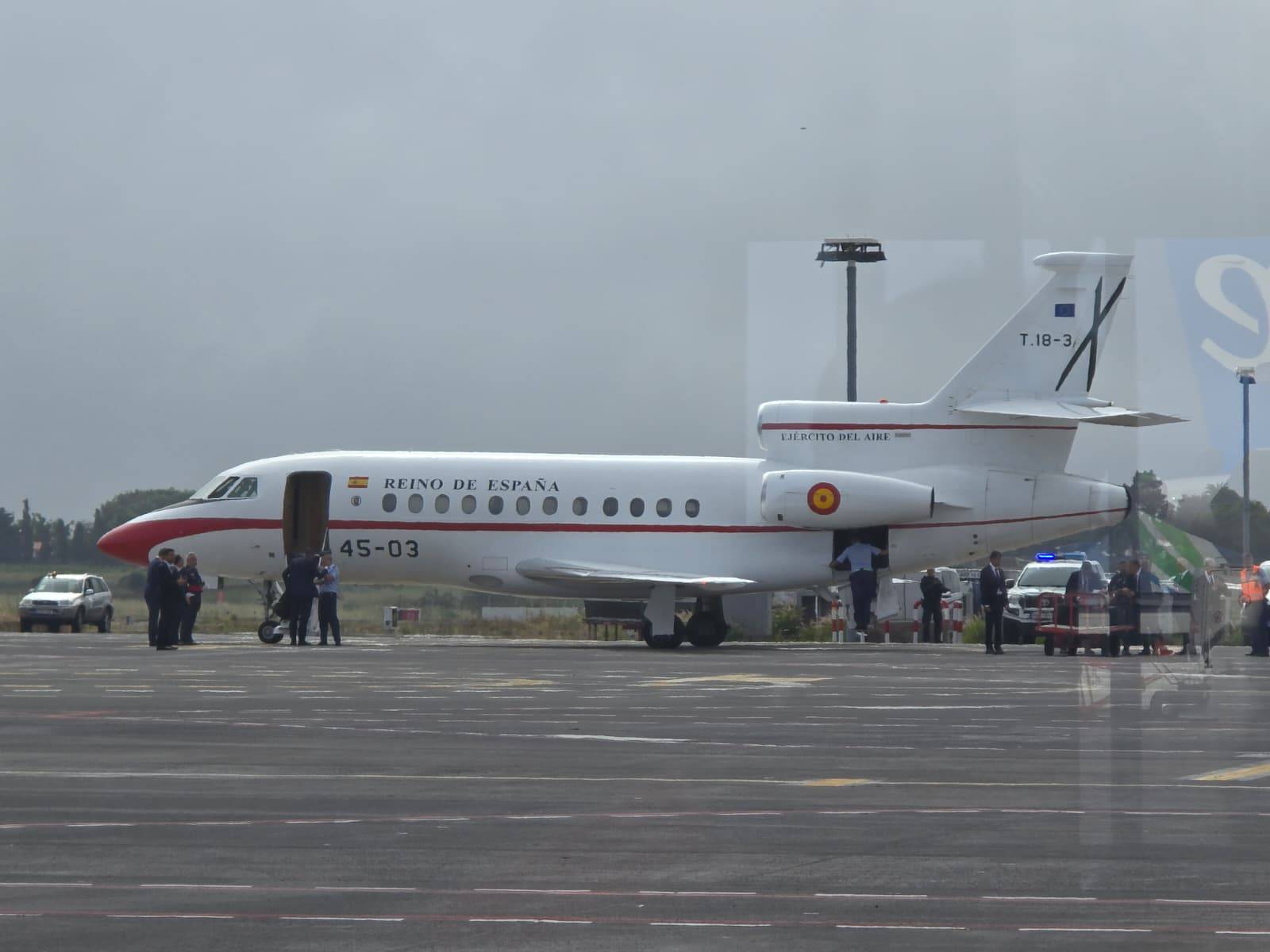
Leo’s last public event in Spain will be a Mass held at the port of Santa Cruz de Tenerife before boarding his return flight to Rome.
Follow Elise Ann Allen on X: @eliseannallen