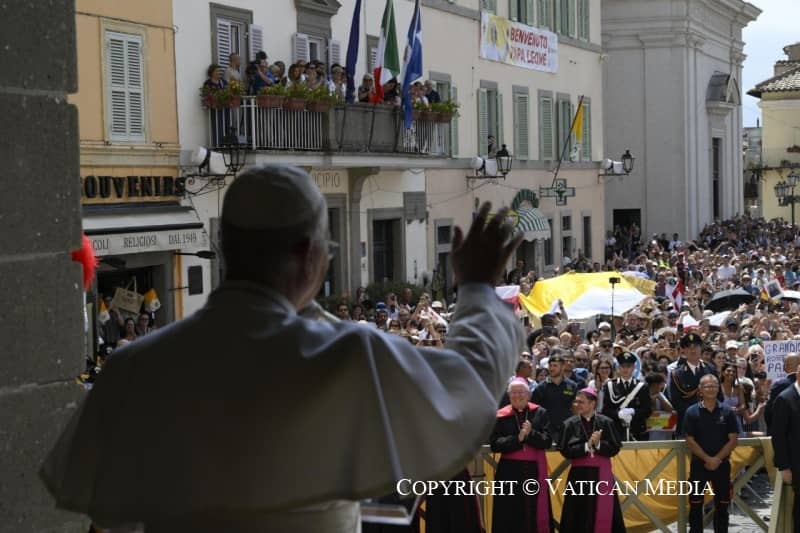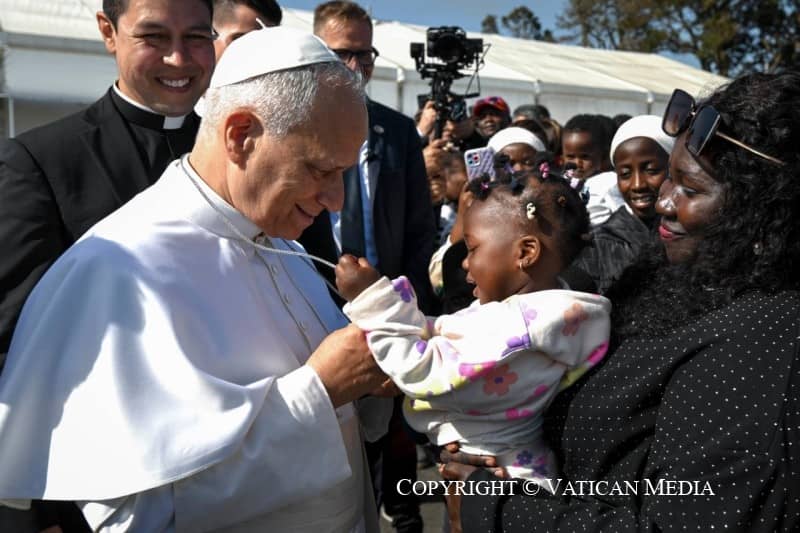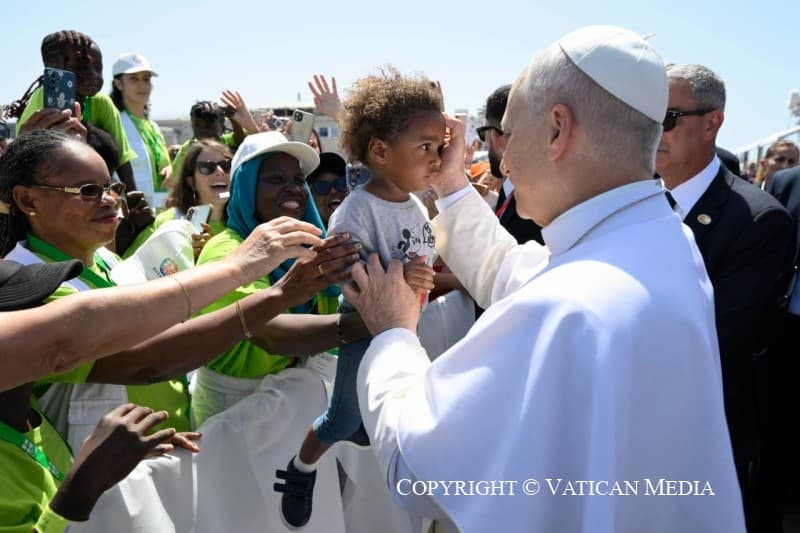
GRAND CANARY – Pope Leo began the final leg of his Spanish tour Thursday with a visit to the Canary Islands – a papal first – hearing testimony of the tragedies migrants endure.
“We cannot grow accustomed to counting the dead,” Leo said, “Human dignity has no passport and does not lose its value when crossing a border,” the pope said in a forceful speech after arriving Grand Canary in the Canary Islands June 11.
At a meeting with organizations engaged in the welcome of migrants arriving to the islands, his first appointment after arriving, he issued a plea on behalf of migrants, voicing hope that history would “not accuse us of turning the pain of those who suffer into a common sight along our shores.”
“Today, here by the sea, every individual that arrives asks us what remains of our humanity,” he said, adding, “Sooner or later, it will be known whether we protected life or whether we yielded to indifference.”
The pontiff called for an end to indifference and urged Europe to take action during the event held at the former “dock of shame” – a name the port earned in 2020, owing to the atrociously filthy and dangerous conditions in which migrants lived when they came ashore during a peak in the wave of migration.
The the pope tossed a floral wreath into the water to honor those who have lost their lives at sea and blessed a wooden cross made with boards from a shipwreck.
There was an image of Our Lady of Carmel next to the cross, which the pontiff venerated.
Spain’s migration crisis
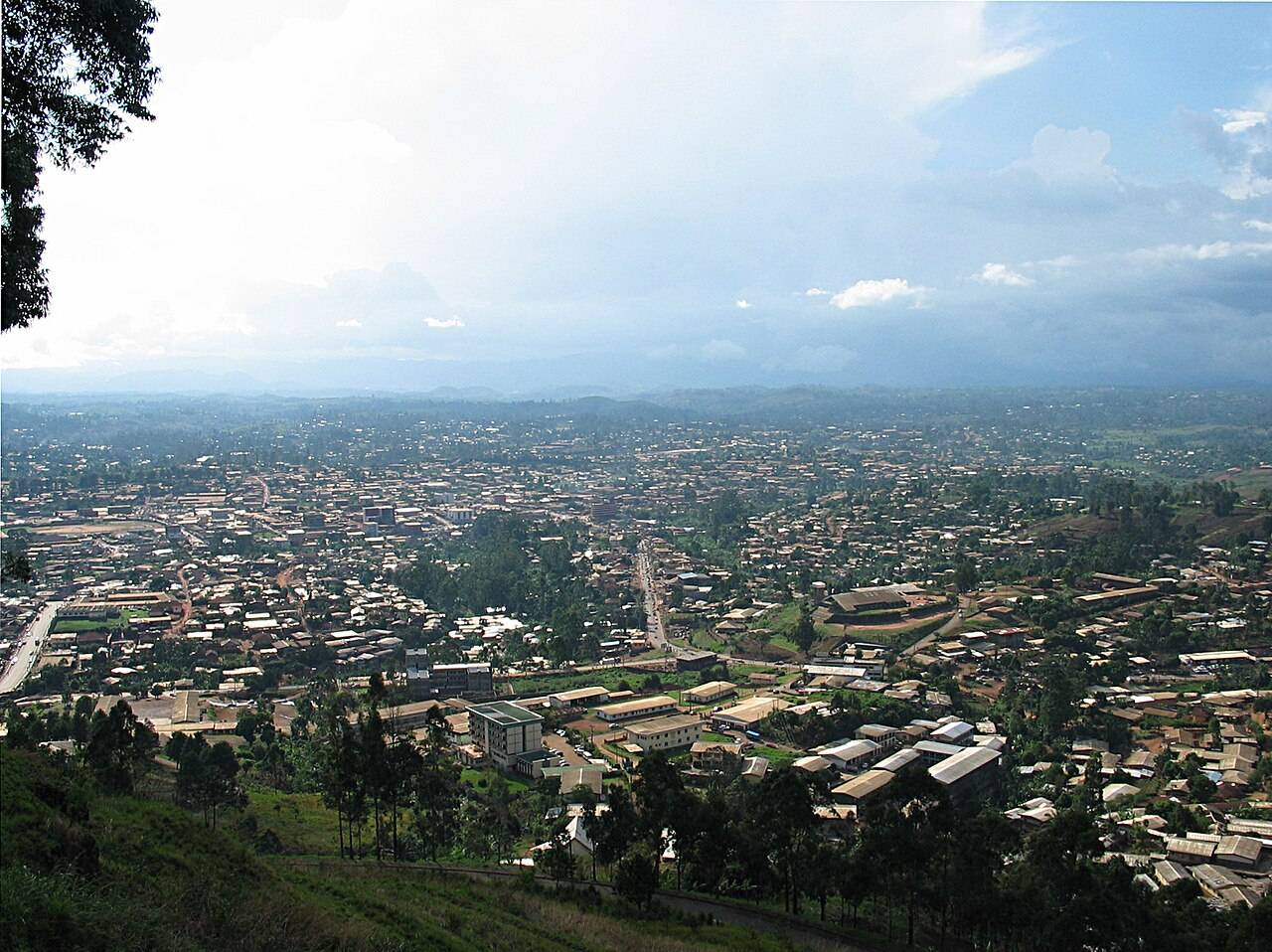
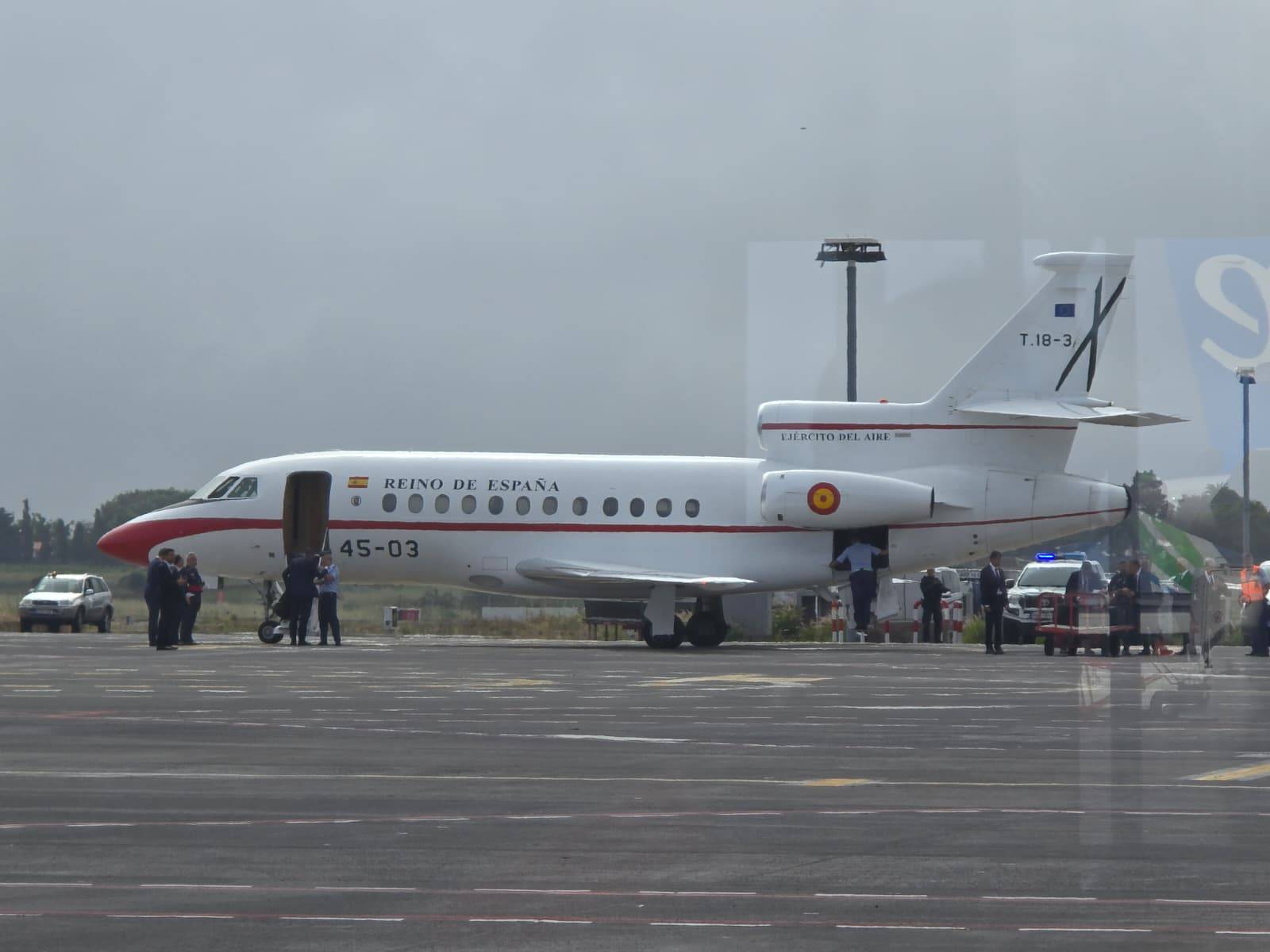
Pope Leo landed in Las Palmas Thursday, having made previous stops in Madrid and Barcelona during his ongoing tour of Spain. He will also meet with bishops and religious serving in the Canaries and celebrate Mass before closing out the day.
Immediately after landing, he traveled to the Port of Arguineguín, which in 2020, at the peak of the Canary Islands’ migrant crisis, became known as the “dock of shame” due to the staggering number of incoming migrants, and the treatment they received upon arrival.
Migrants were forced to sleep in the open in makeshift camps on the dock, some for weeks, with just a blanket for cover and no showers. Asylum seekers were provided with no legal resources, and many were held far longer than the legally allotted three days.
Faced with the crisis, Spain’s ombudsman ordered the Spanish government to close the makeshift camp at Arguineguín and relocate migrants elsewhere.
Though the crisis remains fresh in recent memory for locals, and the trauma that migrants endured is still palpable, the flow has fallen significantly in recent years. Peaking at nearly 47,000 in 2024, new migrant arrivals have fallen to just over 2,000 in the beginning of 2026.
Pope Francis, who made the issue of migration a cornerstone of his papacy, had wanted to visit the Canary Islands when he found out about the crisis, but was never able to.
Leo’s presence in the Canaries is therefore fulfilling an ardent desire of his predecessor, while also shedding light on what is rapidly becoming one of his own top priorities.
In his whirlwind year as pope, Leo has condemned the Trump administration’s strict migrant crackdown and mass deportation policy, and he has also engaged the issue more broadly, at the European and global levels.
On July 4, U.S. Independence Day, the pope will visit the Italian island of Lampedusa, Sicily, which is a primary entry for migrants smuggled from North Africa into Europe. Pope Francis visited the island himself in 2013, his first trip outside of Rome, tossing a floral wreath into the Mediterranean to honor the thousands who have perished in attempted crossings and condemning the “globalization of indifference” that became a catchphrase of his papacy.
The Canary Islands themselves are a key entry point on the Iberian Peninsula for migrants smuggled from West Africa.
Spain’s government, initially criticized for its handling of the migrant crisis, has shifted in tone, with the Socialist-led government welcoming immigration for economic and humanitarian reasons.
Earlier this year, the government under the leadership of Prime Minister Pedro Sánchez pushed forward the legalization of hundreds of thousands of migrants who had entered though unofficial channels, saying they boost the national economy amid low birthrates and an aging workforce – problems faced by much of Europe, and benefits that Pope Francis himself often cited when advocating for migrants’ integration.
During his visit, in addition to his meeting Thursday with organizations engaged in welcoming migrants, Pope Leo will Friday also hold a meeting with migrants themselves at the “Las Raices Center” in Tenerife, and with entities engaged in integration efforts.
Speaking to Spanish Parliament in Madrid earlier this week, marking the first time a pope had done so, Leo urged the welcome and integration for those who choose to migrate, saying their human dignity demanded it.
“The moral greatness of a nation is manifested, above all, in its capacity to accompany, protect and love those lives that are most fragile,” Leo said in a lengthy and wide-ranging speech that received a 7-minute standing ovation at the end.
Encountering the migrant crisis
Pope Leo came face-to-face with the migrant crisis immediately after his arrival in Las Palmas, hearing the heart-wrenching testimonies of migrants and those engaged in rescue work and frontline aid at the port of Arguineguín.
Among the testimonies he heard was that of Ayo – whose name means “blessing” – a victim of human trafficking and sexual exploitation who was not present, but whose testimony was read aloud by someone else due to privacy and security concerns.
From Nigeria, Ayo was raised in poverty and made the difficult decision to leave her country and her two daughters at the age of 22, seeking better opportunities for herself and her family in Europe.
She said she made a pact with a local organized crime ring to cross to Spain, and was given a debt of 25,000 euros to work off when she arrived. She was forced to stay in a facility in unhygienic conditions and with little food for six months, watching others make the same journey she was preparing to make drown along the way.
“I had to choose. To live suffering, or to cross and take my chances. To die trying, or to stay and have nothing. I chose to cross,” she said, saying she was raped on board by a member of the trafficking ring and became pregnant with his child. When she arrived in Spain, the smugglers took her child and forced her into prostitution.
She said they treated her “very badly” and that her son was nearly a year old when the police finally arrested her captives and she was reunited with him.
Since then, Ayo has been working with the Catholic Church and its charitable organizations to move forward, admitting that it “hasn’t been easy,” but that “I have learned to believe in myself again. I have learned that I can make it.”
Pope Leo in his stirring speech thanked Ayo for sharing her testimony, and offered a moving defense of her dignity after having endured so much abuse.
“If others have put a price on your body, know that God has never ceased to recognize your inestimable worth. If others want to trap you in a painful past, God continues to make a promise for your future,” he said.
While others treated her like an object, the church, he said, “wants to tell you today that you are a daughter and a sister; you are a blessing.”
“Your life does not belong to those who harmed you; your body does not belong to those who took advantage of you; your days do not belong to those who wanted to chain you to fear,” he said.
The pope told Ayo her life ultimately belongs “to God, who has given you a dignity that cannot be taken from you,” saying the church wants “to walk with you until that truth feels stronger than the pain.”
Leo also heard the testimony of María Fernanda López Meza, a Latin American migrant who came to Grand Canary in 1997, leaving her family behind to pursue a better life, working in menial jobs until she was eventually able to launch her own construction company four years ago.
He also heard from a Caritas worker who stressed the importance of seeing migrants as more than just numbers, but as people, as well as Tito Villarmea, the captain of the Salvamento Marítimo in the Guardamar Urania, dedicated to rescuing those stranded at sea.
Villarmea said he has done rescue work for 18 years and has saved some 20,000 lives during that time, while also pulling many lifeless bodies out of the waters that many see as an exotic beachy vacation.
However, by night the Canaries tell a different story of “rough seas, absolute darkness, and fragile boats loaded with lives,” Villarmea said, recalling how on one rescue, he encountered a mother whose teenage daughter had perished at sea.
Once safe on board his vessel, the mother, he said, went to the lifeless body of her daughter, took off her beanie and jacket, and put on gold earrings that her daughter had loved.
“She cried and I cried, because I am a father of two teenagers. They could have been my daughters,” Villarmea said, saying, “in every rescue, we see a person whose life depends directly on us.”
In a greeting to the pope, Bishop of the Canary Islands José Mazuelos Pérez lamented that the “dock of shame” had witnessed the arrival of thousands feeling hunger, war, and despair, while enduring dangerous conditions at sea and a lack of rescue resources.
This has left many victims “invisible,” he said, saying the crisis of migration “reveals deep wounds of the contemporary world – inequality, violence, poverty, a lack of opportunities – but it also opens new paths for encounter, solidarity, and fraternity.”
He told Leo that the pope’s presence on the dock “is not just another gesture. It is a light” and serves as a reminder “that no one is invisible, that every single life matters, and that indifference can never be the answer.”
“Human dignity comes before any legislation, and vulnerability does not diminish dignity; rather, it demands greater protection,” he said, saying, “This humanizing perspective allows the Church to offer an ethical outlook that prioritizes the person over any interest.”
A matter of dignity, not numbers
Migrants, Leo said in his speech Thursday, are not just numbers, but have names and faces, and when they are seen as the human beings they are, “our conscience is left with no excuses.”
Addressing a direct message to migrants themselves, the pope said, “I want to bow before your dignity.”
Leo referred to the Gospel passage in which Jesus says those who do not clothe the naked, feed the hungry, quench the thirsty, or welcome the stranger, will be condemned, saying Jesus is present in these people and their misery.
He questioned whether society is capable of seeing Jesus “in those who disembark, marked by fear, hunger and violence, after enduring the desert, the night and the sea.”
As Jesus himself in scripture called disciples to be “fishers of men” and walked on water and calmed stormy seas, the Church, then, “cannot ignore these waters or any place where hunger, thirst, violence, fear or exile continue to wound human dignity,” he said.
The pope said “monsters” too often “lurk in these seas” in the form of criminal outfits “that profit from despair, traffickers who enslave women and children, and those whose indifference allows the poor to be swallowed up by exploitation or forgetfulness.”
In the face of these challenges, he said faith “is not paralyzed” and God is capable of overcoming evil and death.
“You are not just numbers or files,” Leo told migrants. “You are people who have left behind families and homes, you have dreams that no one has the right to despise.”
“Your lives, must be protected,” Leo said.
“Do not surrender your lives to those who trade with them. Do not believe those who promise easy paradises in exchange for your body, your money, your silence or your freedom,” he said, calling these “false promises” that are part of “industries of death.”
The pope said the tragedies migrants endure are an appeal to their countries of origin to establish “conditions for peace, justice and development.”
Their plight should pain the conscience of all Europe, which “cannot claim to uphold human dignity while growing accustomed to the Mediterranean and the Atlantic becoming unmarked graves,” the pope said, an observation also applicable to the international community, “which is called to effective and persevering cooperation.”
Leo urged the church to get more involved, saying the welcome of migrants cannot be left to just a handful of volunteers.
The Church – whether through her institutions or through the work of the faithful as individuals or together – cannot solve every problem, Leo said, but Catholics can be present and engaged, offering relief and helping through small gestures and concrete contributions.
Leo voiced hope that those holding political responsibility – civil authorities, parliaments, governments and international organizations – as well as members of Christian communities would heed the testimonies shared.
“It is not enough to manage arrivals, distribute statistics, reinforce borders or lament deaths after they have occurred,” he said, referring to the current policies of many European nations at the forefront of the continent’s migrant crisis.
Every boat that arrives, he said, “brings a question along with the migrants: What kind of world have we built, if so many brothers and sisters must risk death to seek life?”
“Human dignity demands legal and safe pathways, rescue and assistance, real cooperation against traffickers, effective protection for victims, serious processes of reception and integration, and policies that allow every person to live with dignity in their own land,” he said.
There is a human right both to migrate when life is threatened, and to stay in one’s own land, free of war, poverty, violence, corruption, or persecution, he said, calling for both to be protected.
Leo closed his address voicing hope that God “will judge us on our love” and give humanity the ability “to recognize him today in the poor and in foreigners, and free us from viewing the suffering of others as if it did not concern us.”
Follow Elise Ann Allen on X: @eliseannallen