SÃO PAULO, Brazil – Despite having voiced a number of sociopolitical demands over the past few weeks, the Venezuelan episcopate is still struggling to find a unified voice amid the uncertainties brought about by the United States’ intervention in the South American nation.
After postponing its general assembly, which normally takes place in early January, the bishops finally met for the first time since the strikes on Jan. 3, when President Donald Trump’s administration seized then-President Nicolás Maduro and took him and his wife to New York City to stand trial.
The document released after the assembly by the Venezuelan Episcopal Conference (CEV) failed to incorporate more radical proposals against Chavismo presented by different segments of society and, at the same time, did not criticize the violation of Venezuela’s sovereignty by the United States.
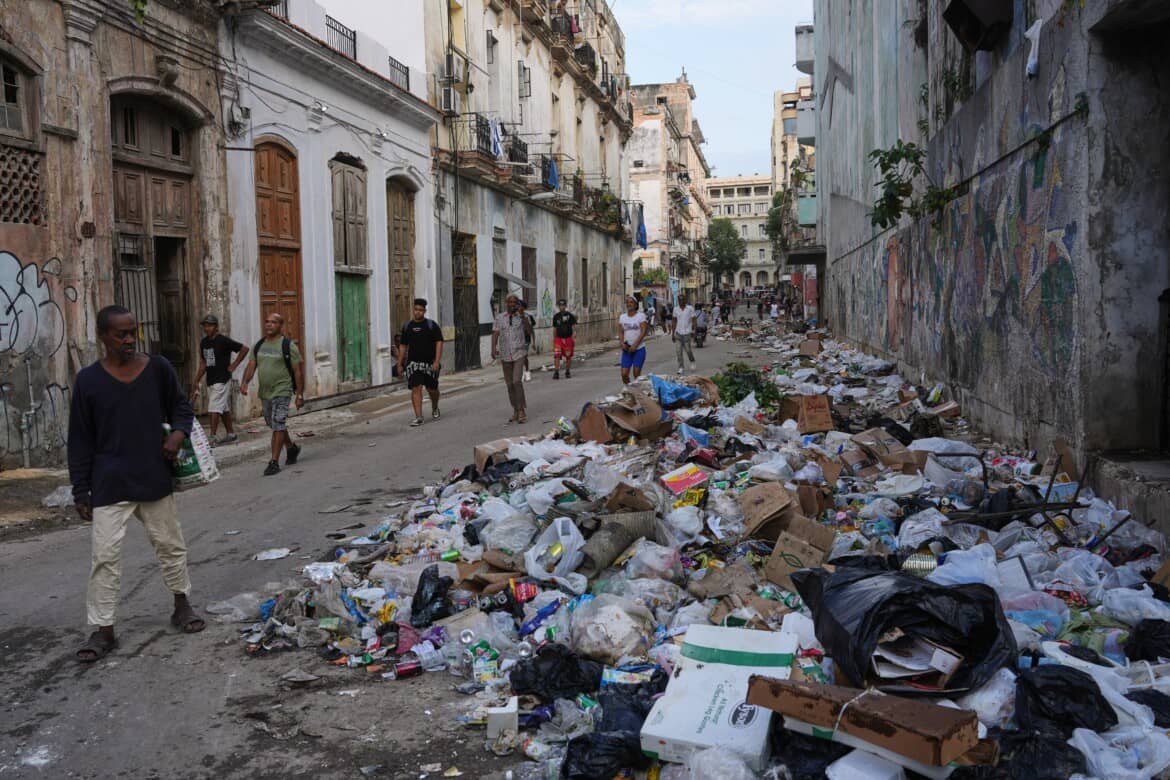
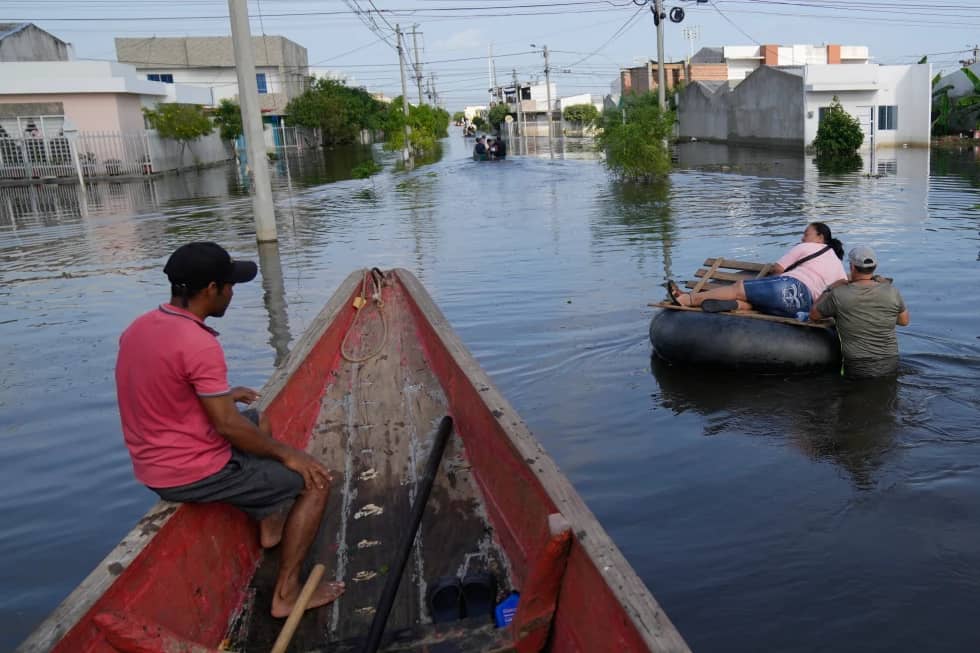
The bishops described the hardships Venezuelans have faced over the past decades, including “widespread impoverishment; lack of fairly paid job opportunities; pervasive and unpunished corruption; violations of human and civil rights, including freedom of expression and the right to due process and defense.”
“This has brought about, among other consequences, an alarming deterioration in everyone’s quality of life, which is manifested in a particular way in the systems of education, health care, public services, and security — both personal and social, as well as legal, economic, and political,” the document read.
The bishops also expressed its solidarity with all those who have been suffering the consequences of such a situation, including “political prisoners and their families.”
The prelates affirmed that popular sovereignty “was disregarded when the detailed results of the presidential elections of July 28, 2024, were not published by the state authorities.”
Before the election, most polls showed that candidate Edmundo González was leading the presidential race, but he ultimately was defeated by incumbent Nicolás Maduro. The result was questioned nationally and internationally by various observers and institutions.
Regarding the U.S. military operation, the letter stated that it has “profoundly changed the political and social landscape.”
“Although they [the Jan. 3 events] have been interpreted as a violation of international law, many believe they open paths toward achieving the democratization of the country,” the document read.
In the section of the apostolic exhortation presenting proposals to address the crisis, the Conference mentioned the need to “rebuild democratic institutions; restore the independence of the branches of government; have a credible Supreme Court of Justice and a National Electoral Council that ensures free and fair elections; and secure the State’s territorial control over the country.”
“In this process, all Venezuelans must take part — those of us who are here and those who are abroad — in a climate of mutual respect and in the pursuit of calm and stable coexistence, regardless of ideology or party affiliation,” the text read.
Returning to the theme of political prisoners, the letter stated that the episcopate is “closely following the proposal and the process toward the approval of a general amnesty law, which must necessarily be broad and inclusive, the result of extensive consultation with all sectors of civil society.”
According to Father Gerardo Moreno, communications director for the Diocese of Trujillo, the Conference’s message was one of hope. The idea, he said, was to emphasize that Venezuelans have an opportunity to rebuild their nation.
“It’s a new dawn to be pursued — a dawn of hope to which all Catholics are invited to contribute — and the Church will accompany them in that process,” he told Crux.
In Moreno’s view, the document adequately called for the immediate release of political prisoners, even though it does not take a decisive stance regarding a potential amnesty law.
“There’s an ongoing debate concerning amnesty. Some argue that political prisoners are innocent, so they do not need to be amnestied,” he said.
The Church did not mention that the United States now controls Venezuela’s oil industry, something that has been widely repudiated by Chavista militants.
According to Moreno, the episcopate knows that “oil has been both a blessing and a curse for the country” and preferred to emphasize that profits from its exploitation should fund relief and social programs for the poorest.
The document also failed to specify a number of demands expressed by prominent anti-Chavista sectors, as well as by groups and organizations seeking the full restoration of democratic principles in Venezuela.
Professor Tulio Álvarez-Ramos, on behalf of the Constitutional Law Chair at the Central University of Venezuela, presented a document to the bishops on Feb. 4 outlining several measures the country should adopt in order to normalize the political situation. He asked the episcopate to incorporate such demands into its documents.
The list included a general amnesty for all politically persecuted individuals, the reestablishment of the rule of law, the repeal of several acts considered repressive — such as the Law against Fascism, Neofascism and Similar Expressions — and the country’s reintegration into the Inter-American Human Rights System.
Although the exhortation alluded to some of those topics, it has a much softer tone than Álvarez-Ramos’s document.
On the other hand, the letter’s failure to condemn the U.S. intervention in Venezuela angered Chavista members of the Church. That is the case with Father Numa Molina, a Jesuit priest whose longstanding ties to Chavismo are well known.
He told Crux that, in his opinion, the letter appears disconnected from the current reality in the country, given that “the government has been promoting several programs,” including initiatives supporting small and midsized companies.
“Thanks to them, Venezuela — despite 970 sanctions — ended 2025 in first place for growth in Latin America, according to figures from the Economic Commission for Latin America and the Caribbean (ECLAC). A country with the poverty and misery described by the bishops would not have that level of growth,” Molina claimed.
But the worst part, he said, was the episcopate’s failure to address the issue of sovereignty.
“It is unforgivable that at this terrifying moment, when the Venezuelan people and their sovereignty were attacked, the bishops of Venezuela do not devote even a single paragraph to courageously and unequivocally condemning the aggression of the United States against Venezuela,” he said. “History will judge them for their lack of prophetic witness. Prophetic witness springs from love for the people.”