SÃO PAULO – The National Conference of Bishops of Brazil (CNBB) issued a statement on Sept. 27 denying any involvement in the production or dissemination of disinformation about far-right presidential candidate Flávio Bolsonaro.
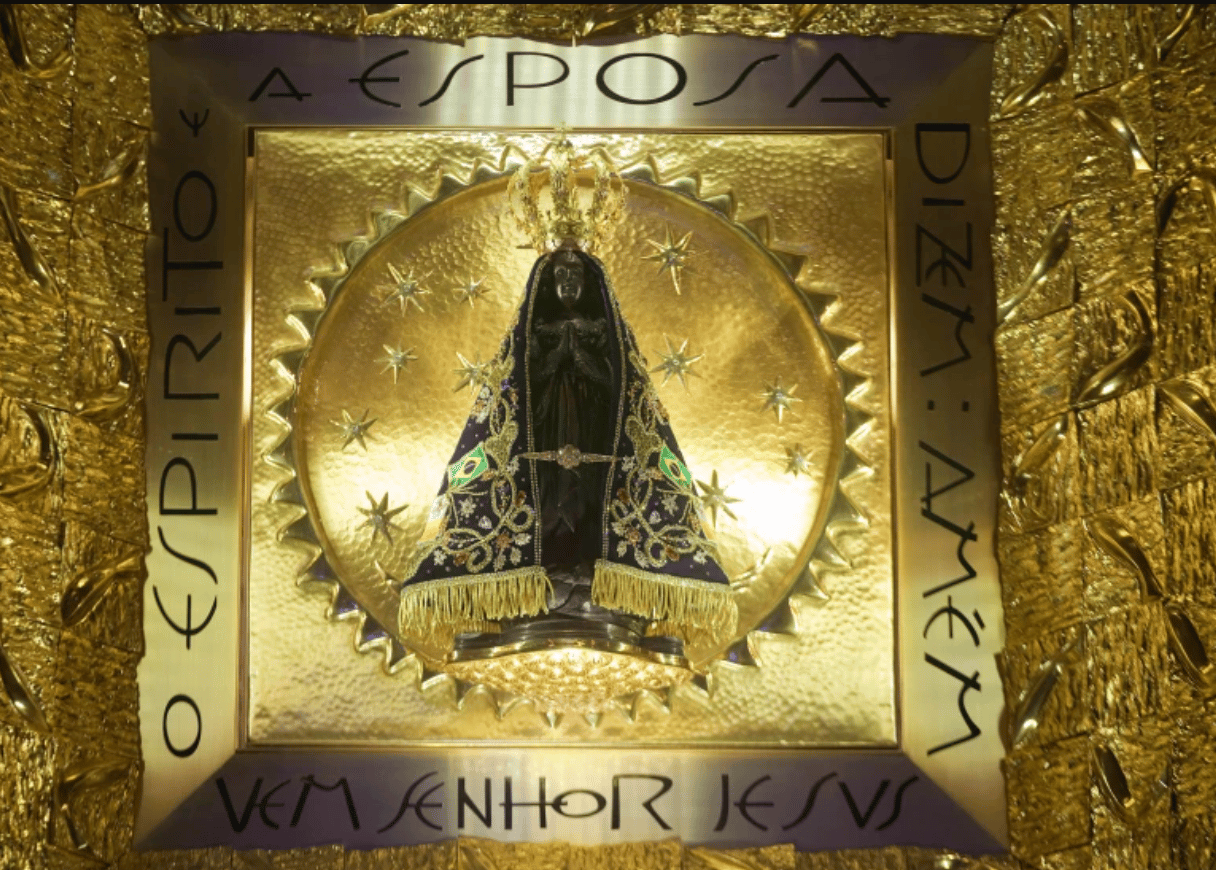
Since last week, Flávio Bolsonaro – the older son of former President Jair Bolsonaro, who is under house arrest following his 2023 conviction for attempting a coup – has been attacked on social media by supporters of incumbent Luiz Inácio Lula da Silva, his main opponent in the elections scheduled for Oct. 4, over his alleged intention to strip Our Lady of Aparecida of her title as Patroness of Brazil.
It all began on Sept. 24, when journalist Maria Cristina Fernandes said on the GloboNews cable channel during a news program that the Brazilian Church was mobilizing against a project by Evangelical leaders to remove the title of Patroness of Brazil from Our Lady of Aparecida. Such a mobilization, she added, could help Lula’s campaign.
GloboNews later acknowledged the information was false and apologized, but the damage had already been done. Just moments after Fernandes’s commentary, a series of social media posts linking Flávio Bolsonaro to the plan against Aparecida went viral.
Many digital influencers who are outspoken supporters of Lula recalled a bill introduced in 2007 by Pastor Victorio Galli, then a congressman. Galli’s bill sought to replace the title of Our Lady of Aparecida, currently defined as the Patroness of Brazil, with the designation “Patroness of Roman Catholic Brazilians.” The bill was shelved in 2008.
Galli, who is currently running for Congress again, served as a special adviser to then-President Jair Bolsonaro in 2019 and remains a prominent political ally of the Bolsonaro family.
A number of posts also emphasized that Flávio Bolsonaro is a member of an Evangelical church founded by Pastor JB Carvalho, who wrote a book arguing that the law declaring the Aparecida the Patroness of Brazil is unconstitutional. The book, published in 2001, also states that “God hates the cult of the Queen of Heaven.”
Influencers and journalists resurfaced an August video of Flávio Bolsonaro saying, “When I become president, one of my first acts will be to decree that Brazil belongs to the Lord Jesus Christ.”
RELATED: Why controversy skipped the Rupnik unveiling in Brazil
Such content appeared on social media alongside old videos of Evangelical pastors attacking the Catholic Church and footage of people vandalizing statues of the Virgin Mary. Many of these posts misidentified the incidents and claimed they had occurred recently, giving uninformed people the impression that an Evangelical offensive had been launched.
One of those videos showed a giant image of the Aparecida on fire. The post said the incident had happened “last night” and that “the man who set fire to the saint had stickers of Flávio on his car.”
But the fire occurred on July 13 in the city of Nerópolis, in Goiás state. At the time, authorities concluded it was accidental, likely caused by the large number of candles placed at the Virgin’s feet.
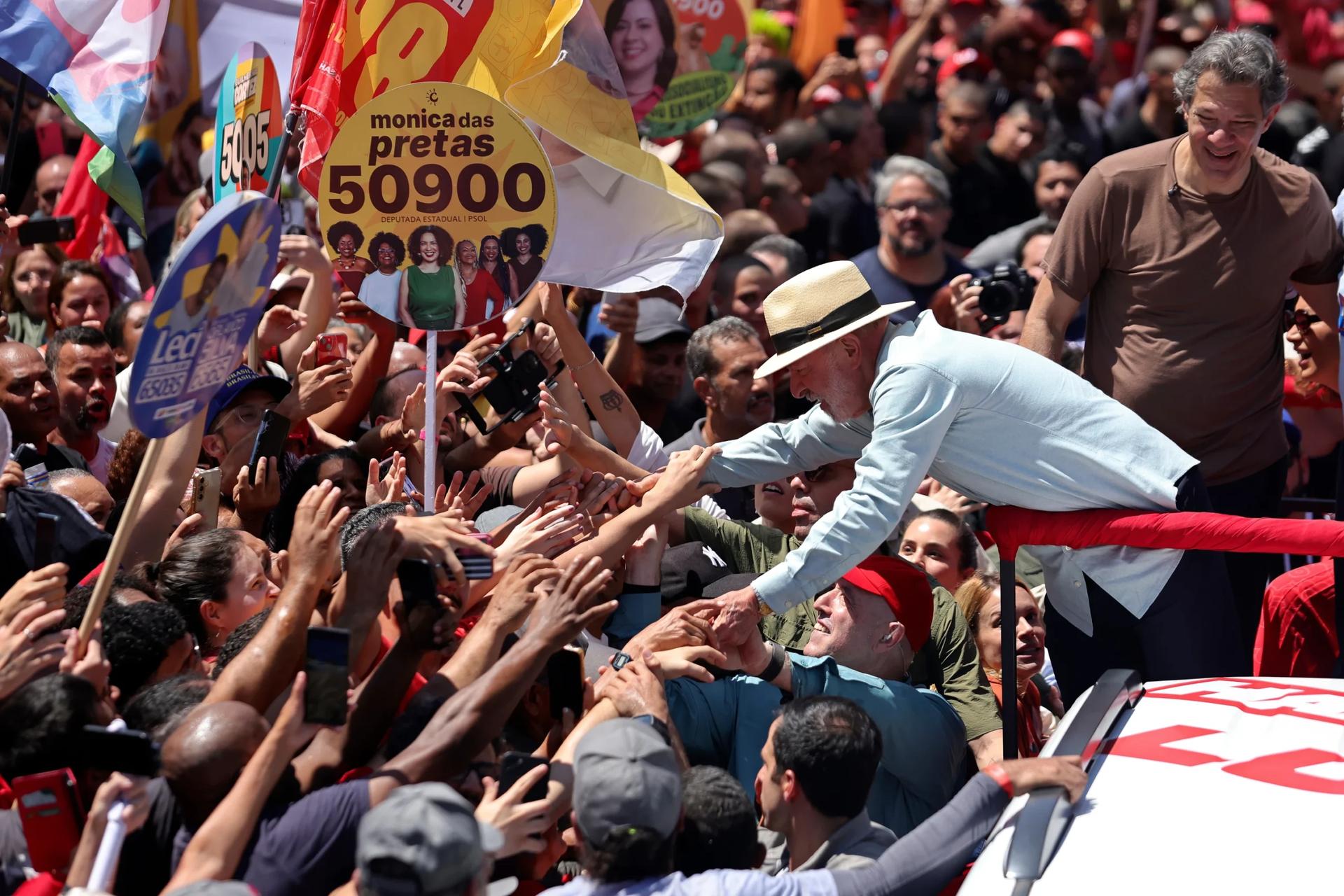
The campaign prompted Flávio Bolsonaro to deny any plan to remove the title of Our Lady of Aparecida. During a rally in Goiânia, Goiás state, on Sept. 27, he addressed the issue with journalists.
“The biggest fake news story of the campaign was this one about Our Lady of Aparecida – something that never existed. There was never any movement to remove her as the patroness of Brazil. It never existed. There is no bill, there is nothing. And the PT [Lula’s Workers’ Party], I now know, had already been trying for several days to push this fake news, and managed to do so with the help of people within the CNBB.”
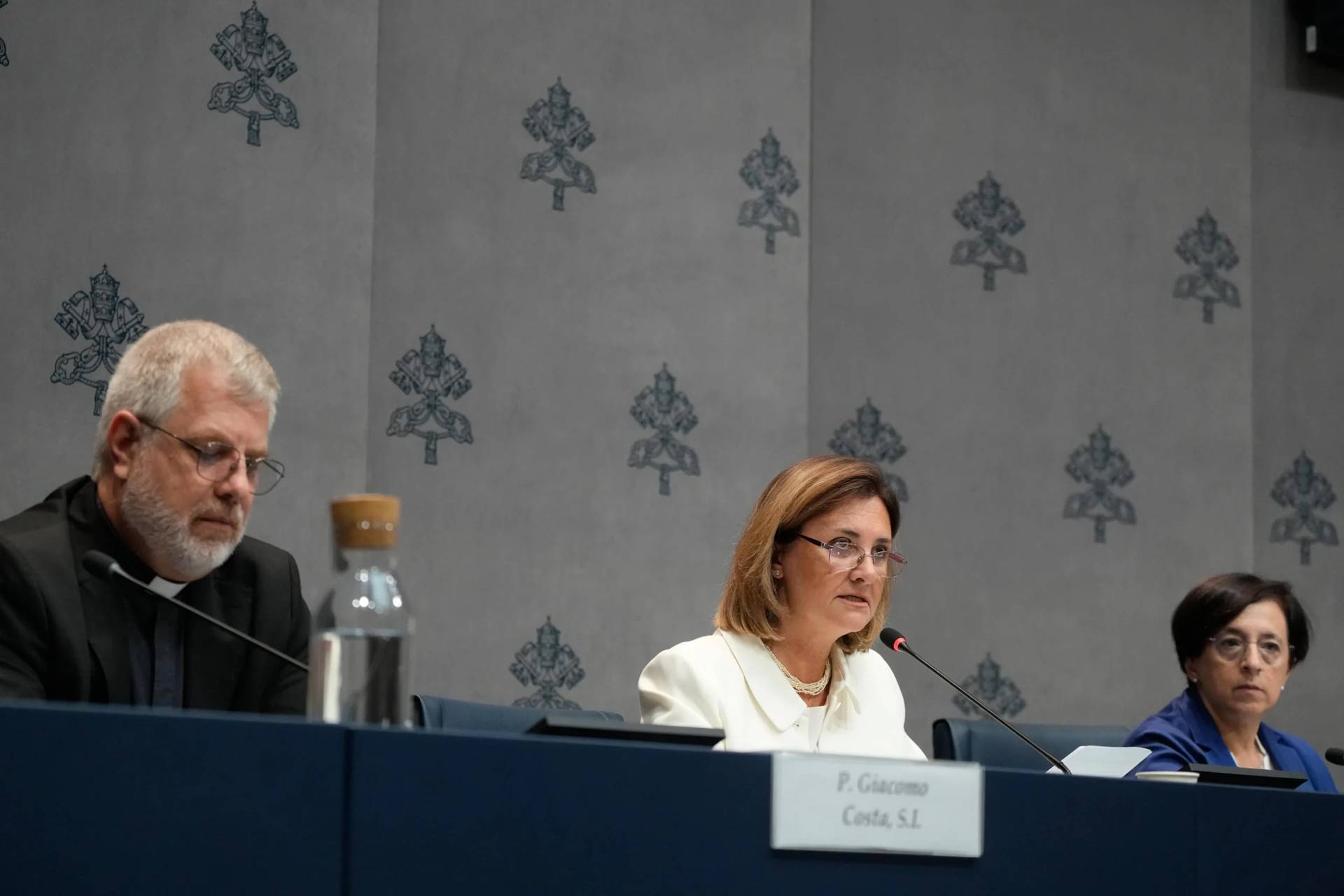
Later that day, the CNBB said in a statement that it had never “produced, authorized, or taken part in the elaboration or dissemination of false information related to the current electoral process.”
“To claim that the CNBB participated in structures involved in producing or disseminating disinformation, without facts and evidence to support such an assertion, unfairly harms the institution and does not contribute to the calm and responsibility that should characterize the electoral process. A lie cannot be fought with another lie,” the statement said.
Although the CNBB described the allegations as fake news – as did most of the press – many lay Catholics and members of the clergy have been expressing online that Flávio Bolsonaro and his allies do have a plan to increase Evangelicals’ political power and hinder the Catholic Church’s social presence.
The controversy prompted members of the Supreme Court to intervene. Justice André Mendonça – a Presbyterian pastor and jurist nominated by Jair Bolsonaro, who described him as “terribly Evangelical” – initially ordered the removal of all posts about the Aparecida.
His colleague, Flávio Dino – formerly Lula’s minister of Justice and Public Security – suspended Mendonça’s ruling and ordered the posts reinstated. On Sept. 28, Justice Luiz Fux overturned Dino’s decision. The case was eventually taken to the Superior Electoral Court, which, on Sept. 30, decided to remove most of the posts concerning Aparecida.
On the same day, Dino ordered the Federal Police to investigate several cases involving attacks on images of Our Lady, as well as other incidents of violence against centers of Afro-Brazilian religions, that had allegedly been staged over the past few months in different regions of Brazil. He said his office had recently received numerous reports of these incidents.
Mentions of Aparecida on Brazilian social media remained frequent this week. An electoral poll released on Sept. 28 showed Lula’s support rising from 43 percent to 48 percent among Catholics and from 23 percent to 27 percent among Evangelicals.
“Since the first presidential election after the military dictatorship [1964-1985], in 1989, religion has appeared one way or another. But this has been the first time the left has used religion for electoral purposes,” sociologist Alexandre Landim, a professor at the Federal Institute of Education, Science and Technology of Ceará, told Crux Now.
Landim, who recently published a book titled O Deus das Urnas – Evangélicos e Católicos em Eleições Presidenciais no Brasil (The God of the Ballot Box: Evangelicals and Catholics in Brazil’s Presidential Elections), argued that the controversy put Flávio Bolsonaro in a difficult position, forcing him to clarify that he is not opposed to Aparecida in a country undergoing a religious transition.
According to recent surveys, Catholics make up about 50 percent of the population, while Evangelicals account for about 30 percent. If the pace of Evangelical growth and Catholic decline remains unchanged, Evangelicals are expected to surpass Catholics in Brazil in less than two decades.
“He had to deny the allegations concerning Aparecida, something that dissatisfied his Evangelical constituency. At the same time, Catholics are equally dissatisfied,” Landim said.
Flávio’s father, Jair, seems to be more skilled when it comes to religion, he added. He identifies as Catholic, but his wife is an ardent Evangelical, which gives him the opportunity to frequent Evangelical spaces with her.
For far-right politicians like Flávio, dealing with an institution like the CNBB is not easy, Landim said, given its commitment to issues such as social justice and democracy.
“The CNBB was one of the institutions that fought against the military dictatorship in Brazil and took part in the pro-democracy protests in the 1980s,” he said. The Bolsonaro family has been prominent defenders of the military regime for decades.
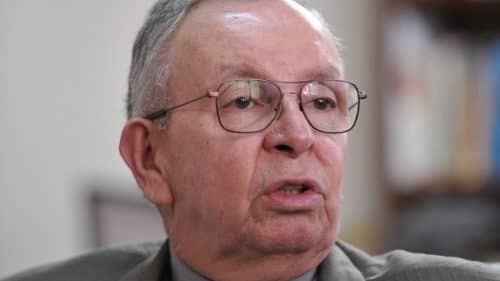
According to Francisco Borba Ribeiro Neto, a Catholic sociologist and an expert on Brazilian religious dynamics, the controversy demonstrated that Flávio Bolsonaro has a problem with the Church’s social doctrine.
“Politicians such as the Bolsonaro family in Brazil and President Donald Trump in the United States have repeatedly opposed the popes’ positions on basic principles of Catholic social teaching, on issues such as the environment, refugees and human rights,” Ribeiro Neto told Crux Now.
Church authorities proclaim the Gospel and love of neighbor, particularly love for the most vulnerable, he added.
“If these politicians oppose the implications of that love, it is they who are placing themselves at odds with the Church – not the Church that is fighting them,” Ribeiro Neto said.
______
You are reading this Crux Now article for free. You can register for our free daily newsletter here, and you can become a Crux Now supporter for full access to all our premium content here. To find out more about why becoming a Crux Now supporter is a great idea, go here.