
An interview with a senior Italian prelate appeared late in the week, and it contained several observations regarding political figures including U.S. President Donald Trump, which both readers and U.S. politicians would do well to note.
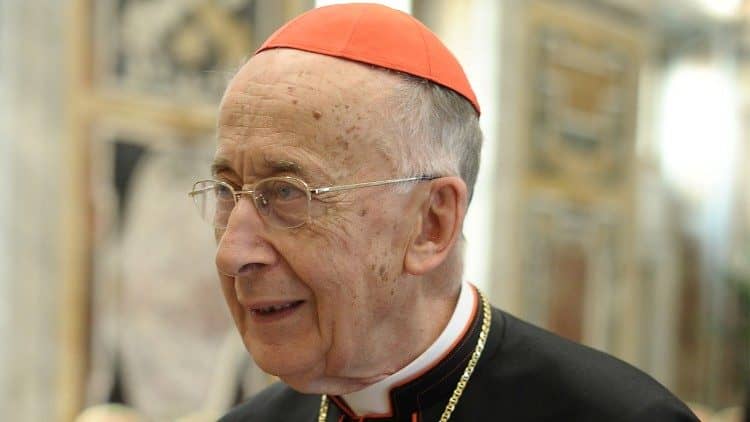
95-year-old Cardinal Camillo Ruini – who was highly regarded by Pope St. John Paul II – granted the wide-ranging interview to Italy’s Corriere della sera newspaper.
Particularly significant – and potentially telling – were the reasons the long-serving cardinal gave for the negative personal and political opinion Ruini expressed for Trump. They were especially interesting because of the way they contrast with his appreciation of the late Italian center-right leader and Prime Minister, Silvio Berlusconi, who many have seen as a forerunner of Trumpism.
He also looks at current Prime Minister Giorgia Meloni – Berlusconi’s political successor – and his observations on her count may give some insight into the post-Trump era.
“I met him when he ‘took the field’ to use his term,” Ruini said of Berlusconi, a reference to the way Berlusconi – the president of the AC Milan soccer club for more than three decades who died in 2023 – described his 1993 decision to found a center-right political party and enter national politics.
“I immediately realized that his lifestyle had problematic aspects,” Ruini said, demonstrating a gift for understatement, given Berlusconi’s reputation as a womanizer and inveterate host of “Bunga-Bunga” sex parties (yes, they were actually called that), frequently at his Sardinian villa.
“But his political action seemed decisive to me in stopping Communism,” Ruini went on to say of Berlusconi. “Call it ‘post-Communism’,” Ruini said when the Corriere pressed him, noting that the Communist Party of Italy was no longer a force in Italian politics by 1994.
“The fact remains,” Ruini said, “that if Berlusconi hadn’t been there, [Italian left-wing post-Communist Achille] Occhetto would have come to power.”
In the wake of sweeping corruption investigations that left the five major governing political parties of Italy not only headless but effectively gutted in 1992 – the tangentopoli scandal, meaning “bribesville” or “kickback city” – Berlusconi entered politics in a move observers publicly speculated was at least partly motivated by a desire to shield his business interests from too much scrutiny.
(Sound familiar?)
In the event, an exhausted Italian electorate disgusted with the status quo in 1994 chose Berlusconi, who had made his bones in the construction industry before pivoting to television and building Mediaset, Italy’s first private nationwide TV network to compete with the RAI state broadcaster.
(Does that sound familiar, too?)
Ruini also noted Berlusconi’s pivotal role in the creation of political bipolarity in Italy – strong party coalitions on the center-right and center-left that greatly stabilized Italy’s fractious national politics for nearly a generation.
For decades before the mid-90s, Italians had been ruled by loose coalitions of center-right and center-left parties joining with a host of self-proclaimed communists, right-wing nationalists who proudly considered themselves post-Fascists, and various strains of libertarians. Predictably, the coalitions were extremely unstable and often collapsed before they had governed a full year.
Ruini praised Berlusconi as well for “resisting the wave of secularism that was already threatening the Church’s non-negotiable values.”
“What about his lifestyle?” Corriere asked Ruini. “I recall how we Catholics were taken with much fervor over John Kennedy,” Ruini said, “and it turned out he wasn’t above reproach either.”
The Corriere also asked Ruini whether he regrets having somehow endorsed, with his authoritative voice and position in Italian public life, the era of Berlusconi with all it entailed?
“I don’t regret it,” Ruini responded. “Today the situation is different,” Ruini also offered, without much in the way of elaboration except to say his “fundamental orientation hasn’t changed.”
Considering all that, then, it may be surprising – at first – to hear Ruini express a very different and much less favorable judgment of Trump.
“I have a judgement that is not positive,” Ruini replied. “Trump has disrupted American and world politics,” he said, adding that Trump has taken not only the U.S. but the world “in a very questionable direction.”
“And I don’t like his unscrupulousness,” Ruini added, the end of his line and of the Corriere’s regarding the 79-year-old second-term incumbent.
That Ruini should be so understanding of Berlusconi’s private foibles, so careful to avoid mention of Berlusconi’s own troubles with business ethics and the suspicions that dogged him regarding his self-dealing motives for entering politics, while also being happy to offer so stark a judgment of Trump, may serve as a bellwether and warning to Republican voters heading into the midterm elections and Republican party leadership heading into the 2028 presidential elections.
The biographical similarities between Berlusconi and Trump are almost uncanny, as are their traits of personality both public and private. The scandals that plagued Berlusconi throughout his public career are almost eerily similar to those attached to Trump, as well.
To Ruini’s mind, however, Berlusconi succeeded in stabilizing domestic politics and preserving – even advancing – Italy’s participation in the post-WWII international order.
Observers across the spectrum of opinion agree – some approving, others lamenting – that Trump has seriously disrupted both the domestic and international orders, with such force and frequency as make it nearly impossible to think the disruption other than somehow by design.
Trump is currently extremely unpopular at home and abroad, and in any case is ineligible to run for a third term, so Republicans eyeing the party nomination would arguably do well to observe Ruini’s favorable observations regarding the character and conduct of Berlusconi’s successor in the center-right political leadership of Italy, Giorgia Meloni.
Asked by the newspaper for his assessment of Meloni both politically and personally, Ruini said, “Decisively positive under both aspects, politically and personally.”
Meloni – whatever one thinks of her policy agenda – has governed largely within the rules of established Italian political culture, deftly managing her own coalition and relations with the center-left, and she has continued (not without some significant bumps) to maintain a reputation as someone with whom leaders of other nations—especially other European leaders – can do business reliably.
It wasn’t a given that Meloni would prove to be such a figure.
A Catholic and a social conservative, Meloni has espoused a popular – and fairly populist – “God, country, family” social platform in the political arena, and surprised both supporters and critics with her capacity to operate politically and achieve results as a pragmatic institutionalist after her election as Prime Minister late in 2022.
“I’ve known her for many years and we enjoy talking,” Ruini said. “She’s a very direct person, very frank,” he said, noting as well that Meloni is “very affectionate” with him.
“We have a true friendship,” Ruini said.
It is possible that Republicans eyeing the 2028 field could do worse than realize that pragmatic institutionalism and a genuine capacity for healthy personal relations within the bounds of cultural norms and established order are not only good in themselves but also winning political tacks.
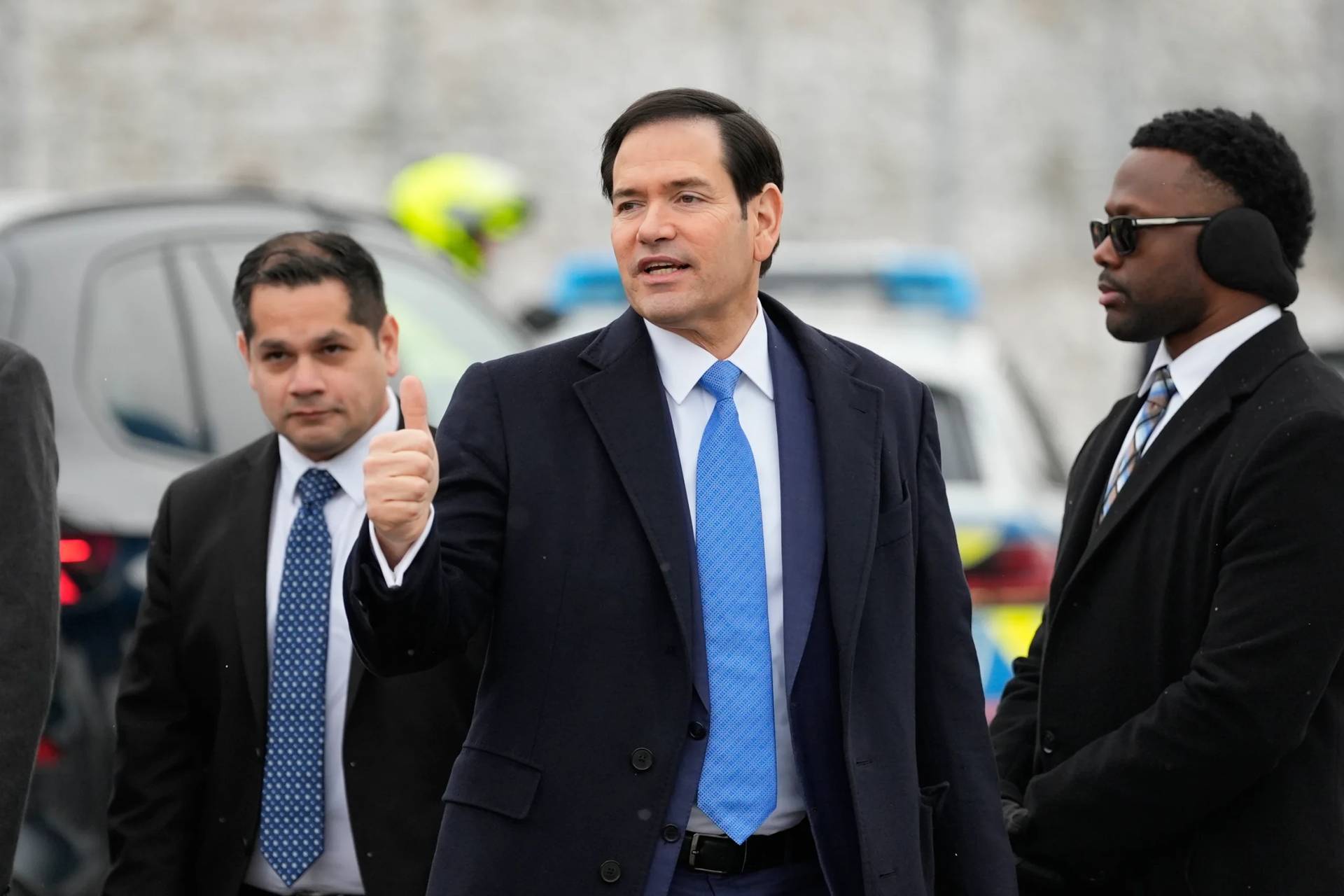
The two people mentioned as most likely to succeed Trump in the Republican party are both Catholics: Vice President JD Vance and Secretary of State Marco Rubio. They both might be eyeing what Ruini said about how Meloni rose to the top in the Berlusconi world.
Democrats in the U.S. should take note as well, if they have not learned that the juice they get from highlighting Trump’s personal grotesqueries may not be worth the squeeze at the ballot box.
Taken all together, Ruini’s remarks show two important things: Clear-eyed acknowledgment of political reality still wins against wish-casting, and frank speech can be measured and restrained. Everyone on every side of every issue everywhere should take note of both.
Follow Chris Altieri on X: @craltieri