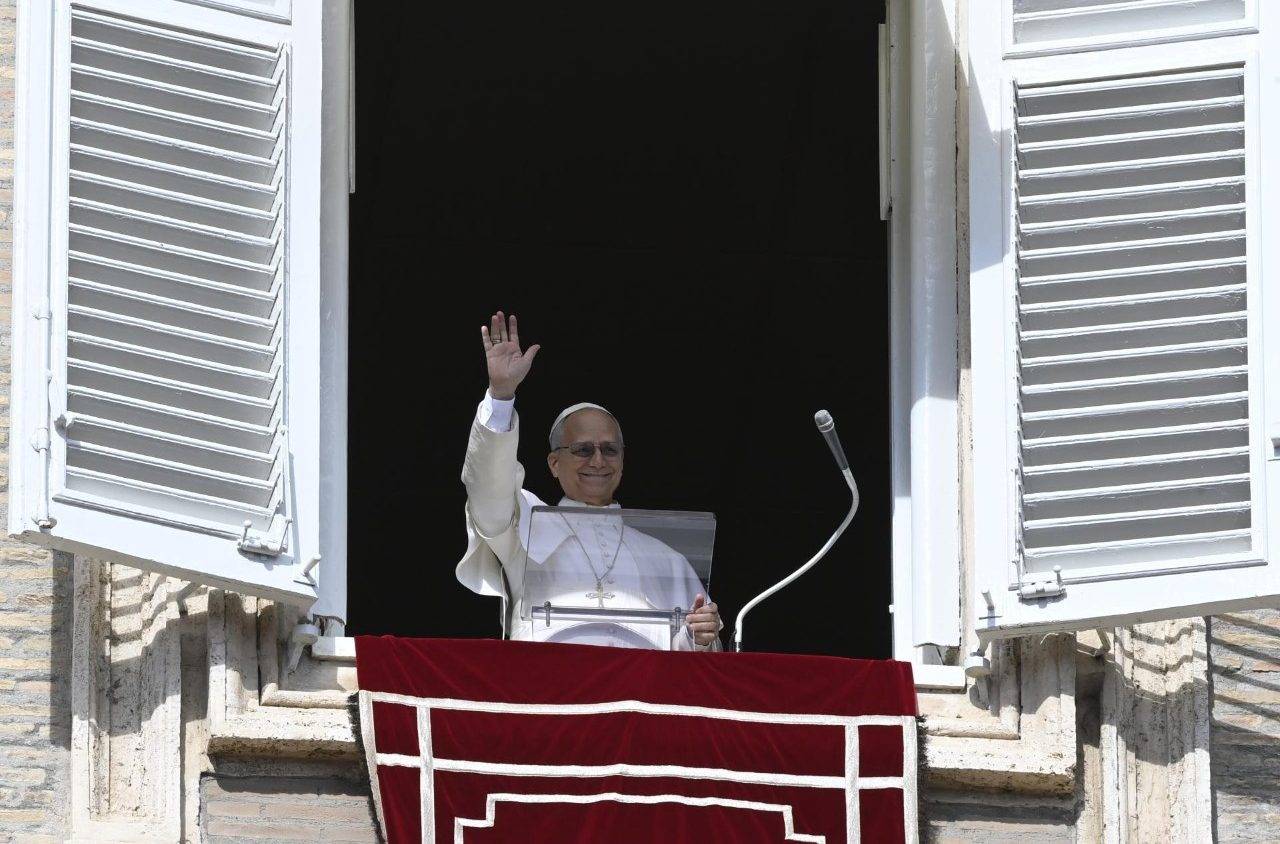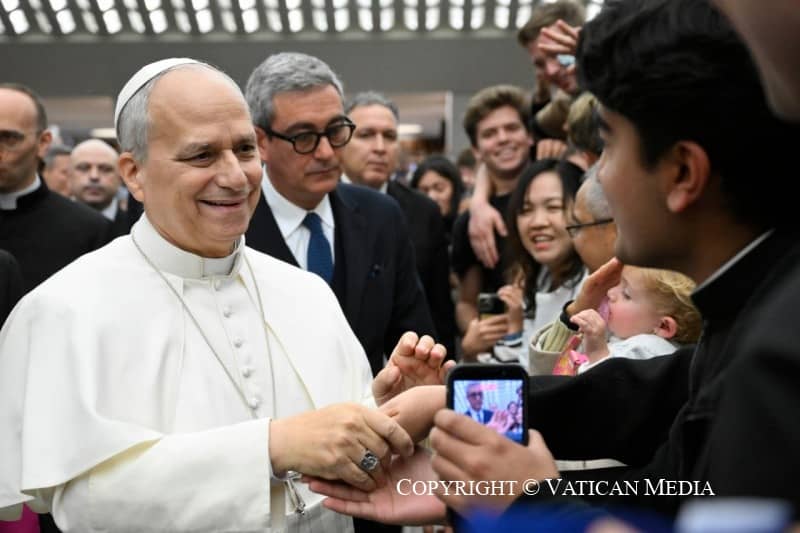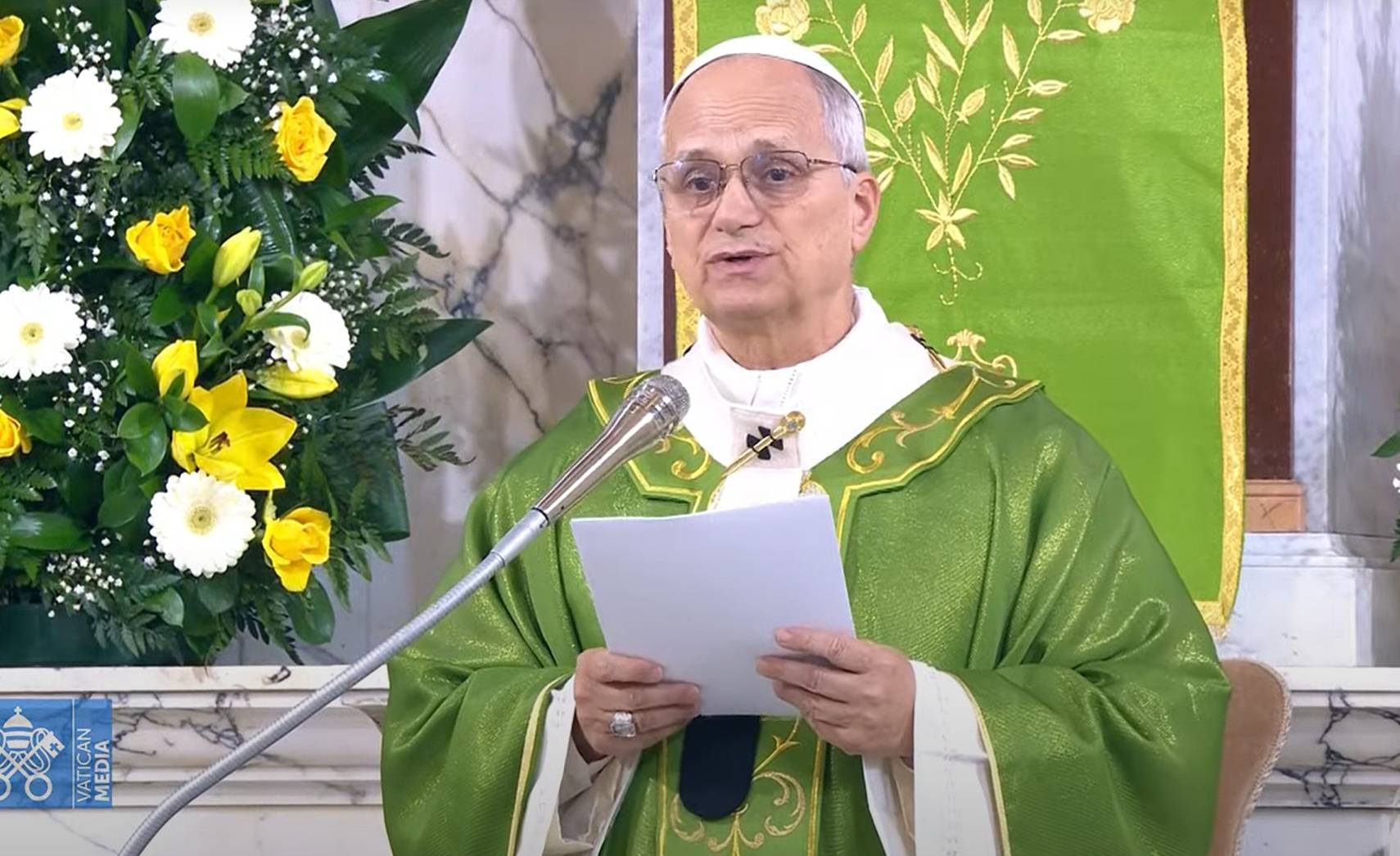
ROME – In his first visit to a Roman parish since his election nine months ago, Pope Leo XIV urged parishioners to leave behind any attitude of division and conflict, and to instead cultivate peace and love through attention to the poor and suffering.
Speaking to parishioners of Santa Maria Regina Pacis in Ostia, near the port of Rome, Leo XIV recalled that the parish was given its name by his predecessor, Pope Benedict XV, in the midst of the First World War.
“With time, however, many clouds still darken the world with the spread of logic contrary to the Gospel – logics that exalt the supremacy of the strongest, encourage arrogance, and nourish the seduction of victory at every cost, deaf to the cry of those who suffer and those who are defenseless,” he said.
Leo urged parishioners to oppose this attitude “with the disarming force of meekness, continuing to ask for peace and to welcome and cultivate this gift with tenacity and humility.”
Quoting Saint Augustine, he said peace is not difficult to obtain, and that “if we want to have it, it is there, within our reach, and we can possess it without any effort.”
“This is because our peace is Christ, who conquers by letting oneself be conquered and transformed by him, by opening our hearts and, through his grace, opening them to those whom he puts on our path,” he said.
Pope Leo told parishioners to put this into practice “day after day,” and to “do it together, as a community, with the help of Mary, Queen of Peace.”
His visit to Maria Regina Pacis parish, overseen by the Pallottine order, marked Leo’s first visit to a Roman parish since his May 8 election.
After arriving around 4p.m. local time, he met with some young people and children undergoing catechism classes, before greeting elderly, sick, a group of poor individuals and around 400 volunteers with Caritas in the parish gymnasium.
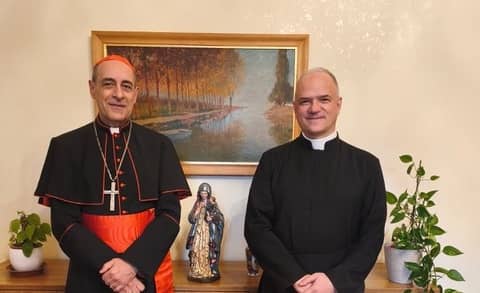
He celebrated Mass alongside the Vicar of Rome, Cardinal Baldasarre Reina, and Bishop Renato Tarantelli, vice regent of the Diocese of Rome who oversees the southern sector of the diocese, as well as the parish priest, Father Giovanni Vincenzo Patanè.
Once Mass concluded, the pope met with members of the parish council and paused to greet faithful gathered outside the parish before returning to the Vatican.
In his homily, Pope Leo said Jesus in the day’s readings offers a new law which is “not merely a teaching, but the strength to put it into practice.”
“It is the grace of the Holy Spirit who writes indelibly upon our hearts and brings the commandments of the ancient covenant to fulfillment,” he said, saying God gave the Israelites the Ten Commandments as a path of salvation which united different tribes and allowed them to walk forward together.
Those commandments, then, are part of “the long journey through the desert,” illuminating the path and showing the way forward.
“Their observance is understood and fulfilled not so much as a formal adherence to precepts, so much as an act of love, a grateful and trusting response to the Lord of the covenant,” he said.
God’s law, Leo said, is thus not an impediment to human freedom, but it is necessary for humanity to flourish in freedom.
The day’s scripture readings, he said, “invite us to see in the commandments of the Lord not an oppressive law, but his pedagogy for humanity which goes out in search of the fullness of life and freedom.”
He pointed to the Second Vatican Council’s constitution Gaudium et Spes, which he said is a document, “In which one can almost feel God’s heart beating through the heart of the Church.”
“The joys and the hopes, the griefs and the anxieties, of the men and women of today, especially of the poor and all those who suffer, they are the joys and hopes, griefs and anxieties, of the followers of Christ. Indeed, nothing genuinely human fails to raise an echo in their hearts,” he said, quoting the document.
This, the pope said, is fulfilled in Jesus’s own preaching, which demonstrates the full and authentic meaning of God’s law, a law based on mutual respect for one another, in words but above all in the heart.
“It is there, in fact, where the noblest sentiments, but also the most painful profanations are born: the closed-mindedness, the envy and the jealousy, so that whoever thinks ill of their brother, nurturing bad feelings toward him, it is as if, in their innermost being, they were already killing him,” he said.
Pope Leo noted how easy it is, often, to judge others and despise them, saying, “let us remember that the evil we see in the world has its roots precisely there, where the heart becomes cold, hard, and poor in mercy.”
This happens everywhere, even in Ostia, where there is violence and organized crime, and young people fall into drugs and people are treated as a means to an end, he said.
In this context, he invited parishioners “to continue to spend yourselves with generosity and courage in scattering the good seed of the Gospel in your streets and in your homes.”
“Do not resign yourselves to the culture of abuse and injustice. On the contrary, spread respect and harmony, beginning with the disarmament of language and then investing energy and resources in education, especially of children and youth,” he said.
The pope voiced hope that children in the parish would learn honesty, welcome, and a love “that overcomes boundaries,” and to “go out towards everyone freely and gratuitously; may they learn the coherence between faith and life.”
“May this, dear ones, be the goal of your efforts and of your activities, for the good of those who are near and those who are far away, so that even those who are enslaved by evil may encounter, through you, the God of love – the only one who sets the heart free and makes us truly happy,” he said.
Follow Elise Ann Allen on X: @eliseannallen