The German bishops’ conference has said there has been a substantial increase in adult baptisms, while baptisms overall have declined.
The conference released statistics last week showing that in 2025, 2,650 adults and young adults aged 14 and over were baptized, a 28% increase from 2024.
However, overall there were 109,002 baptisms in 2025, a decrease from 116,274 in 2024.
Other European countries have seen an increase in adult baptisms, too. In France, this year there were 21,386 adults and teenagers aged between 11 to 17 baptized during the Easter Vigil, an increase from 17,788 in 2025.
In Spain, in 2024 there were 13,323 non-infant baptisms – people over the age of seven – although there were 146,370 baptisms overall which was down from 152,426 the previous year.
Belgium has also seen an increase in adult baptisms, and there were 689 adult candidates for baptism this year, which was an increase of 30% from 2025.
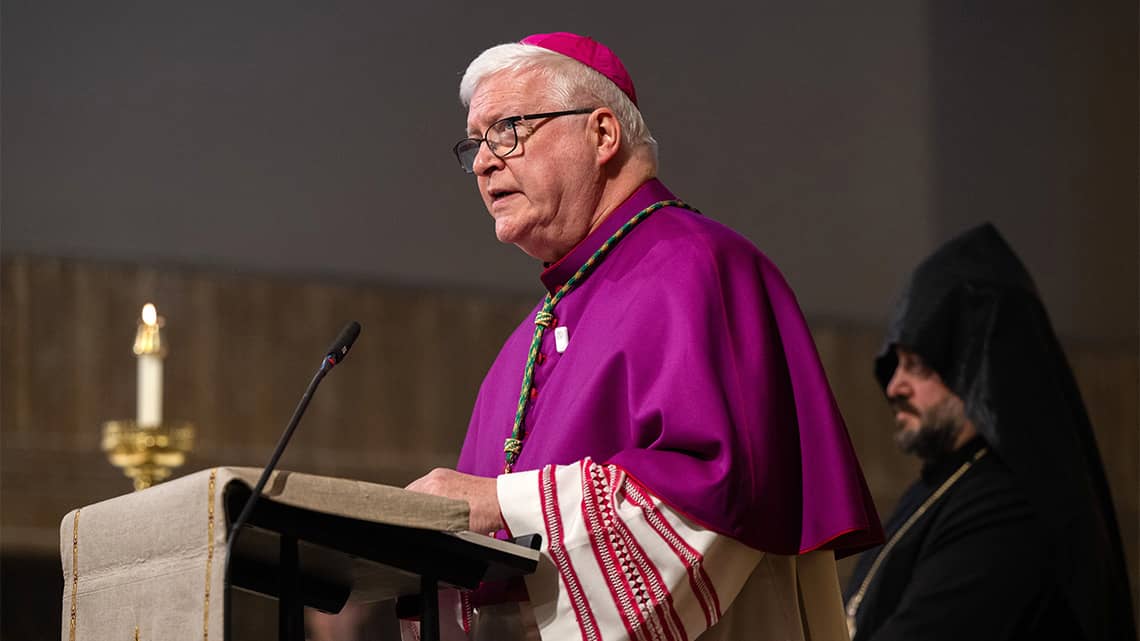
In the United Kingdom, the archdiocese of Southwark saw 590 people present at the rite of election this year, with half of them aged under 35, with Archbishop John Wilson of Southwark telling Crux Now that “the actual number baptised and received is higher.”
Wilson also told Crux Now that “there is a real thirst within young people for a sense of belonging, for connection and for hope.”
RELATED: Defense of life is a cornerstone of civilization, says British archbishop in interview
“Their hearts and minds are crying out for an encounter with Christ and that is exactly what the Catholic Church offers them,” the archbishop said.
“The Church helps them to understand that even before they began searching for God, he had already found them and called them. As the Lord Jesus himself said to his apostles – and to each of us – ‘you did not choose me, but I chose you’,” he said.
“The Catholic Church offers something different to what can often feel like a noisy world of meaningless distractions and empty encounters. It offers something real and tangible, it offers someone: an encounter with the Lord Jesus, who alone quenches that thirst and offers us life,” he added.
Tensions between the Vatican and German church
The German Catholic hierarchy and the Vatican have butted heads in recent years, with a ban on lay preaching during Mass the most recent flashpoint after the Vatican denied the German bishops’ request to allow laity to preach the homily in certain conditions.
Bishop Peter Kohlgraf of Mainz this week told the German bishops’ official Katholisch.de news website that he accepts the Vatican’s ban on lay preaching, but also said it is “common practice” in his diocese. He said he won’t intervene to stop it.
Kohlgraf said he can’t authorise a lay person preaching during Mass because “canon law does not permit it,” but said “it has become customary for lay people to preach,” adding that he “will not intervene disciplinarily or impose canonical sanctions” if he learns of the practice taking place even after the ban.
There has also been significant conflict between the Vatican and the German bishops since the launch of the German bishops’ “Synodal Way” in 2019, which has discussed changing Church teaching on a number of controversial topics, including lay preaching, sexual ethics, and the ordination of women as priests.
Germany’s Synodal Way is a multi-year process involving both bishops and laypeople conceived amid fallout from the country’s massive clerical abuse crisis and launched with the stated intention of re-evaluating Church structures.
Pope Francis personally criticized the Synodal Way on numerous occasions in writing.
RELATED: Pope warns Germany’s ‘Synodal Way’ threatens Church unity
The Vatican has said that the synodal body cannot “compel the bishops and the faithful to adopt new ways of governance and new approaches to doctrine and morals.”
In 2024, after four German theologians – all women – resigned from the Synodal Way and wrote Pope Francis to express their concerns with various aspects of the process, Pope Francis replied by saying he shared “these worries about the numerous and concrete steps that have now been taken by large parts of this local Church.
Francis said some of the steps taken by the Synodal Way “threaten to deviate further and further from the common path of the universal Church.”
______
You are reading this Crux Now article for free. You can register for our free daily newsletter here, and you can become a Crux Now supporter for full access to all our premium content here. To find out more about why becoming a Crux Now supporter is a great idea, go here.