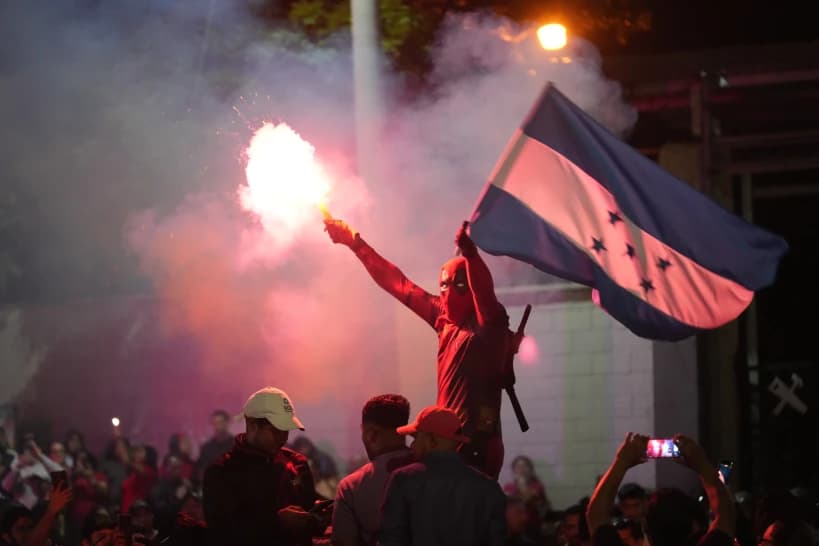
SÃO PAULO, Brazil – The Honduran Church has lamented the security crisis the Central American nation has faced this year, with at least 60 people killed since January.
On May 21, 20 rural workers were killed before they began their daily activities at an oil palm plantation. The crime occurred in the community of Rigores in the municipality of Trujillo.
Only a few hours later, five police officers were kidnapped and killed in the city of Omoa, in northern Honduras near the Guatemalan border, while attempting to capture drug traffickers. Their bodies were dismembered and burned.
On May 25, four people were killed and another was wounded in La Lima, in northern Honduras.
According to Jesuit Father Gregorio Vasquez, who coordinates the National Apostolic Council in Honduras, such massacres “cannot be analyzed without taking into consideration the wave of violence caused both by common and organized crime.”
“Honduras has been facing a rather complex situation. Those deaths touch on very sensitive issues for Hondurans – drug trafficking, gangs, and historic land disputes,” he told Crux Now.
Vasquez, who represents the Society of Jesus’s superior provincial, said that drug cartels have controlled Honduras for a long time, and that corrupt state officials are often involved in criminal operations.
The government declared that the recent wave of violence stems from confrontations between major criminal organizations over territorial control.
“Measures to enhance security in Honduras had been announced shortly before the recent massacres, so we can conclude that those actions were, in part, a warning to the authorities,” Vasquez added.
The bloodbath in Trujillo – in which three children, three women, and three elderly people were among the victims – has particularly shocked the Latin American Church.
On May 22, the campaign La vida pende de un hilo (Life Hangs by a Thread), promoted by the Latin American and Caribbean Episcopal Council (known as CELAM), released a statement condemning the massacre and demanding justice from the authorities.
“As individuals, organizations, and networks, we join the voices demanding justice so that this serious crime may be investigated, those materially and intellectually responsible may be identified, and the State, through its institutions, may help guarantee non-repetition in the face of such grave events as those that occurred last May 21,” the document read.
The campaign also emphasized “the urgent need for the Honduran State to guarantee protection and security for peasant families in the communities of Bajo Aguán and to contribute solutions that respect human and environmental rights in those communities.”
“In the Bajo Aguán region, several violent acts have been perpetrated that reflect the spurious interests surrounding Honduran territory and the consequences of failing to address the structural causes of the country’s problems. As part of the Life Hangs by a Thread campaign, we accompany the emblematic case of Juan López, who was and remains a reflection of the struggle in defense of life and territory,” the statement continued.
Vasquez served for eight years as a priest in Tocoa, about 11 miles from Rigores. He accompanied local peasants in their struggle for land and the violence they continuously suffer.
It was in Tocoa that Juan López, a lay Catholic and minister of the Word, was killed on Sept. 14, 2024.
He was a leader of the city’s Municipal Committee in Defense of the Common and Public Goods – an organization that works to protect the local environment – and had been fighting against the implementation of a mining megaproject in Carlos Escaleras National Park, also known as Montaña de Botaderos.
López argued that the iron oxide mine and several related projects – including a pellet-producing plant and a power plant – would not only devastate the rainforest in the central area of the reserve, but also affect river headwaters throughout the region.
He was killed by hitmen after leaving a church celebration. Earlier in May, Adán Fúnez, the former mayor of Tocoa, who allegedly issued fraudulent operating licenses to the company implementing the megaproject in the park, was detained by police. Fúnez has been accused of being one of the masterminds of López’s murder.
According to Vasquez, Juan López’s killing was part of a long process of criminalization targeting those who protect the environment and defend peasants’ land rights in the region.
“The Diocese of Trujillo has always had a prophetic voice, walking side by side with local communities. In the face of a prophetic voice, those in power always react by criminalizing and attacking the other side,” he said.
In a May 23 statement, the Diocese of Trujillo repudiated the massacre and demanded “the dismantling of the criminal network that stigmatizes, harasses, and murders peasant individuals and groups, thereby spreading fear, terror, and death throughout the Department of Colón.” The diocese also called for a resolution to the historic land disputes in the area.
“[We demand] a true and comprehensive State agrarian policy that resolves once and for all the bloody and historic agrarian conflict in the Aguán Valley; that guarantees the right to land for peasant men and women; and that addresses the needs for healthcare, education, housing, and technical and financial support in order to eradicate poverty in rural areas,” the letter read.
According to Vasquez, Bishop Jenry Ruiz Mora has been facing a smear campaign because of his criticism of mining companies.
“They don’t want him there anymore,” he said.