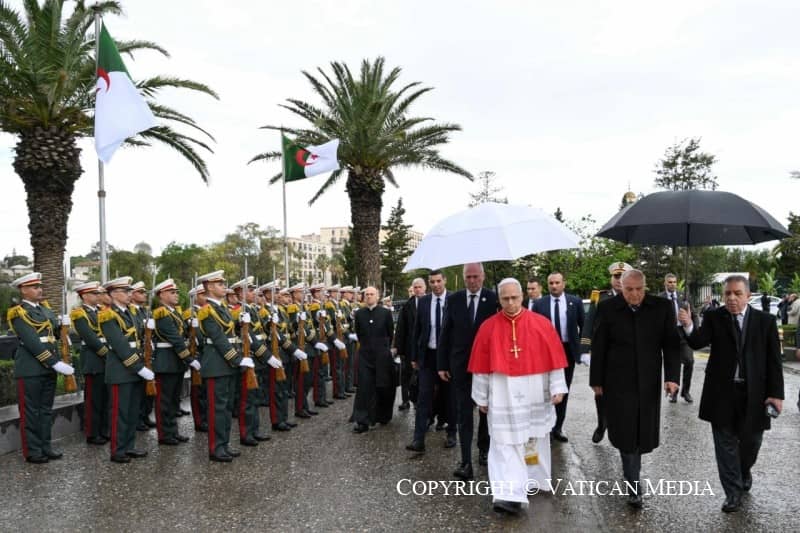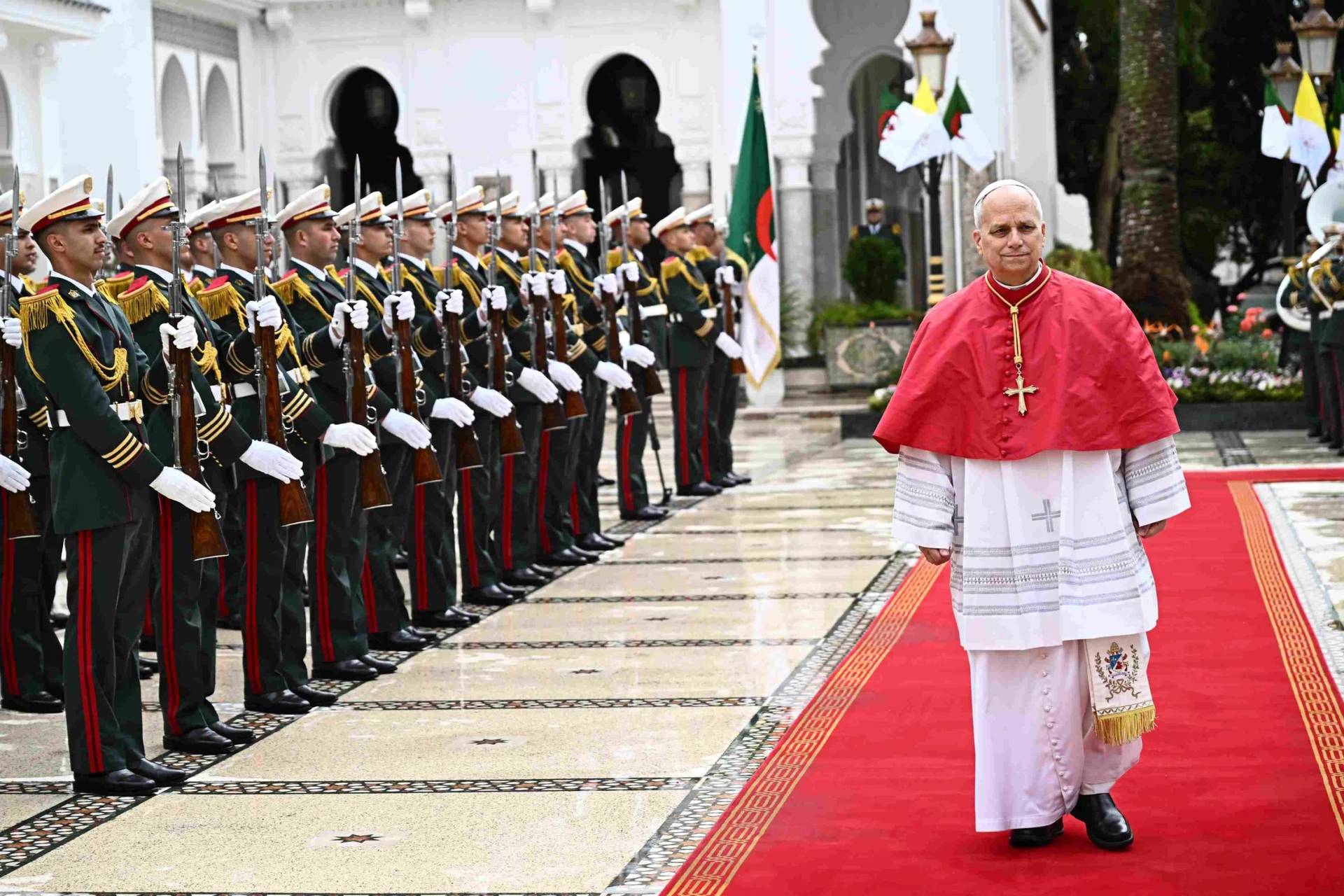
ROME – Pope Leo XIV, the first Augustinian pope, made history again on Tuesday by becoming the first pontiff to visit Algeria, the birthplace of Saint Augustine of Hippo, after whom his religious order is named.
Famed among other things for his radical conversion from a hedonistic lifestyle of self-indulgence to one of self-sacrifice and faith, Augustine served as bishop of Hippo in Algeria for nearly 40 years, from 396-430.
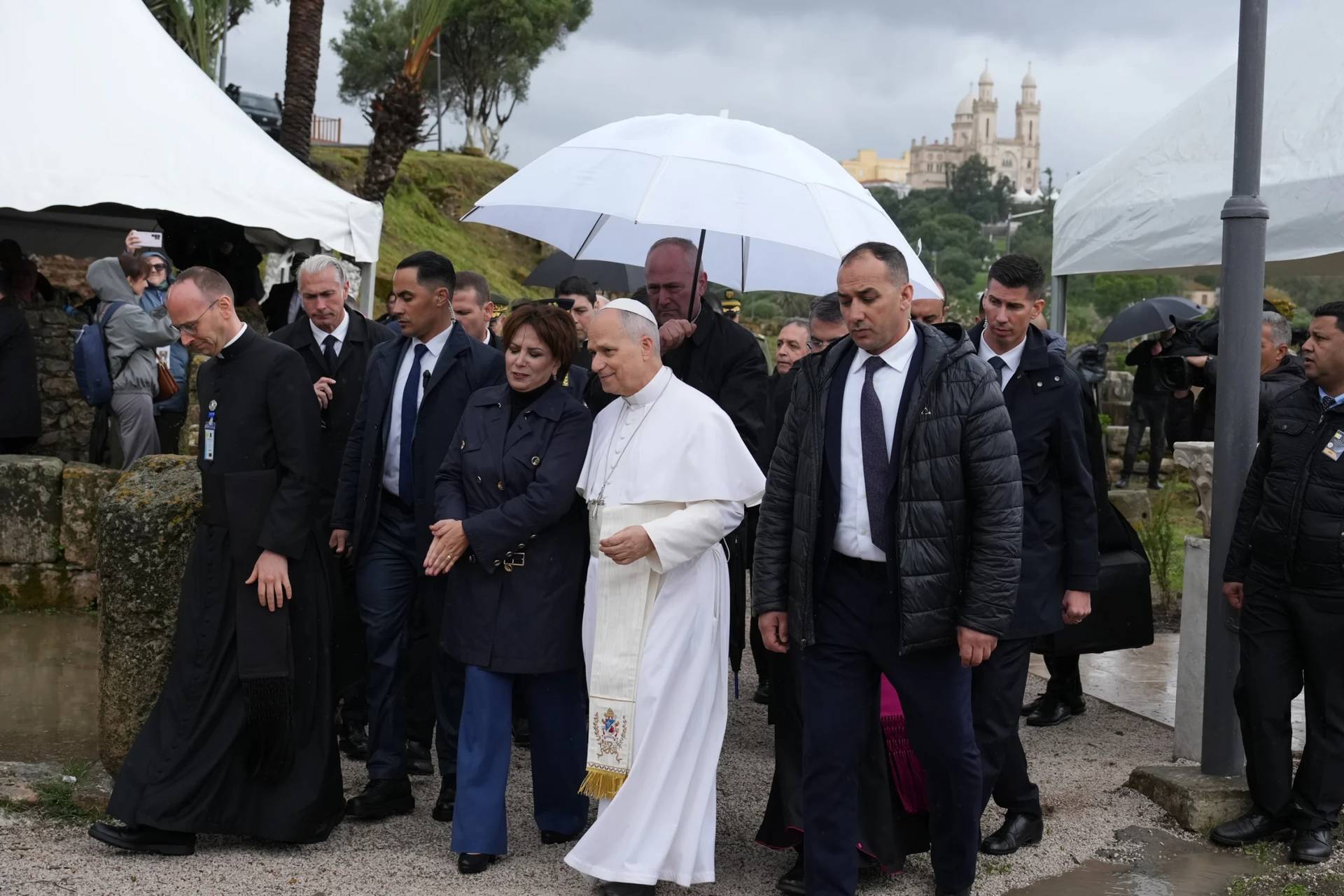
Leo XIV, who emerged on the balcony of St. Peter’s Basilica after his election to the papacy last year, declaring that he was a “son of Augustine,” made a day trip to Hippo (modern-day Annaba) on April 14 as part of his broader 11-day tour of Africa.
During his visit, the pope focused his message on the transformation of the human heart, saying that conversion, much like the one St. Augustine himself underwent, is key for those seeking cultural change in a culture still scarred by war.
In Algeria, a majority-Muslim nation, the aftereffects of the country’s war for independence and its “dirty war” of the 1990s are still palpable beneath the surface of a nation striving to heal from past wounds and promote a national process of dialogue and reconciliation.
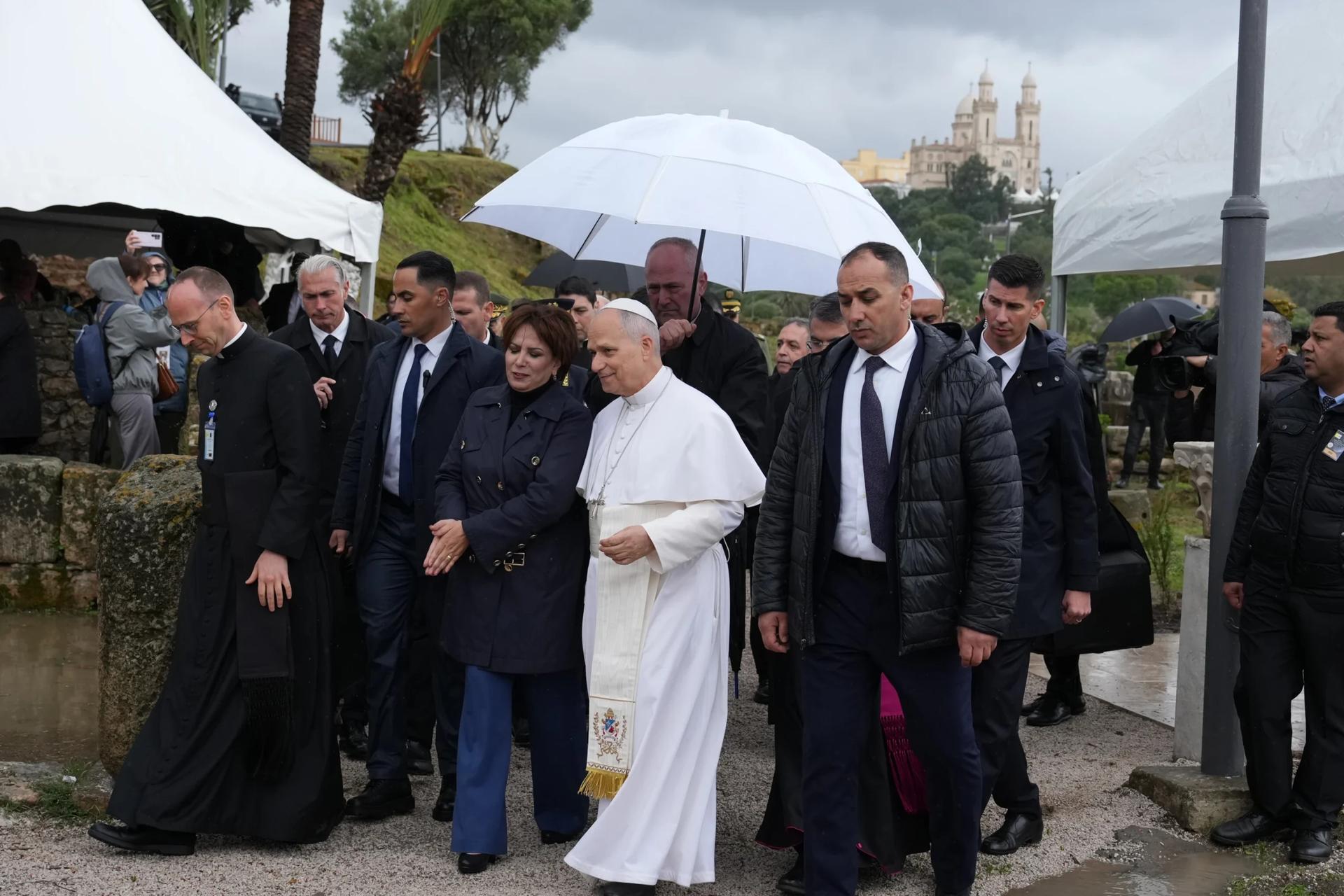
After landing in Annaba Tuesday morning, Pope Leo made a brief visit to the archeological site of Hippo, braving wind, rain, and mud, to visit the ruins and plant an olive tree for peace, though the visit had to be shortened due to the adverse weather.
Shortly after, the pope paid a visit to a nursing home run by the Little Sisters of the Poor, where he lauded the sisters for striving “to live together in fraternity.”
Looking at the center, God, Leo said, would certainly declare, “‘There is hope!’ … because God’s heart is torn apart by wars, violence, injustice, and lies.”
“But our father’s heart is not with the wicked, the arrogant or the proud,” he said.
Rather, he said “God’s heart is with the little ones and the humble, and with them he builds up his Kingdom of love and peace day by day, just as you are striving to do here in your daily service, friendship and life together.”
Wherever love and service are present, God is present also, he said, saying that after hearing their testimonies and seeing their work with the elderly, “it is natural to praise God and give thanks to him.”
After his visit to the nursing home, Pope Leo met and had lunch privately with members of the Augustinian community in Annaba, which consists of three friars as well as the prior general of the order, American Fr. Joseph Farrell, and the Order’s representative for Africa.
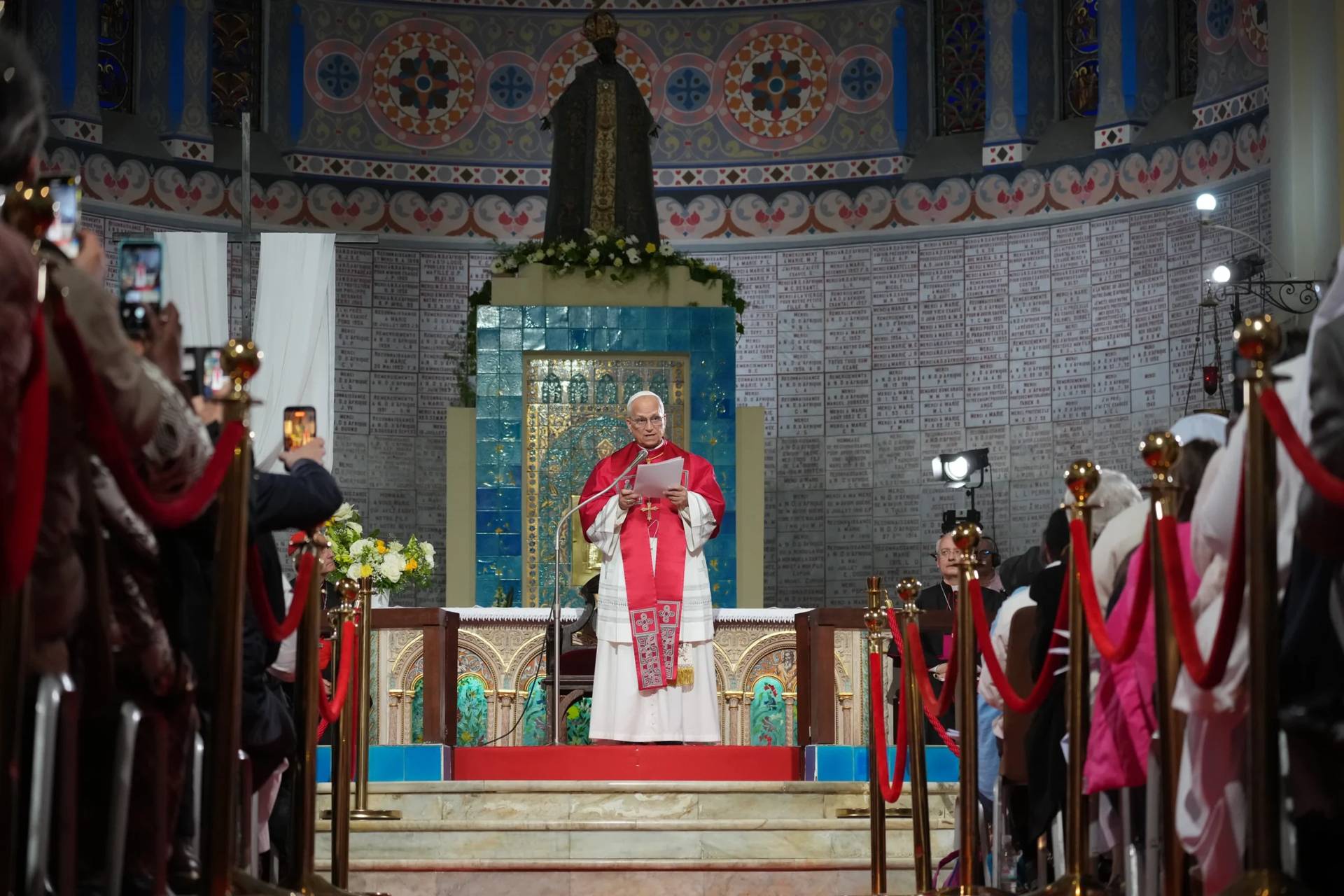
He then had a private meeting with members of the Augustinian order before celebrating Mass at the Basilica of Saint Augustine.
In his homily, Leo noted that the city’s name had changed over the centuries, from Hippo to Annaba, but said that even as names and places change, the saints associated with them, such as Augustine, remain “our patrons and faithful witnesses” to follow.
“It is precisely this dynamic that the Lord revealed at night to Nicodemus,” he said, referring to the day’s scripture reading which speaks of Nicodemus, a Pharisee who is drawn to Jesus’s teachings and visits him in secret to discuss them.
“This is the strength that Christ instills in the weakness of his faith and the tenacity of his search,” the pope said, referring to Nicodemus’s search.
Jesus, the pope said, invited Nicodemus “to a new life, entrusting to his interlocutor – and to us as well,” the task of seeking God and looking to him for answers, rather than to the world.
This invitation from Jesus also gives rise “to the mission of the whole Church, and consequently to the Christian community in Algeria: to be born again from above, that is, from God.”
In this sense faith, Leo said, “overcomes earthly hardships and the Lord’s grace makes the desert blossom” amid various challenges, but ones which “the Gospel calls us to face together.”
Leo said the day’s Gospel reading included a command from Jesus that almost sounded forceful, “you must be born again from above!”
While this might have seemed like an aggressive order, the pope said, “we come to understand that this is neither a harsh imposition nor a constraint, and much less a condemnation to failure.”
“On the contrary, the obligation expressed by Jesus is a gift of freedom for us, because it reveals an unexpected possibility: we can be born anew from above thanks to God,” he said.
Christians, then, ought to always seek to follow God’s will, “which desires to renew humanity by calling us to a communion of life that begins with faith.”
“While Christ invites us to renew our lives completely, he also gives us the strength to do so,” he said, and urged attendees to ask themselves, “how a future of justice, peace, harmony and salvation will be possible.”
The answer to this question, he said, is that humanity must ask the same questions that Nicodemus did; namely, “can our story truly change?”
“We are so weighed down by problems, hardships and tribulations! Can we truly start our lives over again?” he asked the community in Annaba, saying the answer for Christians is always “Yes!”
This yes, he said, “fills our hearts with hope. No matter how weighed down we are by pain or sin: the crucified One carries all these burdens with us and for us.”
“No matter how discouraged we are by our own weaknesses: It is precisely then that God manifests his strength, the God who has raised Christ from the dead in order to give life to the world,” he said.
Each person is capable of experiencing the freedom of new life in Christ, he said, saying Saint Augustine “offers us an example of this: we revere him for his conversion even more than for his wisdom.”
Especially in modern times, this renewal must be put into practice, “meditating on it as an authentic criterion for ecclesial reform: a reform that must begin in the heart, if it is to be genuine, and must encompass everyone if it is to be effective,” he said.
To this end, Leo stressed the importance of unity, noting that the day’s scripture readings described the Christian community as being “of one heart and soul.”
“This spiritual unity is a concordia: a word that signifies well the communion of hearts that beat as one because they are united with the heart of Christ,” he said.
In this sense, the early church was not based “on a social contract,” but rather, on “the harmony “of faith, affections, ideas and life decisions centered on the love of God who became man to save all the peoples of the earth,” the pope said.
“Everyone has everything, sharing in one another’s goods as members of a single body. No one is deprived of anything, because everyone shares what they have,” he said.
Pope Leo said this dynamic of communion “dedication does not represent a utopia,” and that “only hearts divided against one another and souls consumed by greed believe that it is.”
“On the contrary, faith in the one God, Lord of heaven and earth, unites people according to perfect justice, which calls everyone to charity – that is, to love every creature with the love that God gives us in Christ,” he said.
Pope Leo then urged Christians to practice charity with those around them, especially those afflicted by poverty and oppression.
For Christians, this type of charitable action has been “inscribed in our hearts by God,” and because of this, “the Church is continually reborn.”
“Where there is despair she kindles hope, where there is misery she brings dignity, and where there is conflict she brings reconciliation,” he said, stressing the importance of reaching out to all people in this effort regardless of culture or language.
Speaking directly to the church’s pastors, Leo said their primary task as ministers is to “bear witness to God before the world with one heart and one soul, not permitting our concerns to lead us astray through fear, nor trends to undermine us through compromise.”
The pope closed his homily voicing hope that Christians in Algeria would remain “a humble and faithful sign of Christ’s love in this land.”
“Bear witness to the Gospel through simple gestures, genuine relationships and a dialogue lived out day by day: in this way, you bring flavor and light to the places where you live,” he said, and invited Catholics to turn to God and encourage one another to persevere amid difficulties.
Speaking of Algeria’s “generous hospitality and resilience in times of trial,” he said that it was in Annaba, formerly Hippo, that “the martyrs prayed; here Saint Augustine loved his flock, fervently seeking the truth and serving Christ with ardent faith.”
“Be heirs to this tradition, bearing witness through fraternal charity to the freedom of those born from above as a hope of salvation for the world,” he said.
Follow Elise Ann Allen on X: @eliseannallen