With the threat of legal assisted suicide looming larger every day in the UK, the president of the Scottish bishops’ conference has appealed to Catholics to contact their MPs to try and stop the bill.
The Terminally Ill Adults (End of Life) Bill is scheduled for a vote in the House of Commons on Sept. 11.
Reintroduced by Lauren Edwards MP in June, the proposed legislation would make it legal for terminally ill adults in England and Wales to receive assistance to end their lives.
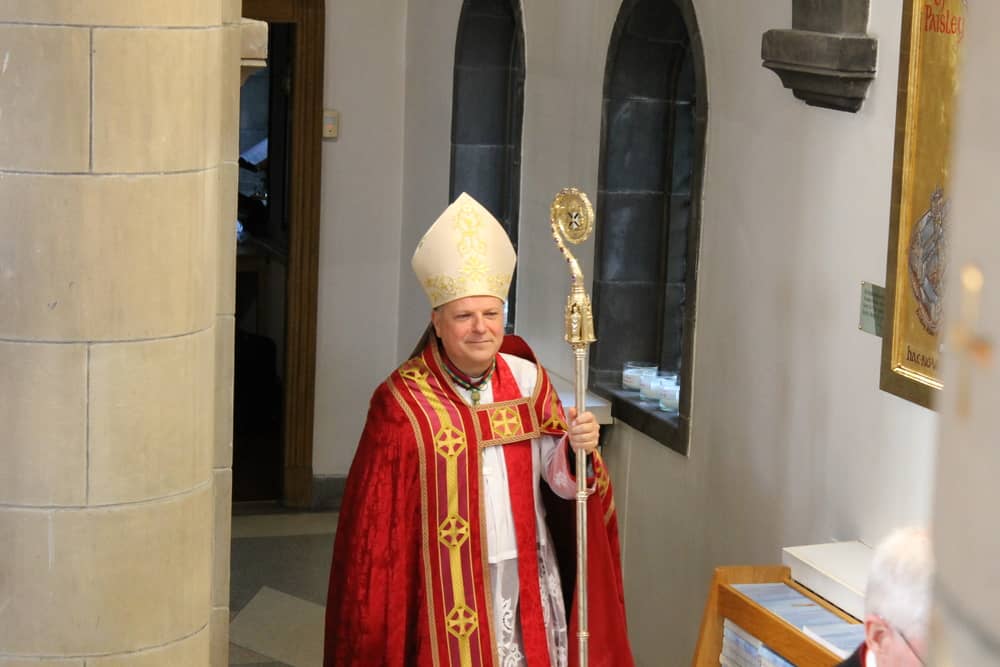
Bishop John Keenan of Paisley, and president of the country’s bishops’ conference since 2024, called on Catholics to contact MPs and “ask them, respectfully and urgently and, in your own words, to protect vulnerable people and support better palliative and hospice care by voting against” the bill.
“Our opposition to assisted suicide is rooted in compassion. Every person, from conception until natural death, possesses an inviolable dignity as one made in the image and likeness of God,” Bishop John Keenan also said.
“Illness, frailty, disability, dependence or fear must never lead society to conclude that some lives are no longer worth living,” Keenan added.
A similar bill was defeated in March this year in Scotland, and practically the same bill in the UK parliament failed to pass the House of Lords after it ran out of time this April.
Although the Edwards bill would only apply to England and Wales, Keenan said its passage would put pressure on Scottish parliamentarians to reopen the debate.
“Although it would not directly apply to Scotland,” he said, “it would significantly increase the likelihood of MSPs revisiting the issue of assisted suicide,” if the bill should pass, “despite the Scottish Parliament having rejected it only recently.”
“Changing the law would place vulnerable people, including the elderly, the disabled, the seriously ill and those who feel they are a burden, at risk of pressure. No safeguard can remove that danger completely,” he added.
The UK’s Prime Minister, Andy Burnham, recently dealt the pro-assisted suicide movement a blow by saying he believed that palliative care needed to be improved before debating assisted suicide, a sentiment that Keenan echoed.
“Scotland and the whole United Kingdom need better palliative and hospice care, better support for carers, and a renewed commitment that no one should face terminal illness alone, afraid or without dignity,” Keenan said.
“We welcome calls by the Prime Minister, Andy Burnham, for improvements to palliative and social care to be prioritised before a debate on assisted suicide,” he also said.
Burnham’s intervention
Last month, Burnham said debate around the introduction of assisted suicide should be put on hold until palliative and social care programs in the country are properly funded.
“I take the view that that debate – and I don’t say that there shouldn’t be a debate at some point about those issues – personally, I think there’s something that needs to happen first,” Burnham told reporters.
“That is the fixing of the funding of palliative care and social care,” said the Prime Minister, who was speaking with reporters after a speech at a London care home.
Those opposed to assisted suicide welcomed his intervention, particularly as if this bill passes the House of Commons there is little the House of Lords can do prevent it, unlike the last bill, which timed out after over a 1200 amendments were tabled in the House of Lords.
Edwards’ bill is nearly identical to the one proposed by Kim Leadbeater that died in the Lords. Due to two Parliament Acts – of 1911 and 1949 – if a bill is reintroduced the next parliamentary session then the House of Lords can’t block it.
Therefore, if Edwards’ second bill passes the Commons, the Lords won’t be able to prevent the UK joining the ever-growing list of European countries that have legalised assisted suicide.
In a statement sent to Crux Now, Alisdair Hungerford-Morgan, CEO of the charity Right To Life UK, which campaigns against assisted suicide and in support of better access to palliative care, highlighted the controversial aspect of using the Parliament Acts in such a piece of legislation.
“The near-identical bill makes it clear that assisted suicide campaigners are paving the way for the highly controversial use of the Parliament Acts to bypass the House of Lords to force it into law.
“Utilising the Parliament Acts route would mean it would be impossible for MPs to amend the bill in the House of Commons to fix the dozens of serious flaws in the bill,” he said.
“Using the Parliament Acts to force through a controversial Private Members’ Bill that was not in the government’s election manifesto would be unprecedented and unacceptable. It is striking that a number of MPs who previously supported the assisted suicide bill have already recognised this, and it is highly likely they are not alone,” he added.
______
You are reading this Crux Now article for free. You can register for our free daily newsletter here, and you can become a Crux Now supporter for full access to all our premium content here. To find out more about why becoming a Crux Now supporter is a great idea, go here.