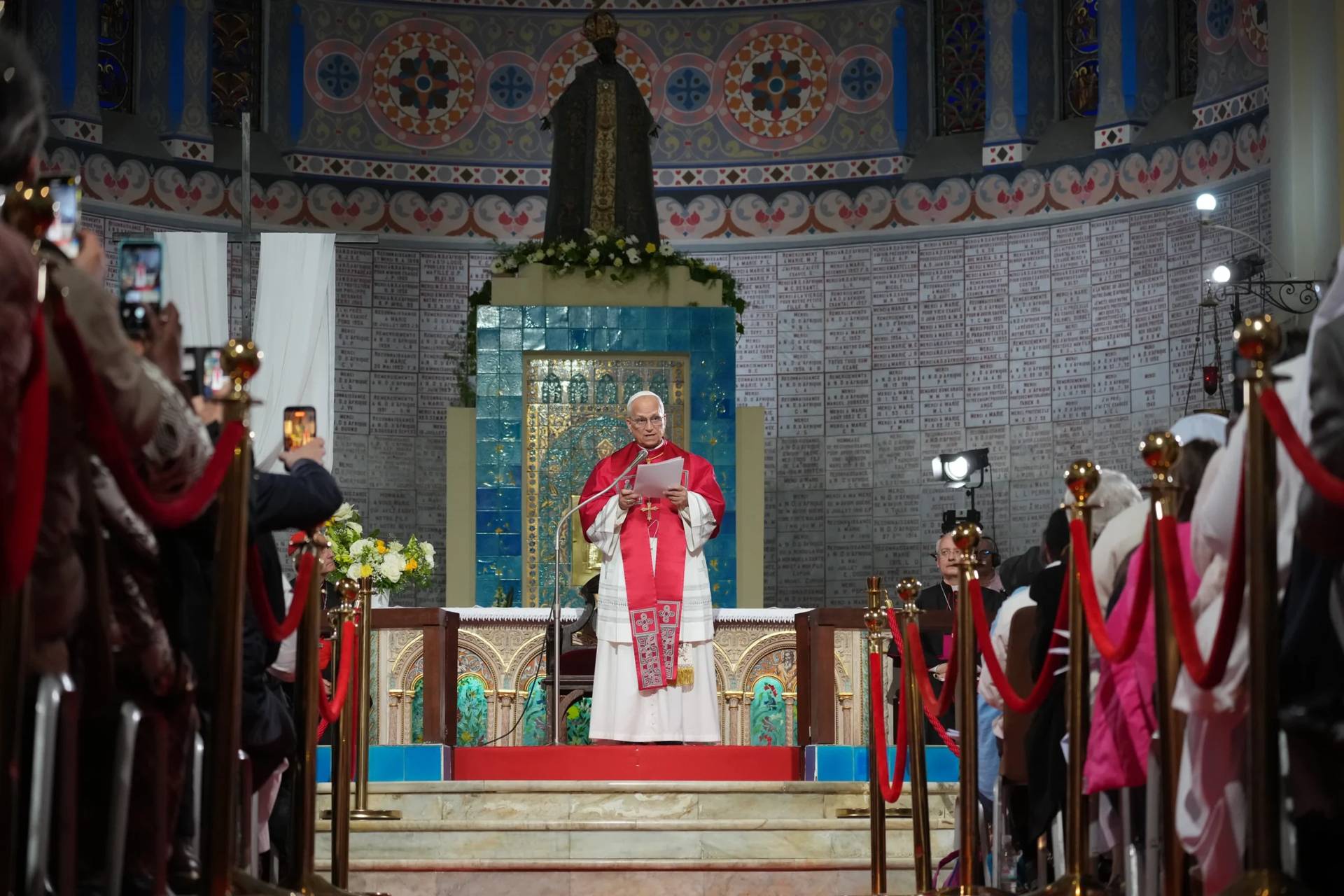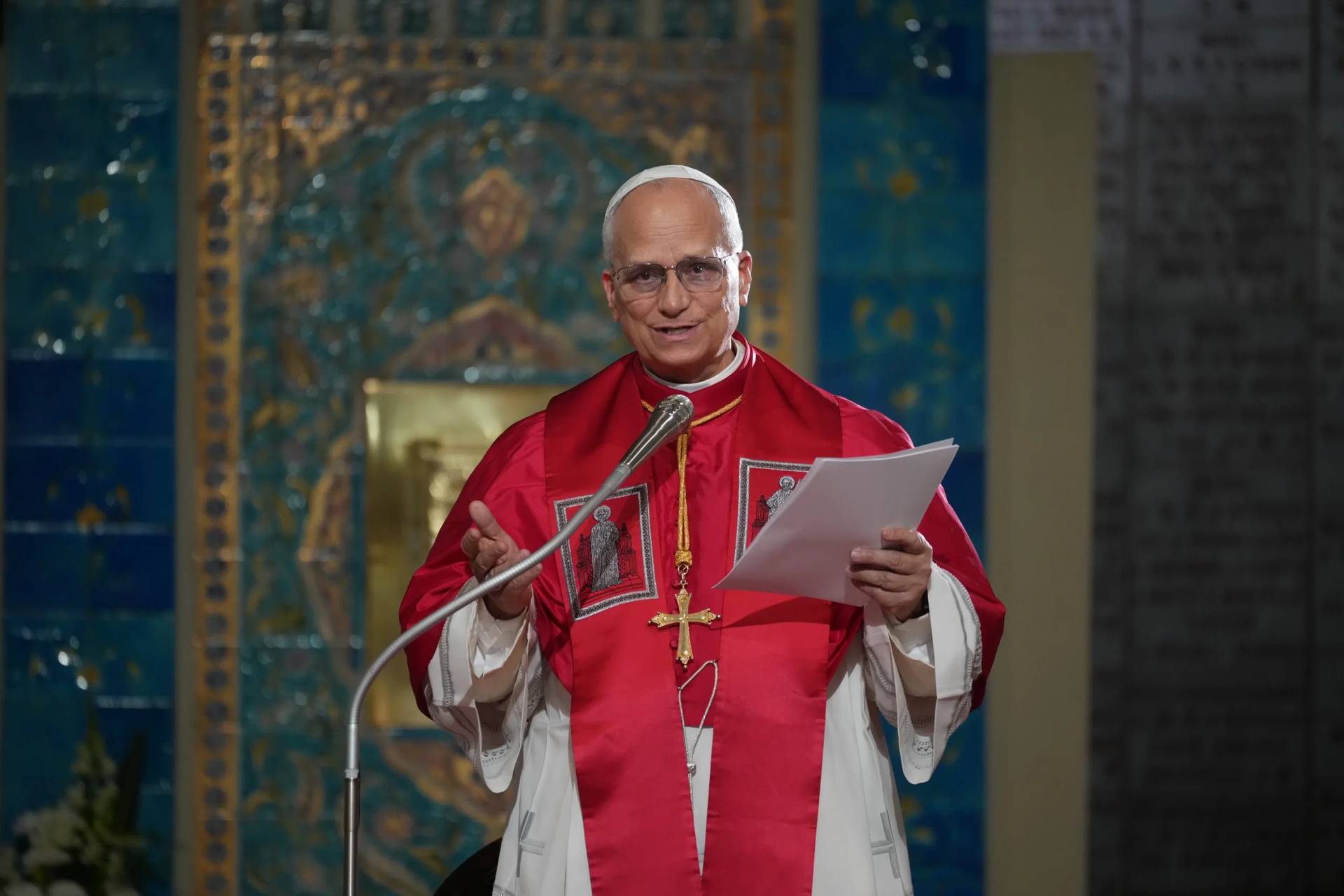
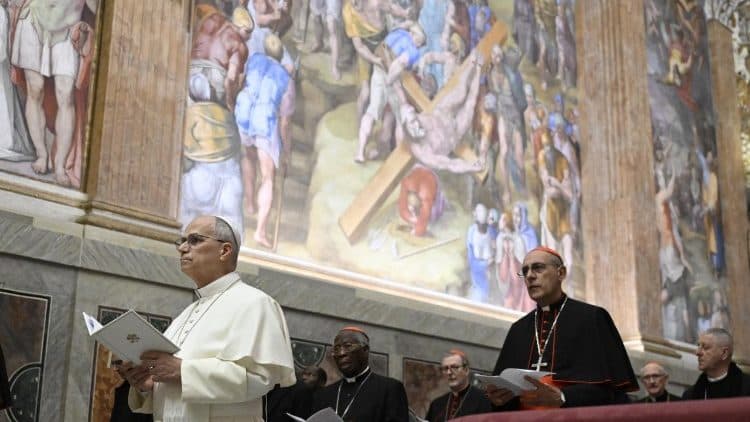
Bishop Erik Varden of Trondheim, chosen by Pope Leo XIV to deliver the 2026 Lenten spiritual exercises to the pope and senior members of the Roman Curia, on Wednesday offered a searing reflection on the duty of Church leaders to face the ongoing crisis of abuse and coverup squarely and unstintingly.
“Falls can humble us when we are puffed up, showing God’s power to save,” Varden said in his opening remarks on Wednesday morning in the Pauline Chapel of the Apostolic Palace in the Vatican.
“They can become milestones on a personal journey of salvation, to be recalled gratefully,” he said, quickly warning however that Christians – especially churchmen – “cannot afford to be gullible.”
“Not every fall ends in exhilaration,” Varden continued. “There are falls that reek hellishly,” he said, “bringing destruction to the guilty and carrying ruin in their wake. That wake is often broad and long, pulling in many innocents.”
“Nothing has done the Church more tragic harm, and compromised our witness more, than corruption arisen within our own house,” Varden said.
“The worst crisis of the Church,” Varden continued, “has been brought on, not by secular opposition, but by ecclesiastical corruption. The wounds inflicted will take time to heal. They call out for justice and for tears.”
“It is tempting, face to face with corruption, especially when we confront abuse, to look for a diseased root,” Varden said.
“We expect to find early warning signs that were ignored,” he said, “some failure in screening, an original pattern of deviancy.”
“Sometimes,” Varden continued, “these trails exist and we are right to blame ourselves for not having spotted them in time.”
“We do not, however, find them always,” he said.
Varden said it is possible to see “great and joyful good often manifest in the beginnings of communities now linked with scandal,” and ought not “presuppose that there was structural hypocrisy from the start,” or that founders of communities and congregations were rotten from the start, “as white-washed sepulchres,” he said, a bracing allusion to Jesus’s condemnation of the Pharisees’ hypocrisy.
“Sometimes,” Varden went on to say, “we do find signs of inspiration, even traces of holiness.”
The bishop of Trondheim asked how it is possible to account for such good signs and also for “warped developments[.]”
“A secular mindset will simplify,” Varden said, designating “monsters and victims” when faced with disaster.
“Happily,” he said, “the Church possesses, when she remembers to use them, more delicate and more effective tools.”
Varden indicated the insights of St. Bernard of Clairveaux, saying the great 12th century Cistercian abbot, mystic, and reformer “took the demonic realm seriously,” but did not ascribe “all spiritual disease to villains with horns and pitchforks.”
“He holds men and women responsible for the way in which they use their sovereign freedom,” Varden – himself a Cistercian of the Strict Observance or Trappist – said, adding that St. Bernard’s point was “that human nature is one.”
“If we begin to go deep into our spiritual nature,” he said, “other depths are perforce laid bare.”
“We shall face existential hunger, vulnerability, a yearning for comfort,” he said, and experiences of such and similarly inevitable facts of human life in a fallen world “may arise by way of assault.”
Varden said there is always a risk – elevated in founders — that spiritual exposure “will seek physical or affective release.”
There is, moreover, a danger “that such instances of release are rationalized as if they were somehow ‘spiritual’ themselves, more elevated than the misdemeanors of ordinary mortals.”
Though Varden did not mention any individual or group specifically, he did provide a link – in the version of his remarks published to his personal blog, Coram fratribus, and to the official Vatican News website of the Holy See – to a 2021 book by French journalist Céline Hoyeau, La trahison des pères. Emprise et abus des fondateurs de communautés nouvelles (The Betrayal of the Fathers: Control and Abuse by the Founders of New Communities).
Hoyeau’s book details her own discovery of the double lives led by prominent clerics and laymen, many of them founders of congregations and movements in the middle of the last century, and examines the institutional and cultural failures of churchmen in dealing with them.
Recently, in light of numerous cases, Church leaders – including high-ranking Vatican officials as well as experts in different fields – have called for legal reform to make spiritual abuse a specific crime at Church law and to consider spiritual manipulation an aggravating factor in abuse cases.
RELATED: Group defining crime of spiritual abuse making good progress, cardinal says
One particularly notorious story that has brought the matter into focus in recent years is the ongoing case of Father Marko Rupnik, a disgraced former Jesuit and celebrity mosaic artist accused of accused of sexually abusing and manipulating at least 40 different women, most of whom were religious women who belonged to the Loyola Community Rupnik helped found in his native Slovenia in the 1980s.
RELATED: Rupnik case casts shadow on Vatican’s commitment to fight abuse
Rupnik’s artworks decorate countless shrines and sanctuaries around the world, including the Redemptoris Mater chapel in the Apostolic Palace (where Pope St. John Paul II frequently held the very Lenten retreats Varden is this year preaching in the Pauline Chapel).
Another is the case of the Legionaries of Christ, founded by Father Marcial Maciel, who preyed on women, seminarians and minors (including at least one of his own illegitimate children), and used both the priestly society he founded and Regnum Christi – the Legion’s lay arm – to help bankroll his depraved double life.
Benedict XVI ordered Maciel into a life of prayer and penance in 2006, but he allowed the Legion he founded to continue in operation and only ordered a change of the organization’s leadership and statutes.
RELATED: Scandal-ridden Legionaries of Christ named in Pandora Papers
In his remarks to Pope Leo and the curial leadership on Wednesday, Varden said, “The integrity of a spiritual teacher will be attested by his conversation, but not only; it will be evidenced as much by his online habits, his comportment at table or at the bar, his freedom with regard to others’ adulation.”
“The spiritual life is not adjunct to the remainder of existence,” the bishop said, “it is its soul.”
“We must beware of all dualism,” Varden continued, “always remembering that the Word became flesh so that our flesh might be imbued with Logos.”
“We must learn to be equally at ease in our carnal and spiritual nature,” Varden said, “so that Christ our Master may govern peacefully in both.”
Follow Chris Altieri on X: @craltieri