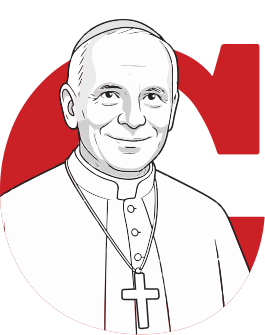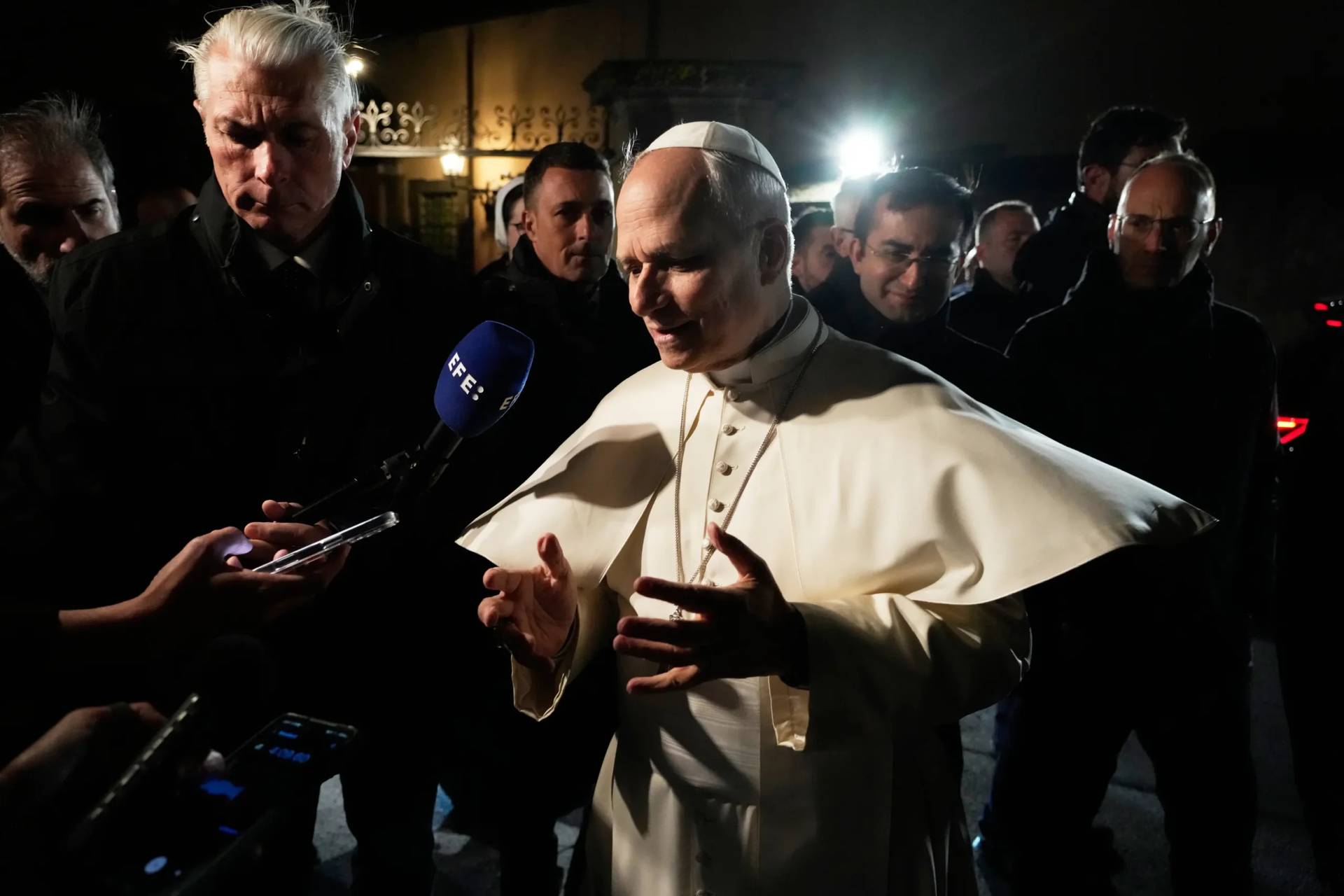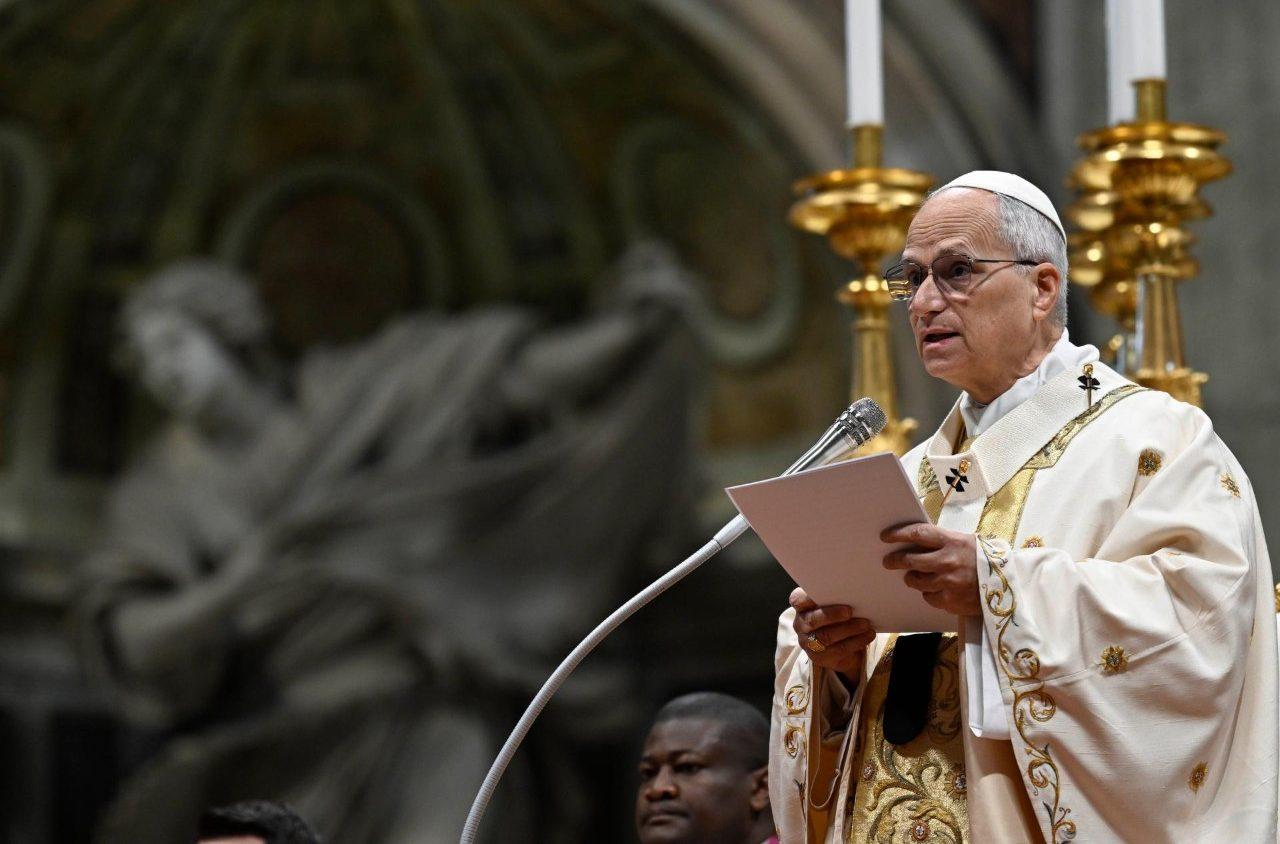
ROME – During his first Holy Week after his election last year, Pope Leo XIV offered a lengthy reflection on Christian mission and the need to be missionaries of unity and hope in a world in crisis.
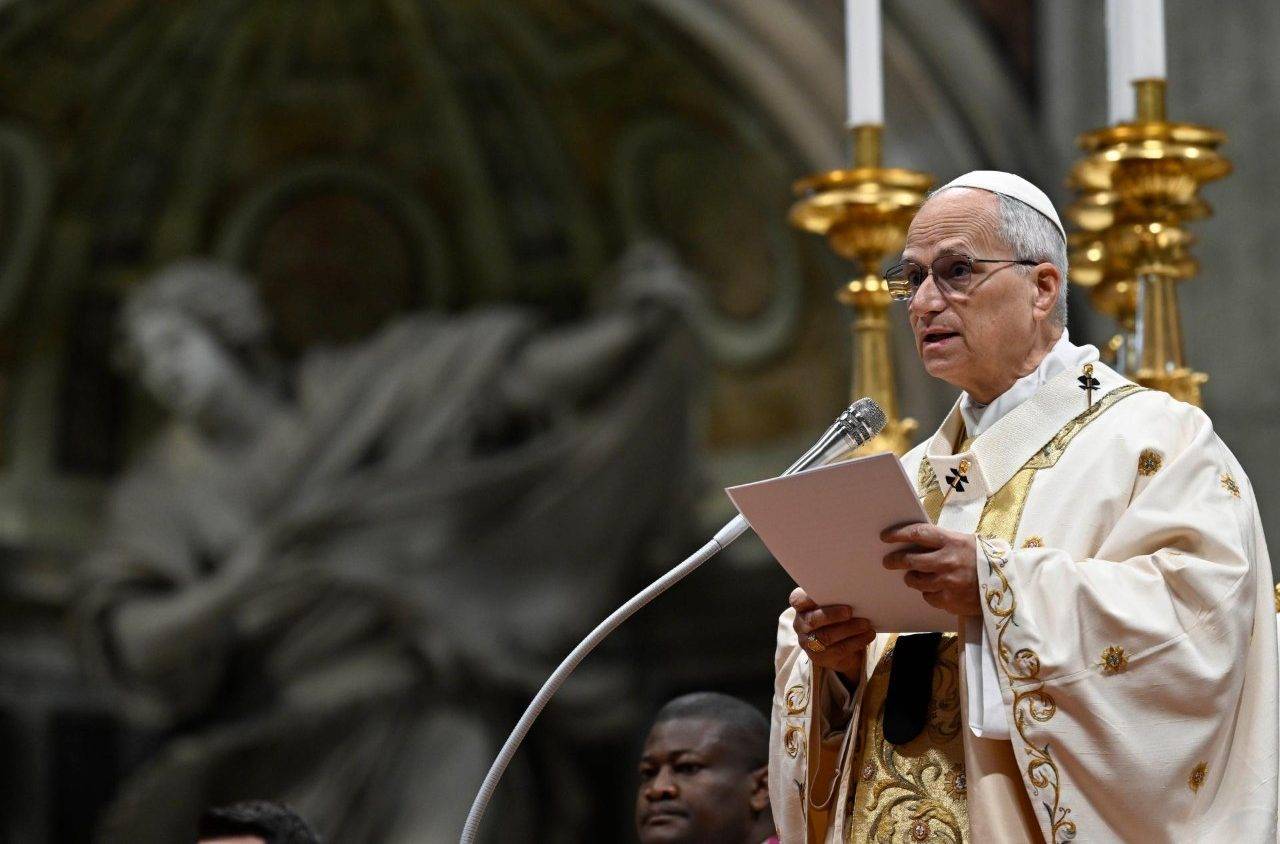
Himself a longtime missionary, the pope in his April 2 Chrism Mass on Holy Thursday said the commemoration of Jesus’s death and resurrection has the ability “to transform what human pride generally tends to harden: our identity and our place in the world.”
Jesus’s freedom in the face of suffering and death “changes hearts, heals wounds, refreshes and brightens our faces, reconciles and gathers us together, and forgives and raises us up,” he said.
Reflecting on what he said was the “Christian mission,” the pope said it is the same mission Jesus had, and it is carried out by each person according to their own vocation and state in life.
However, this mission “never without others, never neglecting or breaking communion!” he said, saying bishops and priests in particular “are at the service of a missionary people.”
“Together with all the baptized, we are the Body of Christ, anointed by his Spirit of freedom and consolation, the Spirit of prophecy and unity,” he said.
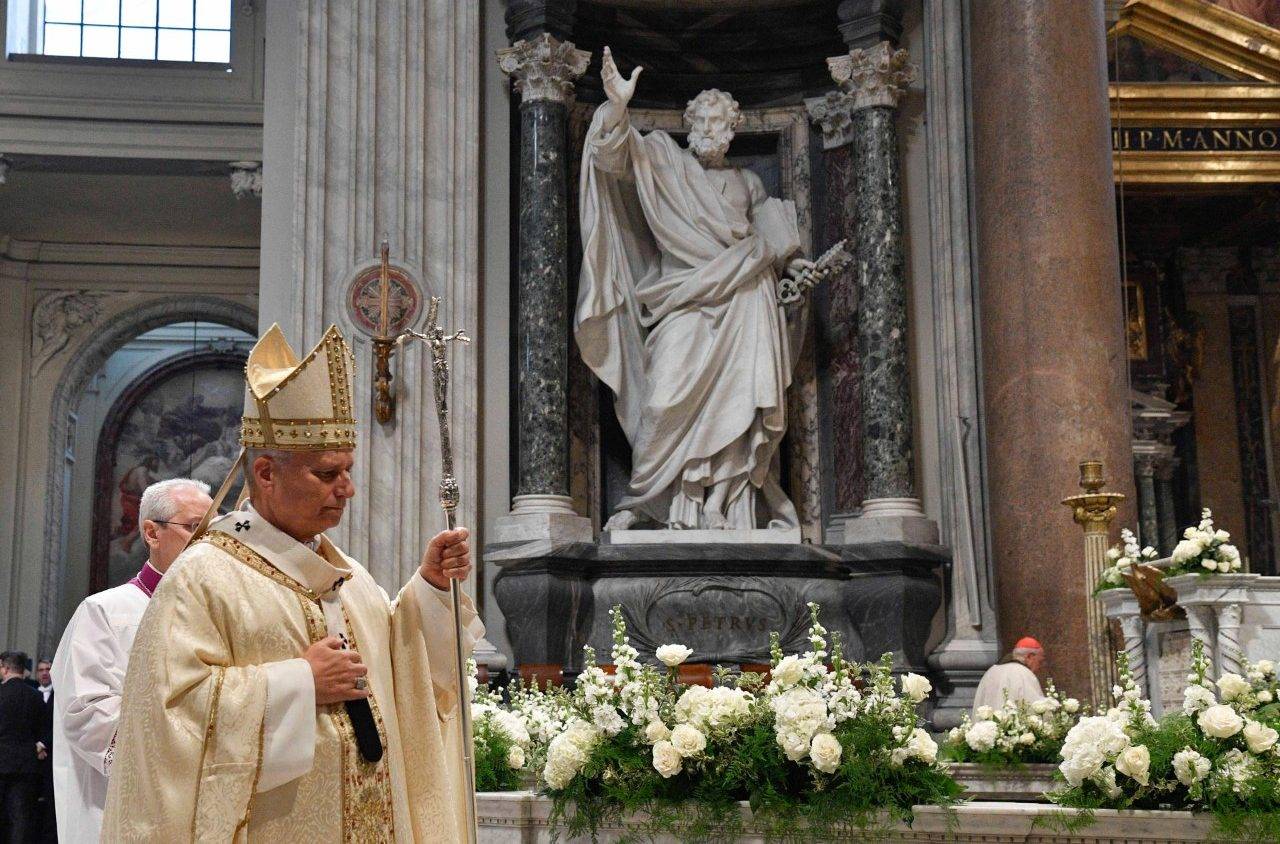
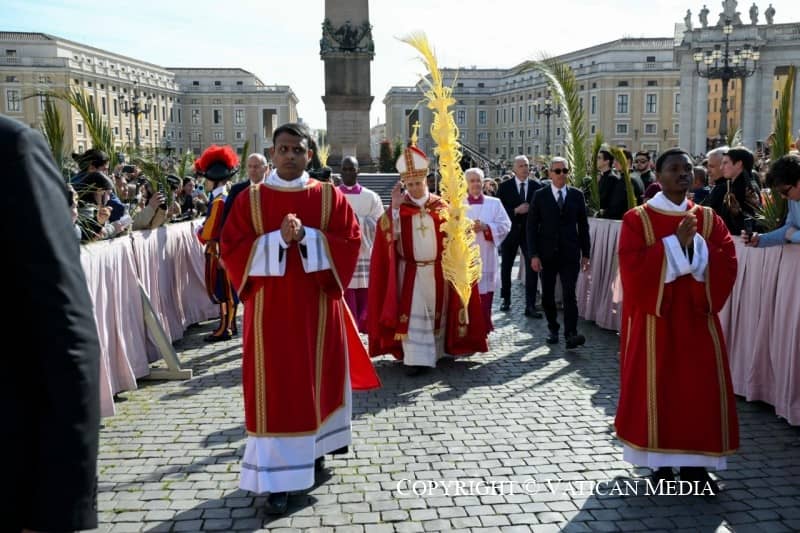
Pope Leo spoke in his first major liturgy of the Holy Week Triduum, which commemorates Jesus’s arrest, condemnation, death and resurrection on Easter.
During the Chrism Mass, holy oils, called chrism, to be used in the sacraments throughout the year, are blessed and priests renew the promises of their ordination, during which their hands were anointed as a sign of their call to serve God.
Following the Chrism Mass, Pope Leo will celebrate the Mass of the Lord’s Supper at the Basilica of Saint John Lateran Thursday evening, during which he will wash the feet of priests ordained the past year, and the rector of Rome’s diocesan seminary.
In his homily, Leo said that looking back on the course of Jesus’s entire ministry, the events of his Passion and death, and his resurrection at Easter, it is clear that “God consecrates in order to send.”
Jesus in saying he was sent by God his faither describes “that movement which binds his Body to the poor, to prisoners, to those groping in the dark and to those who are oppressed,” he said.
As members of the Body of Christ, Christians, he said, “speak of a Church that is ‘apostolic,’ sent out, driven beyond itself, and consecrated to God in the service of his creatures.”
Leo XIV, who spent over 20 years as a missionary in the most impoverished areas of Peru and who often speaks fondly of his time there, said that to be sent by God implies detachment, a willingness to leave what is familiar and to venture into something new.
In this regard, he noted that Jesus after his baptism leaves Nazareth, where he grew up, “to usher in a new era… so that what has taken root there, Sabbath after Sabbath, through faithful listening to the word of God, may come to fruition.”
“Likewise, he will call others to set out, to take risks, so that no place becomes a prison, no identity a hiding place.”
The self-emptying involved in going on “mission,” he said, does not mean severing with one’s past, but growing from one’s previous experiences, which God uses to bear fruit in the future.
“There is no mission without reconciliation with our past, with the gifts and limitations of the upbringing we have received; but, at the same time, there is no peace without setting out, no awareness without detachment, no joy without risk,” he said.
Pope Leo said this willingness to empty oneself is an act that opens to encounter, because “Love is true only when it is unguarded; it requires little fuss, no ostentation, and gently cherishes weakness and vulnerability.”
This is a struggle, but it is impossible to bring good news to the poor with signs of power, and it is impossible to become free without detachment, he said.
In this regard, Leo condemned past missionary efforts to colonize and dominate the cultures they came to evangelize, saying, “We know that throughout history, mission has not infrequently been distorted by a desire for domination, entirely foreign to the way of Jesus Christ.”
“Neither in the pastoral sphere nor in the social and political spheres can good come from abuse of power,” he said, saying the greatest missionaries employed “quiet, unobtrusive approaches, whose method is the sharing of life, selfless service, the renunciation of any calculated strategy, dialogue and respect.”
Drawing on his own missionary experience, Leo said this is the way of the Incarnation, “which always takes the form of inculturation.”
“Salvation, in fact, can only be received by each person through his or her native language,” he said, and referred to Pentecost, when the Holy Spirit descended on the apostles and they each spoke their native language, but understood one another.
Stressing the need to trust in the Holy Spirit, the pope said Christians “must go where we are sent with simplicity, respecting the mystery that every person and every community carries within them.”
Christians are God’s guests, he said, saying, “This is also true if we are bishops, priests, or men and women religious.”
“Even the places where secularization seems most advanced are not lands to be conquered or reconquered,” he said.
Faithful and pastors will only be successful in bringing God’s word to new places, he said, “if we walk together as the Church, if mission is not a heroic adventure reserved for a few, but the living witness of a Body with many members.”
Leo also highlighted an uncomfortable aspect of Christian mission, which he said is the possibility of misunderstanding and rejection along the way.
“The cross is part of the mission: the sending becomes more bitter and frightening, but also more freeing and transformative,” he said.
In life, people face many situations “where everything seems to be over. We then ask ourselves whether the mission has been in vain,” he said.
Whether this happens due to failures from personal shortcomings or those of others, or from a complex intersection of responsibilities, “we can make the hope of many witnesses our own.”
To this end, Pope Leo spoke of Bishop Oscar Romero, who was assassinated while celebrating Mass for his advocacy on behalf of the people during a time of social unrest.
Leo closed his homily saying that in a world “torn apart by the powers that ravage it,” there arises “a new people, not of victims, but of witnesses.”
“In this dark hour of history, it has pleased God to send us to spread the fragrance of Christ where the stench of death reigns,” he said, and urged faithful and pastors to their “yes” to their mission, which “calls for unity and brings peace.”
“Let us overcome the sense of powerlessness and fear! We proclaim your death, O Lord, and we proclaim your resurrection, as we await your coming,” he said.
Follow Elise Ann Allen on X: @eliseannallen
This article has been corrected.