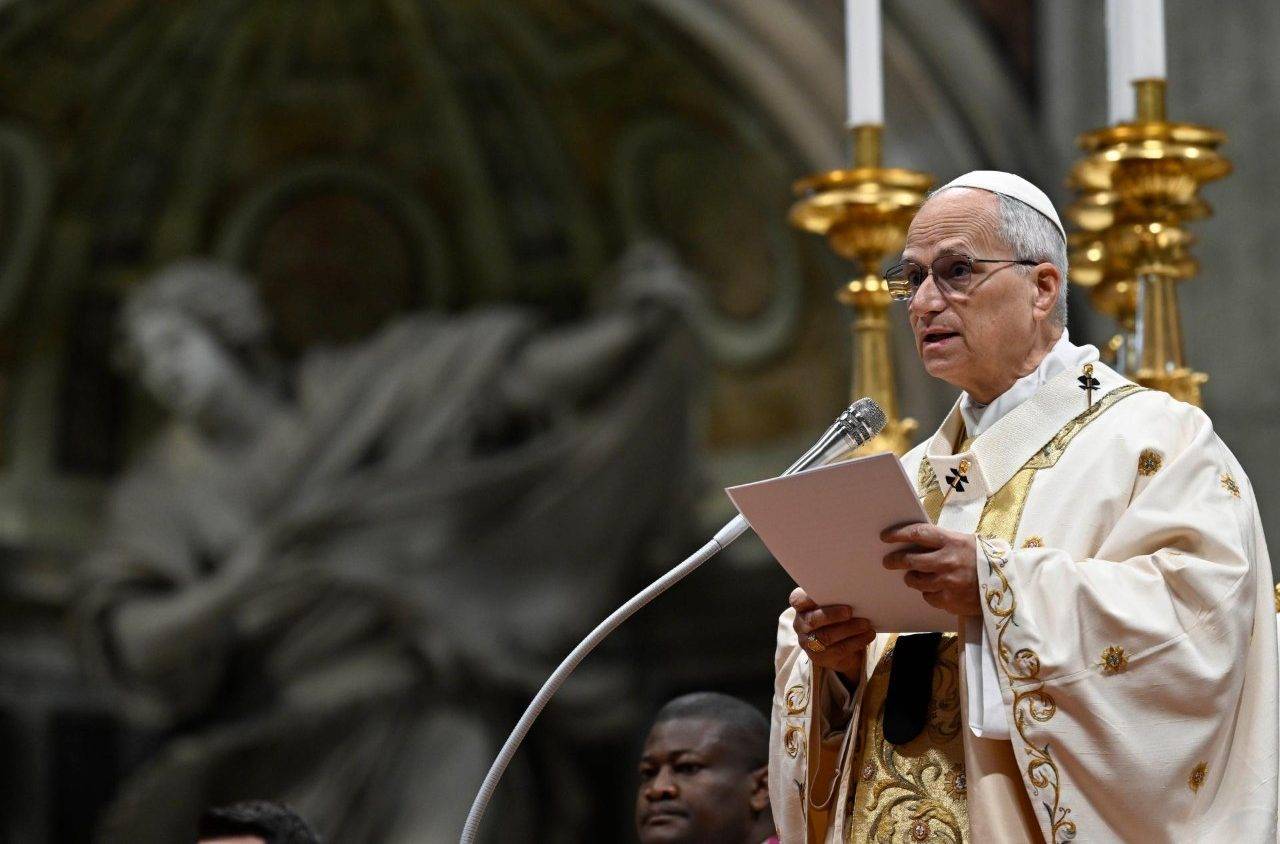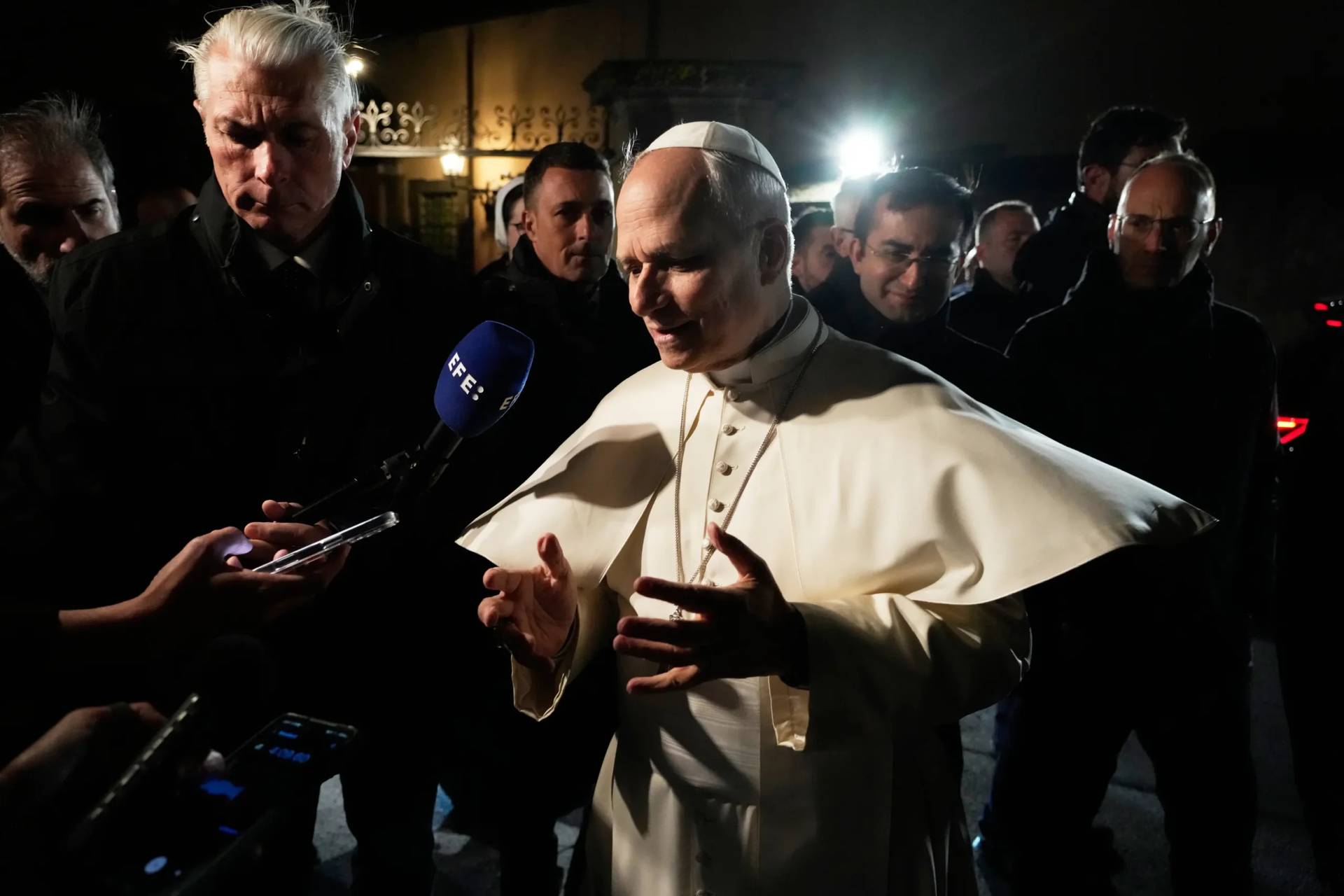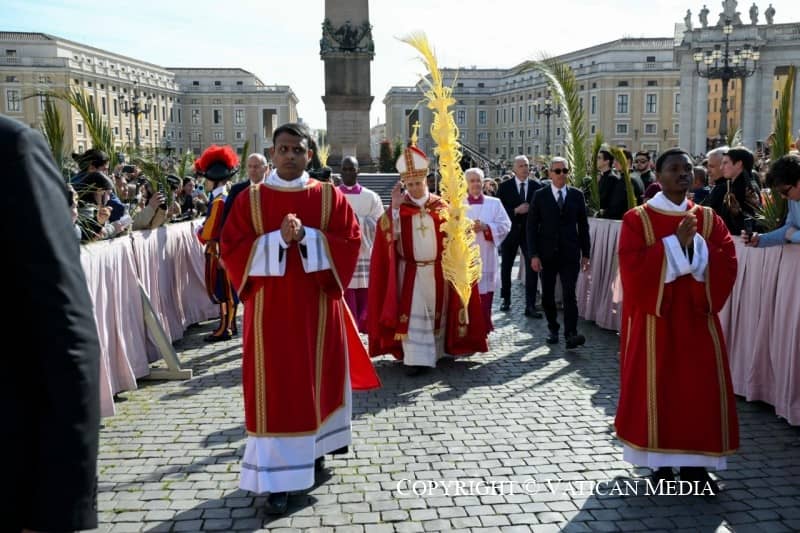
ROME – Pope Leo presided over the traditional rite of the washing of the feet on Holy Thursday, speaking of the gesture as one of fraternity and urging Christians, but especially pastors, to stand with the oppressed.
“As humanity is brought to its knees by so many acts of brutality, let us too kneel down as brothers and sisters alongside the oppressed. In this way, we seek to follow the Lord’s example,” the pope said in his April 2 homily.
The whole of biblical history converges in Jesus, he said, and in him, “the ancient figures find their fulfilment, for Christ the Savior accomplishes the Passover of humanity, opening for all the passage from sin to forgiveness, from death to eternal life.”
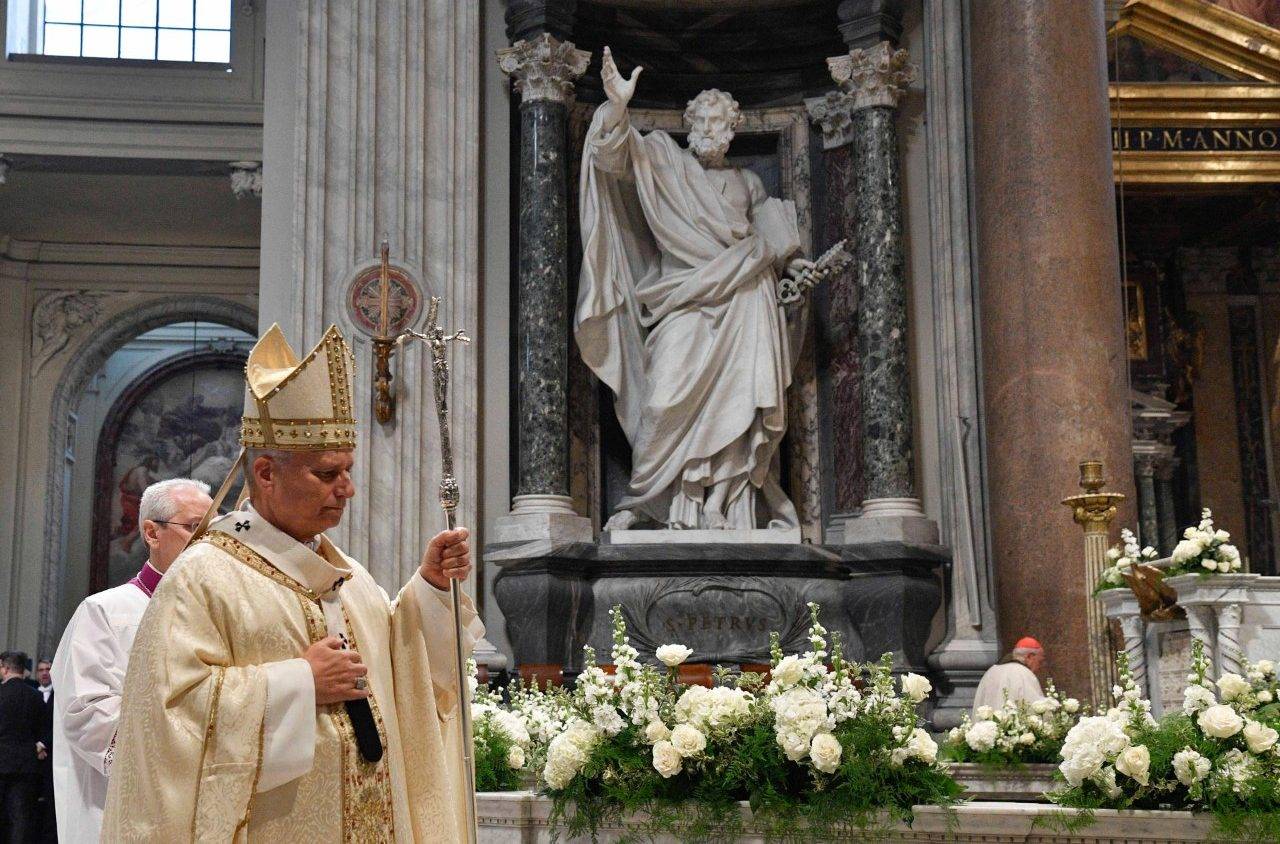
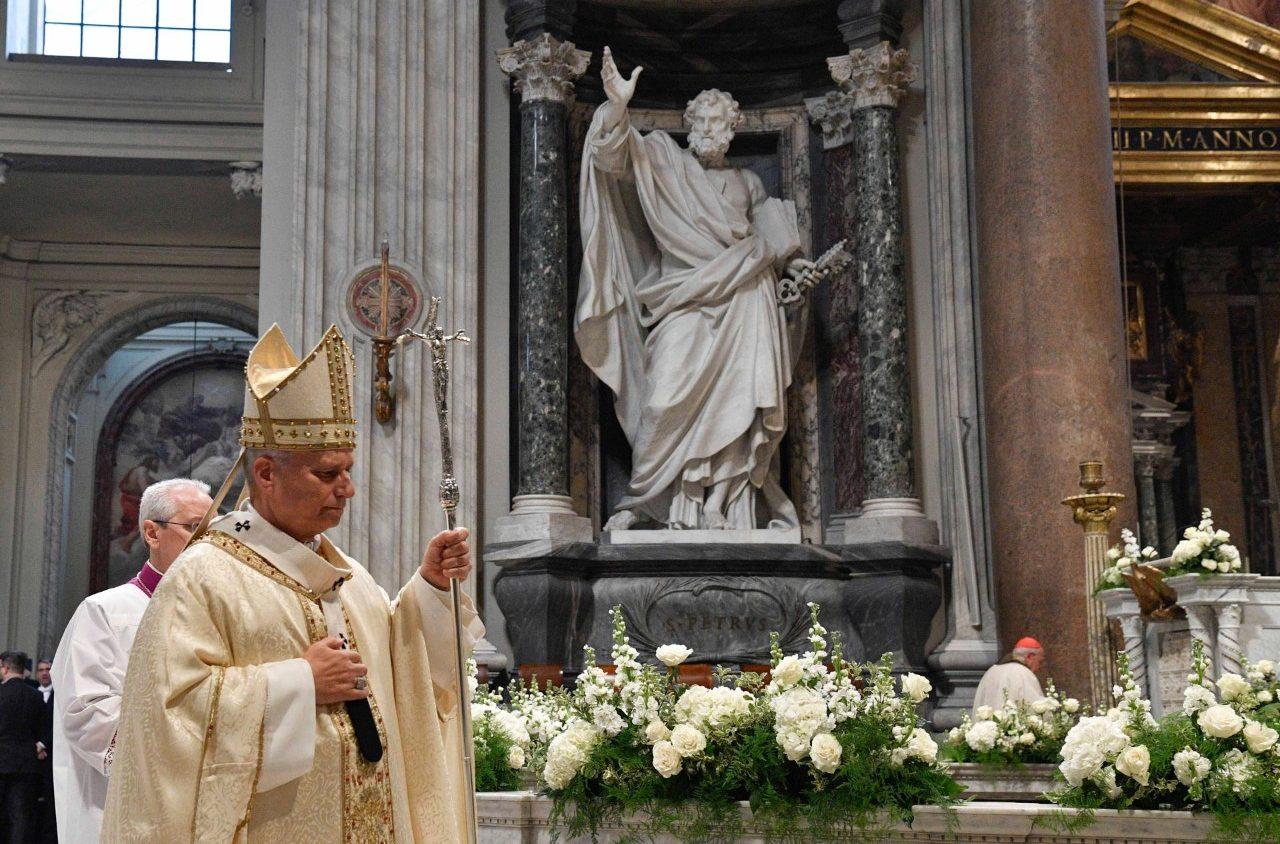
Differently than his immediate predecessor, Pope Leo opted to celebrate the Mass of the Lord’s Supper in the Pontifical Basilica of Saint John Lateran, the pope’s official see and chose to wash the feet of only priests during the liturgy.
Pope Francis set aside this practice, preferring instead to celebrate the Holy Thursday Mass in prisons, detention centers for migrants, and centers for the disabled.
Whereas Francis made a point of washing the feet of women and even non-Catholics, which drew the ire of more conservative camps uncomfortable with the changes, Leo returned to the typical practice of washing the feet of only priests.
The priests whose feet he washed included 11 whom he ordained last year, as well as the rector of Rome’s diocesan seminary.
In his homily, Leo said Jesus’s act of washing the disciples’ feet was “both gesture and nourishment for all, revealing the justice of God.
“In this world, and particularly in those places where evil abounds, Jesus loves definitively – forever, and with his whole being,” he said.
Pope Leo said the washing of the feet was also inseparable from Jesus’s actions at the table, when he broke bread and shared wine, instituting the Sacrament of the Eucharist.
Not only do these gestures reveal the mystery of the Eucharist, but they “also entrusts to us a task – a mission that we are called to take up as nourishment for our lives,” he said.
“What the Lords shows us – taking the water, the basin and the towel – is far more than a moral example. He entrusts to us his very way of life,” the pope said.
Washing the feet of the disciples encapsulates God and his incarnation, he said, because in taking on the condition of a servant, “the Son reveals the Father’s glory, overturning the worldly standards that so often distort our conscience.”
“Along with the silent astonishment of his disciples, even human pride cannot remain blind to what is taking place,” he said, noting that like Peter, who initially resisted Jesus’s gesture, all Christians must learn to accept that “God’s greatness is different from our idea of greatness.”
As Christians, “we systematically desire a God of success and not of the Passion,” the pope said, quoting Pope Benedict.
“We are always tempted to seek a God who ‘serves’ us, who grants us victory, who proves useful like wealth or power. Yet we fail to perceive that God does indeed serve us through the gratuitous and humble gesture of washing feet,” he said, adding, “This is the true omnipotence of God.”
Through the gesture of washing the disciples’ feet, Jesus transforms the image not only of God, but of humanity, the pope said.
“We tend to consider ourselves powerful when we dominate, victorious when we destroy our equals, great when we are feared,” however, Jesus, as true God and true man, “offers us the example of self-giving, service and love.”
Humanity needs Jesus’s example in order to understand what love is and to truly love one another, he said.
Jesus, he said, “is the true measure, the ‘Teacher and Lord’ who removes every divine and human mask. He offers his example not when all are content and devoted to him, but on the night he was betrayed, in the darkness of incomprehension and violence.”
This fact demonstrates God’s proactive nature, revealing that “he loves us first, and in that love, he forgives and restores us,” the pope said.
God’s love, Leo said, “is not a reward for our acceptance of his mercy,” but rather, “he loves us, and therefore cleanses us, thereby enabling us to respond to his love.”
Pope Leo urged faithful to learn from the reciprocal service Jesus demonstrated, as he did not instruct disciples to repay his gesture, but rather, to love one another, and to wash one another’s feet.
Quoting Pope Francis, he said the washing of the feet “is a duty which comes from my heart: I love it. I love this and I love to do it because that is what the Lord has taught me to do.”
Francis, he said, “was not speaking of an abstract imperative, nor of a formal and empty command, but expressing his heartfelt obedience to the charity of Christ, which is both the source and the model of our own charity.”
“Indeed, the example given by Jesus cannot be imitated out of convenience, reluctance or hypocrisy, but only out of love,” he said.
Allowing oneself to be served, then, is necessary in order to serve others, he said, saying that in Jesus, “God has given us an example – not of how to dominate, but of how to liberate; not of how to destroy life, but of how to give it.”
Noting that the Mass of the Lord’s Supper is a commemoration of the institution of the Eucharist but also of Holy Orders, he said “The intrinsic bond between these two sacraments reveals the perfect self-gift of Jesus, the High Priest and living, eternal Eucharist.”
Bishops and priests, and thus through the sacraments, charity is shown to the entire people of God, he said, saying priests “are called to serve the People of God with our whole lives.”
“Holy Thursday is therefore a day of fervent gratitude and authentic fraternity,” he said, praying that the liturgy celebrated in every parish and community throughout the world, would be “a time to contemplate Jesus’ gesture, kneeling as he did, and to ask for the strength to imitate his service with the same love.”
Follow Elise Ann Allen on X: @eliseannallen