The Vatican has recognised the martyrdom of 20 Spanish priests from Ibiza who were killed in hatred of the faith during the beginning of Spain’s Civil War in 1936.
The Dicastery for the Causes of Saints published a decree on Thursday confirming “the martyrdom of the Servants of God Juan Torres Torres and 19 companions, diocesan priests, killed in hatred of the faith between August and September 1936, in the territory of the diocese of Ibiza, Spain.”
Father Juan Torres Torres died at the age of 25 and was the youngest to die –as well as the first – among the group of Catholic priests. They were targeted as part of an attempt to eradicate Catholic identity from the islands of Ibiza and Formentera through violence and desecration.
At the time, their deaths represented nearly half of the clergy in Ibiza. The oldest member of the group was Father José Tur Bennassar, born 1859, who was killed along with most of the group on Sept. 13, the day on which the Ibizan diocese celebrates the martyrs’ feast day.
The beatification process of these martyrs was opened in 2008 by the then bishop of Ibiza, and the recognition of their martyrdom now clears the way for their beatification.
Along with the Spanish priests, the decree also recognised the heroic virtue of five Servants of God who are now Venerable, including 17th century religious Clara Andreu y Malferit from Mallorca and Belgian missionary Father Júlio Emílio Alberto De Lombaerde who founded several religious congregations.
More than 2,200 martyrs of the civil war have been beatified by the Church, 11 of whom have been canonized.
The legacy of the civil war
The legacy of the 1936-39 Spanish Civil War is a complex one, particularly for the Church. Estimates suggest that in the 1930s under the Republicans, 13 bishops, 4,154 priests and seminarians, 2,365 religious, 283 nuns were killed, along with approximately 4000 laymen.
Largely because of the violence against the Church in Republican-controlled areas, the Church sided with General Franco’s regime. Following his death, a detachment has taken place, due partly to the atrocities that took place under Franco, along with the Church’s change in tack following Vatican II.
Last November, the president of the Spanish bishops’ conference and Archbishop of Valladolid, Msgr. Luis Argüello, talked about the “critical distancing” that has taken place in Spain between the Church and the memory of Franco.
Argüello said that “beginning in 1958, a distancing begins between the Church and Franco’s regime” but even before this there were “movements of criticism and opposition.”
The war monument built by Franco, which also houses a basilica and Benedictine monks, the Valley of Cuelgamuros (formerly known as the Valley of the Fallen) has been a lightning rod for controversy, demonstrating the incendiary legacy of the civil war.
The current government headed by Prime Minister Pedro Sánchez from the Spanish Socialist Workers’ Party (PSOE) has undergone a multimillion-euro project to “redefine” the monument, and the Church’s role in this process has come under heavy criticism, with many on the Spanish right seeing it as a capitulation.
Pope Leo XIV’s visit
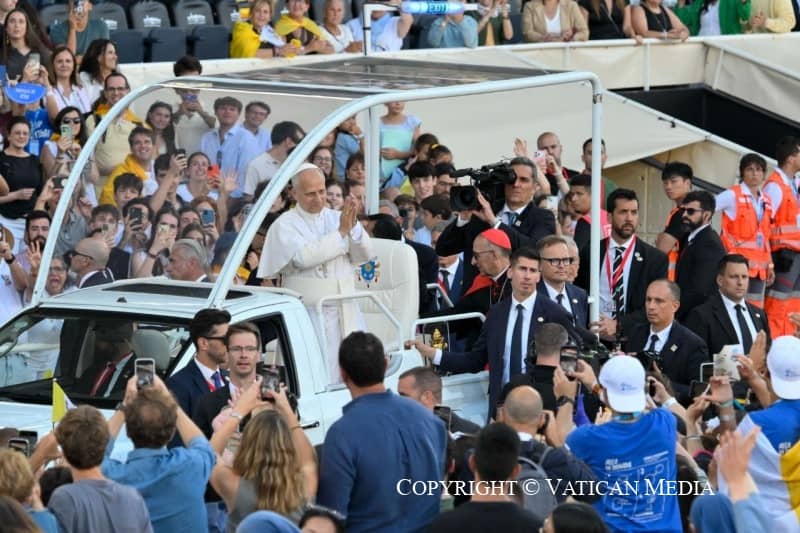
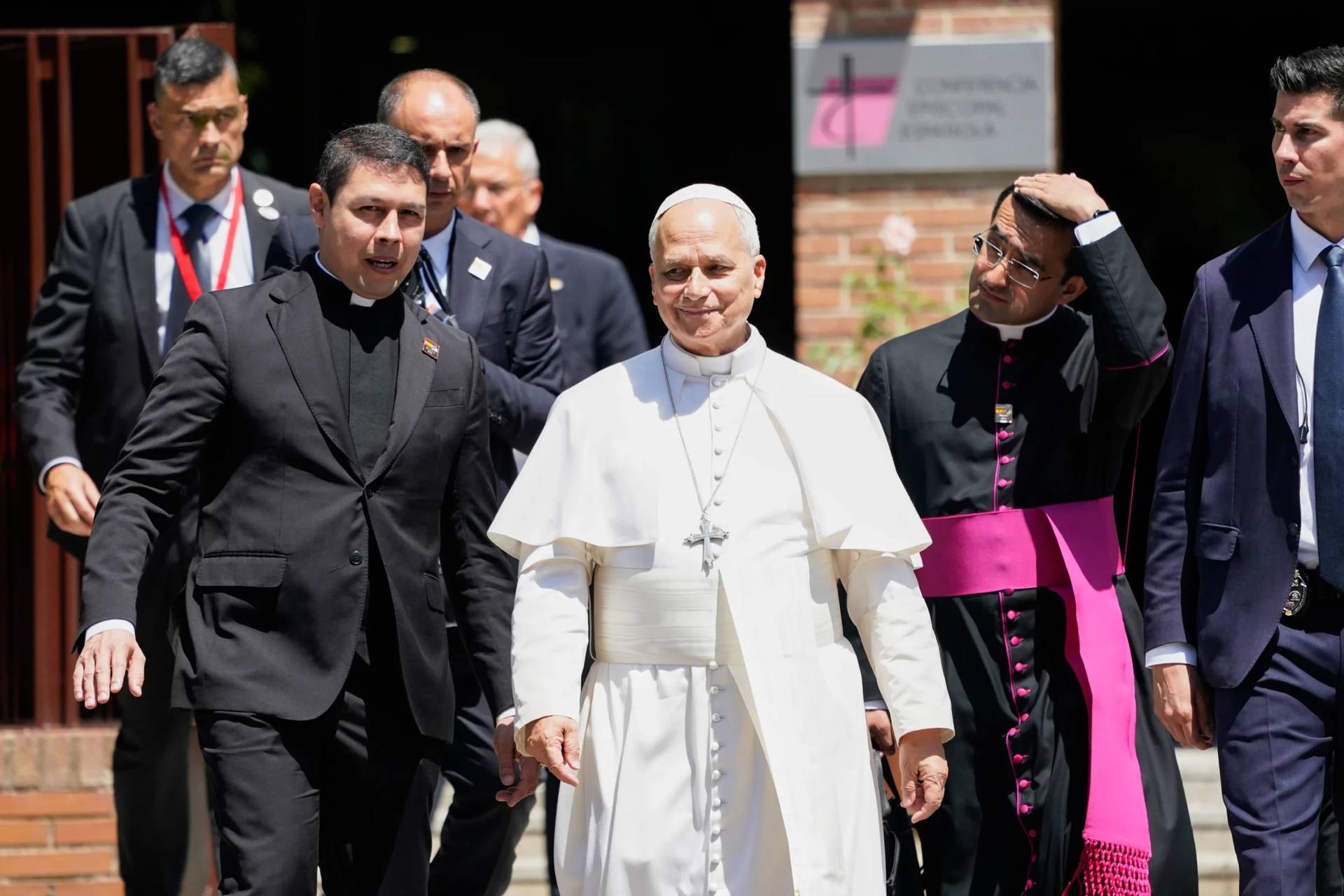
In early June, Pope Leo XIV visited Spain, stopping off in Madrid, Barcelona and the Canary Islands, and according to the organizers the trip attracted approximately 2.5 million visitors.
Speaking to reporters this week as he left Castel Gandolfo, Leo said “the enthusiastic response from so many people” during the trip “was something truly beautiful.”
“Every moment was very well prepared, it must be said, by the bishops with so many lay people and so many volunteers in all the places who worked to prepare everything. It has been wonderful. From what I’ve seen, the people were very happy, and I am certainly happy to be able to celebrate the faith,” Leo added.
Argüello also recently praised the trip at a press conference. “The trip had a heart, which was seeing the evangelization of the Church in action. It was an apostolic journey in which the Word was proclaimed, the liturgy was celebrated, and the charity of the Church was exalted with harmony in the various places where the visit took place,” he said.
He revealed that following the trip Leo told the Spanish bishops it was their job to turn the emotion into virtue and work.
Argüello also confirmed a story that appeared in the Catalan local press that a number of choir members were removed by the police as they planned to disrupt the celebrations of the inauguration of the Tower of Jesus Christ at the Sagrada Família in Barcelona.
The protestors planned to unfurl a Catalan flag, shout for independence, and sing the Catalan national anthem in front of the King of Spain, Felipe VI, who was present at the Sagrada Família.
“Some members of the choir were the ones who alerted [authorities] over the situation,” Archbishop Argüello said.