Thirty years after Pope Saint John Paul II’s landmark Apostolic Exhortation, Ecclesia in Africa, the document remains both a beacon of hope and a mirror reflecting the continent’s unfinished journey.
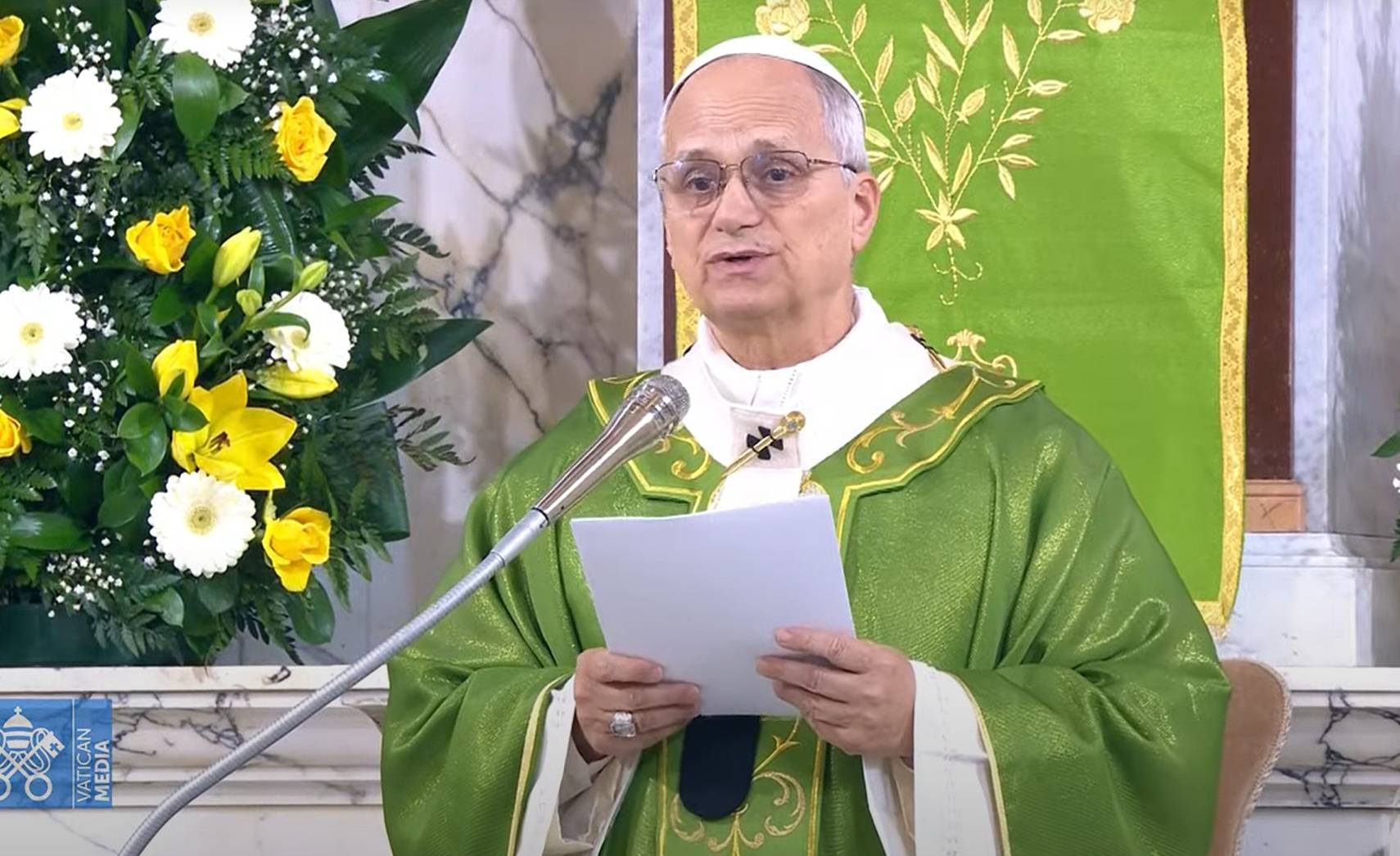
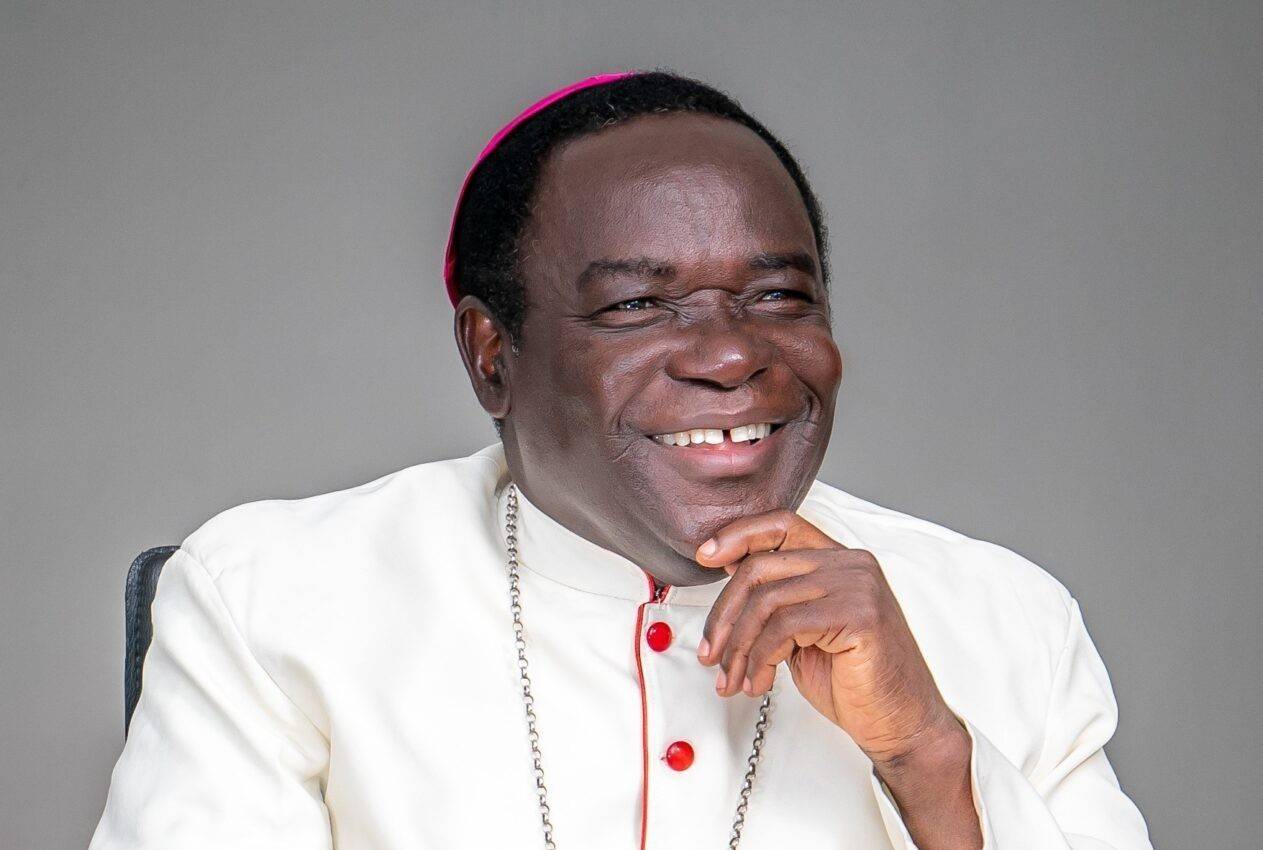
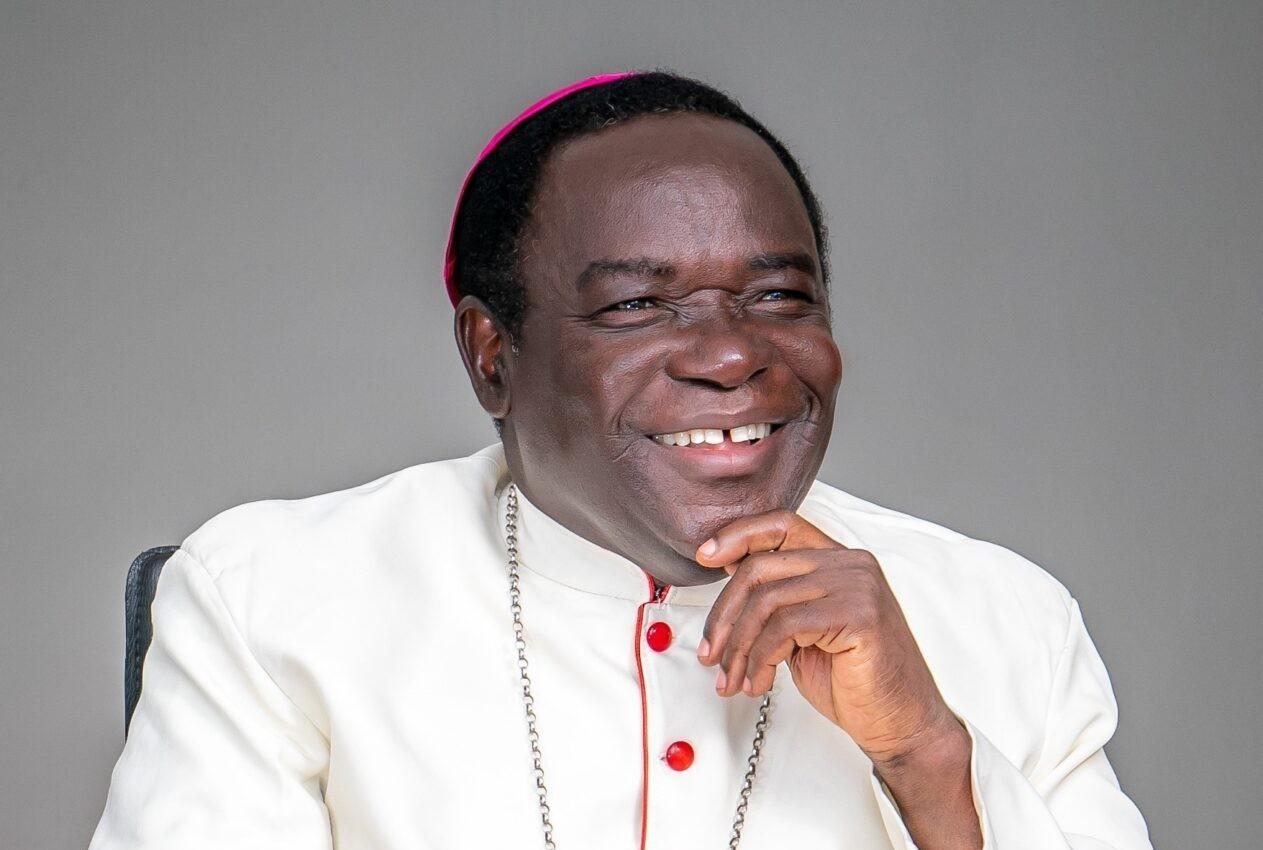
That’s according to Bishop Mathew Hassan Kukah of Sokoto in Nigeria, a leading prelate in the country who has served as the head of the Church in his diocese since 2011 and was appointed a member of the Dicastery for Integral Human Development in 2020.
In a candid interview with Crux, Kukah offers a nuanced perspective on the document’s legacy, acknowledging the “incredible light of hope” it cast while frankly confronting the “miserably slow pace of developments” that continue to challenge Africa.
Kukah spent years in service at the turn of the century as a member of the Nigerian Investigation Commission of Human Rights Violations and as secretary of the National Political Reform Conference, as well as a turn on the Nigerian federal government’s committee for electoral reform.
In the following Q&A – which has been edited for length and clarity – Kukah brings both historical perspective and palpable urgency to his reflections on Ecclesia in Africa, offering insights at once powerfully trenchant and deeply personal, relevant to the Church’s mission in Africa and beyond.
Crux: As the continent marks three decades of Ecclesia in Africa, what is the first word or feeling that comes to your mind when you consider its journey?
Bishop Mathew Hassan Kukah: I feel some nostalgia, measured optimism and at one level, a forlorn feeling about the miserably slow pace of developments across the continent. The synod itself had been greeted with so much excitement and hope that Africa had finally come to center stage in the mind of the Catholic Church. Pope John Paul, happily St. John Paul had cast an incredible light of hope for Africa.
Ecclesia in Africa spoke about Africa’s moment, but when you look around, the fate and pace of economic, social and political transformation seem largely in suspended animation. The continent is still ravaged by violence; democracy has not delivered on its lofty promises across the continent.
Crux: Cardinal Ambongo of the DRC recently called the document a “true pastoral roadmap.” Is it still a roadmap pointing forward, or has it become more of a historical map that shows us where we’ve been?
Bishop Mathew Hassan Kukah: A great roadmap at that. The challenge is what to make of the roadmap because by itself, the efficacy of a roadmap depends on the reading ability of the map reader, the quality of his leadership and the commitment of the people to continue on the journey. Beyond this document, the entire corpus of Catholic teaching has not been given its pride of place in Africa and so, our public life has not been exposed to the nourishing benefits of these teachings.
This year, the theme of our Bishops’ Conference is The Common Good. At the Kukah Centre, we are starting a series of Conversations called the Newman Seminars. The idea is to deliberately plan to insert the social teachings of the Church into the political syllabus of Nigeria.
Crux: What do you think have been the fruits of Ecclesia in Africa? And what have been the pitfalls?
Bishop Mathew Hassan Kukah: The fruits have been diverse because it laid the foundation for what Africa could be and Pope John Paul II literally sought to help Africa appreciate the urgency of the church moving more confidently into public life. Sadly, Catholic involvement in politics is still hesitant and tentative. We have hardly model politicians on the continent wearing the proud colors of the Catholic Church.
The pitfalls are based on what we as Church leaders did not do.
We did not do much to make these documents accessible to our laity and we also did not do much to make these documents part of our conversations in our seminaries and houses of formation. We urgently need to become more deliberate in marketing our beliefs especially against the backdrop of the superficiality and toxicity of the prosperity gospels.
Crux: The “Church as Family of God” was central to the exhortation. How does this concept hold up against the modern realities of urbanization, migration, and the individualism that social media can foster, especially among young Africans?
Family is what defines any society.
When the Bishops of Africa scaled up the exhortation and highlighted the idea of Church as Family of God in Africa, it was being true to its mission. However, the family has, through time been the first casualty of modernity or urbanization. Family breakdown is a sociological reality due largely to the inability of society to design safety nets to care for mothers, and children. These safety nets ought to ensure comprehensive programs that ensure access to pre and post-natal care for mothers and their children.
Sadly for us in Africa, the vast majority of our people are trapped in the vicious circles of poverty and misery.
The result is very high infant and maternal mortalities, street children, teenage pregnancies and so on. These pose a serious problem for the ideals of church as the family of God. Poverty threatens dignity, but still, as we see from the model family of Bethlehem, social conditions do not remove the need for human dignity.
Individualism and migration have created and will continue to create their own problems. As we can see, migration is not only driven by poverty alone. Ideology and other choices are also facing people to move. This has always been the reality of life since the first family was expelled from the Garden of Eden.
Migration brings opportunity as well as threats, and the family is often at the center.
On the whole, the Catholic Church has always been the greatest source of succor through time. During Covid-19, we the Catholic Bishops of Nigeria placed before the federal government, our over 500 hospitals and clinics across the length and breathe of Nigeria. Service and care has been in the DNA of the Catholic Church around the world.
I only wish African leaders will rise beyond pettiness and work more closely with the Church in the area of education and health of our people.
Crux: Ecclesia in Africa emerged in a post-Cold War context, speaking of reconciliation after dictatorships and conflict. Today’s conflicts are often different, mostly; they are ethnic militia violence, resource wars, and political instability. How must the Church’s approach as an agent of peace evolve to meet these new, more complex challenges?
The world is convulsing in a way and manner that no one believed. When the cold war ended, there was talk of Africa’s second liberation. Two American scholars diagnosed what the future would be: Francis Fukuyama spoke of the ‘end of history,’ suggesting that the world was now going to embrace western liberal models of capitalism and free markets. Samuel Huntington on the other hand spoke about the clash of civilizations.
Pope John Paul II then issued Novo millennio ineunte, warning the world on what to look forward to as the new millennium approached. The world looked forward to a new world order. Rather, before our own eyes, the world is unraveling.
We are witnessing the setting aside of a rules-based system which has undergirded global relations and finding that the rule of the jungle is coming back not even in diplomatic subtlety but in a show of raw bravado.
We are witnessing the reign of might is right, the right to threaten, harass and undermine the sovereignty of other nations or outrightly abduct other leaders of poor countries.
Africa is becoming the theatre of this global war for rare minerals and all of this is coming at a great cost. We are witnessing the rise of ethnic or religiously motivated militias marketing violence and threatening the foundations of our nations. The people and the church all seem helpless. These are challenging times ahead.
CRUX: There was great emphasis on inculturation in Ecclesia in Africa, but the biggest “other” facing the CHurch and the faith today may be global secularism and the explosive growth of Pentecostal and charismatic movements, rather than traditional African religions. How, then, does the Church present the Gospel as both deeply African and universally relevant in this new competitive religious landscape?
Bishop Mathew Hassan Kukah: We are witnessing serious reverses in the gains that the Church made some years back. The Church’s moral authority is being undermined by corrosive politics in some parts of the world. We are also seeing decline in our people’s participation in the sacramental life of the church, the rise of neopaganism, the emergence of oriental religions and the internal challenges within the body of Christ.
Seminary training and the formation programs for our future pastoral leaders must address the issues of the social gospel, a more serious understanding of the nature of the social fabric of Africa’s politics. The quality of Catholic participation in politics is in decline and so is our impact too. The Church cannot rest on its oars or be nostalgic about a past given that the ground is shifting.
What we need is greater and a more forceful evangelization and deeper catechesis given how much access people now have to “fast food spirituality,” no thanks to the new media developments and AI. We cannot shy from these developments.
We must educate ourselves and see how to use them well.
Crux: When the Church speaks out on political corruption or injustice, it is often accused of being partisan. How can the clergy maintain a credible prophetic voice without being pulled into the messy game of politics?
I can only think of the words of the late Archbishop of Olinda and Recife in Brazil, the Servant of God Hélder Câmara, who said, “When I give food to the poor, they call me a saint. When I ask why the people are poor, they call me a communist!” I live in Nigeria and for the last thirty or forty years in the public space, I have faced all these accusations.
Today, the opposition considers you a prophet, tomorrow, they come to power and you become an agitator, trying to bring them down. They then remind you to face your work as a priest. It is the way of the world. Jesus faced it, we should not expect anything less.
The important thing is the truth.