MANILA, Philippines – Filipino bishops are pushing back against deeply ingrained folk beliefs about mental illness.
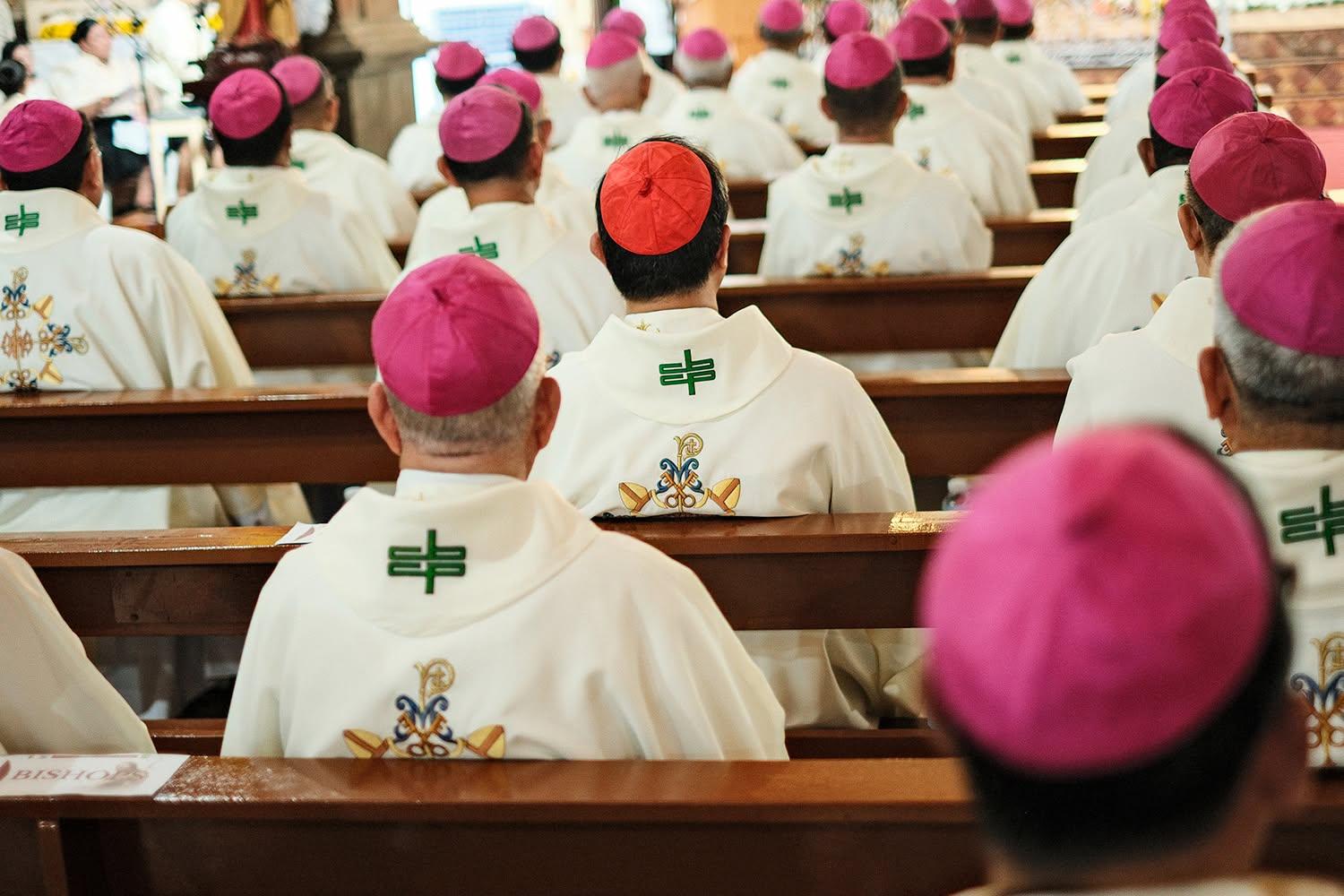
In a historic pastoral letter on mental health issued this week, the bishops tackle widespread misconceptions including the notion of mental illness as a signal of divine punishment.
The pastoral letter was the bishops’ first on the subject of mental health, a sign that the country’s 83 active bishops are treating the problem with greater urgency.
The Catholic Bishops’ Conference of the Philippines (CBCP) issued the pastoral letter following its 132nd plenary assembly, its highest decision-making body, from July 8 to 10.
“Mental illness is not a sign of weak faith,” the bishops write, “not a punishment from God.”
“Like any illness,” the CBCP letter states, “it deserves understanding, appropriate care, and compassionate accompaniment.”
The CBCP published the letter, signed by the conference’s president, Archbishop Gilbert Garcera of Lipa, on July 13.
“Every person, whatever his or her condition, is created in the image and likeness of God and possesses an inalienable dignity that no illness can ever take away,” the bishops say.
The Philippines, the world’s third biggest Catholic-majority country, is suffering a silent mental health crisis, with many Filipinos refusing to seek medical aid because of the stigma attached to mental illnesses.
Based on the 2021 Philippine National Survey on Mental Health and Well-being, about 14 percent of Filipino adults have “developed at least one mental health problem during their lifetime.”
About 8 percent of the population has thought of killing themselves, and among these people with “suicidal ideations,” 22 percent has attempted suicide at least once.
Yet only 5 percent of those with mental health disorders — a “very low” proportion — have sought mental health services such as counseling, medication, and hospital confinement.
Headlines in recent months have shown the extent of the problem.
In June 2026, a school shooting incident involving two minor suspects — which is rare in this Catholic-majority nation — rocked the central Philippines. The alleged shooters, aged 14 and 15, had reportedly been bullied and at the same time influenced by online extremists.
In Nov. 2025, the suicide of a 68-year-old Filipino priest also made headlines and drew attention to the clergy’s mental health needs.
‘Punishment from God’
The problem is worsened by the lack of trained professionals or treatment facilities to address mental health illnesses.
The 2021 Philippine study said that “stigma and violations of human rights directed toward people with these disorders compound the problem.”
Much of the stigma arises from superstitious beliefs, stemming from a mix of Catholic and folk religiosity — a common kind of syncretism in the Philippines, which was dominated by folk religion before it was colonized by Catholic Spain about 500 years ago.
Dr. Michael Tan, one of the country’s most prominent medical anthropologists, wrote in 2017 that “people shun hospitals not only because of the cost but also because many mental health illnesses are still poorly understood, and given supernatural explanations.”
“Punishment from God,” and “possession by spirits or the devil, ‘treatable’ by traditional healers or evangelical pastors,” are among the misconceptions Tan gave in 2017.
“For the vast majority of Filipinos,” Tan said in a 2017 article for the Philippine Daily Inquirer, “psychological and psychiatric services are just beyond reach, so the patient is sequestered at home.
“In rural areas,” Tan wrote in 2017, “there have been cases of patients chained by the family to the bed or to a post to prevent them from wandering,”
It was in this context that the CBCP encourage Filipinos experiencing mental health challenges “to seek appropriate professional care whenever needed.”
“Seeking medical or psychological help is not a lack of faith. God’s healing often comes through the dedicated service of doctors, psychologists, counselors, and other caregivers, whose work we gratefully acknowledge,” the country’s bishops say.
Bishops’ apology
Leaders of the Catholic Church in the Philippines also acknowledge that they have been part of the problem.
In their pastoral letter, the bishops allude to instances when the Church has made families of suicide victims feel “unwelcome.”
In the Philippines, some conservative priests still refuse to give a church burial to people who committed suicide — a practice that followed the 1917 Code of Canon Law but was dropped in the code’s 1983 edition.
“The Church entrusts your loved ones to the infinite mercy of God,” the Filipino bishops tell families of suicide victims. “Please do not lose hope.”
The bishops cite the Catechism of the Catholic Church, which states, “As the grave psychological suffering can diminish personal responsibility, we should not despair of the eternal salvation of persons who have taken their own lives.”
They also quote the Book of Job (12:10): “In God’s hand is the life of every living thing and the breath of all mankind.”
“If you have experienced misunderstanding or felt unwelcome within the Church during your time of grief, we ask your forgiveness,” they say.
“We urge our priests and pastoral workers to accompany families with compassion,” they also say, “to celebrate the Church’s funeral rites in accordance with current ecclesiastical discipline, and to proclaim the hope that is found in Christ.”
The CBCP said the Church commits to “building communities of encounter” and “breaking the stigma.”
“Above all,” the bishops say, “let us become communities where no one is ashamed to seek help, no one is judged for struggling, and no one is left to carry life’s burdens alone.”
*Correction: An earlier version of this article misstated the percentage of persons in the Philippines who have considered suicide. The article now correctly reports the statistics: Roughly 8 percent of people have considered suicide, and of the persons who have experienced suicidal ideation, 22 percent have attempted suicide at least once. Crux Now regrets the error.