Following a long and complicated parliamentary battle, French MPs have now approved assisted suicide and euthanasia, sparking outrage from the country’s bishops.
On Wednesday evening, the National Assembly – the lower house – approved the legislation by 291 votes to 241.
It was the fourth time the National Assembly passed the legislation, but on three separate occasions the French Senate rejected the bill. However, under a constitutional mechanism invoked by the government, the National Assembly was able to pass the law without the Senate’s agreement.
Before it can become law, Prime Minister Sébastien Lecornu has referred parts of the bill to France’s Constitutional Council.
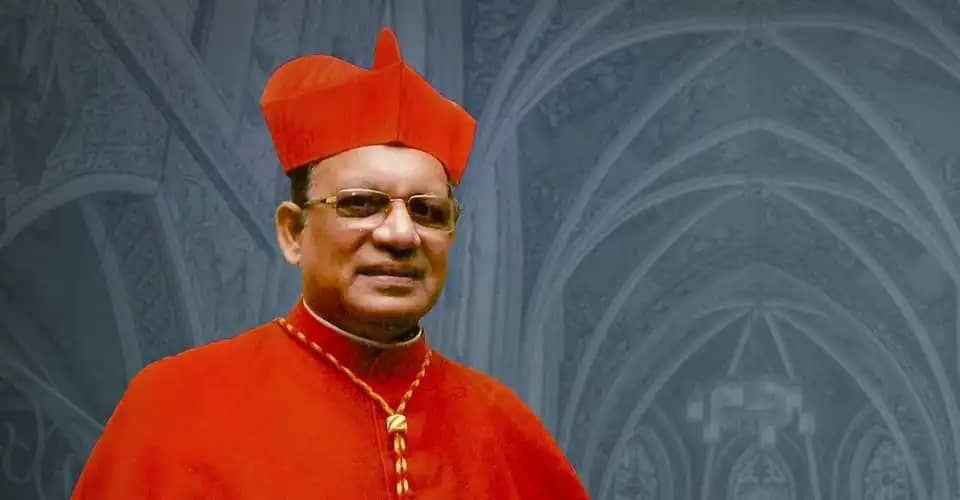
A statement in reaction to the news was released by the Bishops’ Conference of France (CEF) in the name of Cardinal Jean-Marc Aveline, president of the CEF, and two vice-presidents, Bishop Vincent Jordy of Tours and Bishop Benoit Bertrand of Pontoise.
“By choosing to legalize euthanasia and assisted suicide, the members of parliament have enshrined in French law the possibility of causing death. This choice breaks with the long tradition of care, whose vocation is to alleviate suffering and accompany each person to the natural end of their life,” the statement said.
“The effects of such legislation are not yet fully measured, but they are already taking shape. Our relationship to vulnerability, old age, disability, and illness will change,” the statement also said.
“The bond of trust between generations, as well as between caregivers, patients, and their families, will be weakened, and society’s perception of frailty will be damaged,” the statement added.
“The poorest are likely to be the first to pay the price: not wanting to be a burden on their children or grandchildren, elderly people in precarious situations may feel pressured to die. Furthermore, the experience of other countries shows that the criteria for accessing assisted dying tend to broaden, to the detriment of palliative care,” the bishops also said.
The law would mean that a patient first needs to “freely manifest his or her intention” to a doctor, who then decides within 15 days.
If approved, after a further two days of reflection, the patient would administer the lethal substance themselves, although if they are unable to do so a healthcare professional would do it. The decision to go ahead would have to be approved on the day by a physician.
The implementation of assisted suicide was a key policy objective of President Emmanuel Macron’s government.
France would join a list of European countries that allow assisted suicide including Belgium, the Netherlands, Switzerland, and Spain.
In the UK, an assisted suicide bill has recently been reintroduced in the UK after the previous one ran out of parliamentary time while it was being debated in the House of Lords, with over 1200 amendments to the bill tabled. It passed in the House of Commons in June 2025 with a majority of 23 MPs.
In Scotland, in March this year the parliament voted against an assisted suicide bill, with 69 Members of Scottish Parliament (MSP) voting against and 57 voting for. To pass, it needed the backing of 64 MSPs.
Catholic opposition to the French bill
The Catholic Church in France consistently argued against the bill. Jordy recently spoke to Crux Now about the bill, warning that not all things that are considered progress turn out to be.
“Over the past 150 years, we have developed industrial progress that is now turning against humanity and gradually making the earth uninhabitable. What once appeared to be progress is ultimately not as obviously beneficial as it seemed. But it took time to realize this,” he said.
“The same applies to moral life and societal choices. Some choices that may seem like solutions can ultimately produce harmful effects on society. It is therefore important to help our contemporaries exercise discernment so as not to be misled by a kind of ideology of progress,” he added.
In January, before the first debate in the Senate about the bill, the French bishops released a statement saying that “palliative care is the only truly effective response to the difficult situations of the end of life,” and that proper care “almost always leads to the disappearance of requests to die among terminally ill patients.”
“We do not care for life by giving death,” they added.