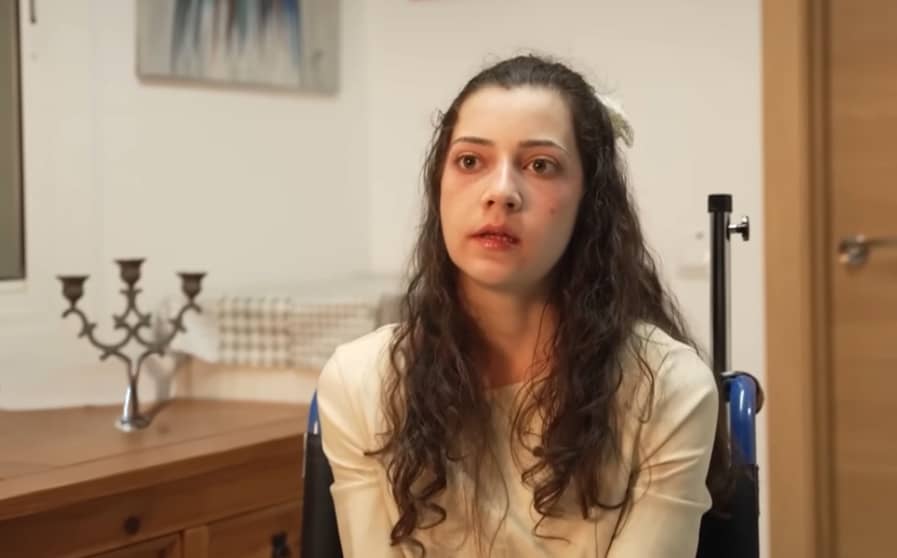
The bishops of Spain have condemned the euthanasia of Noelia Castillo, the 25-year-old woman who died Thursday evening after a lengthy legal battle with her father who tried to prevent it.
Castillo tried to kill herself in 2022 after a sexual assault by multiple people which some reports have referred to as a gang rape. She jumped from a balcony, causing her to be paraplegic and wheelchair-bound which prompted her to request euthanasia.
Her father fought a long and ultimately unsuccessful legal battle to stop the euthanasia, arguing that her diagnosis of borderline personality disorder, obsessive compulsive disorder, and frequent suicidal ideation meant she needed psychiatric support rather than euthanasia.
Castillo was from Barcelona and entered foster care when she was 13.
Archbishop Joan Planellas of Tarragona, who is president of the Conferencia Episcopal Tarraconense – a Catalonian regional bishops’ assembly established in 1969 – told Crux Now it was “a very sad situation.”
RELATED: Spanish woman to undergo euthanasia after fierce legal battle with her father
“It makes me think a lot and shows, in a way, the kind of society we live in. That there are people who reach a situation like this, in which they refuse to live for whatever reasons, saddens me,” he said.
“In this situation, one must ask them why they have reached this depression – perhaps the cause is social as well. We live in a society in which we are not capable of accompanying people, of following up with them; of manifesting the Gospel, ultimately,” he added.
Planellas also told Crux Now that the “serious problem with euthanasia is when it is analyzed simply as a personal freedom, of doing with one’s own life whatever one wants. Life is something sublime, something much more important than what one might think in a given moment.”
Bishop José Mazuelos of the Canary Islands, and president of the Spanish Episcopal Conference’s Subcommittee for the Family and the Defense of Life, said it was “barbaric that, when faced with a vulnerable person, the middle ground is chosen: Eliminating them and applying euthanasia.”
In a video message, Mazuelos also said that “what Noelia is demanding is truly humane care and psychological support to help her cope with the harshness of the illness and human frailty.”
The subcommittee also released a full statement, saying “euthanasia and assisted suicide are not medical acts, but rather the deliberate severing of the bond of care, and constitute a social defeat when presented as a response to human suffering.”
“The dignity of the human person does not depend on their state of health, their subjective perception of life, or their degree of autonomy. It is an intrinsic value that demands to be recognized, protected, and promoted in all circumstances,” the statement added.
Castillo’s father employed the Christian Lawyers Foundation to help fight his case and the foundation released a statement. “Euthanasia has already been carried out on Noelia. We ask for prayers for her soul and her family. Rest in peace,” the statement said.
The lawyer for her case, José María Fernández, on Thursday evening spoke to press outside the hospital where the euthanasia took place, saying they had always hoped “that she could reconsider her idea.”
Alongside the press were a number of protestors who had gathered to try and convince Castillo to change her mind.
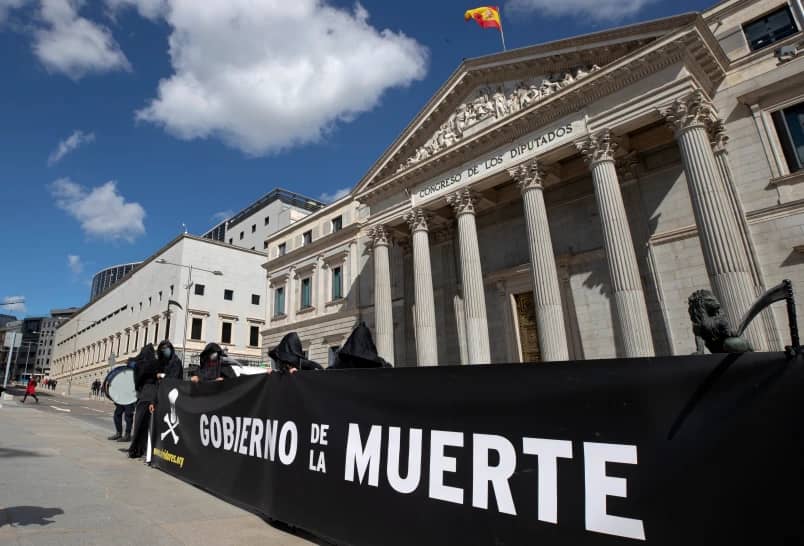
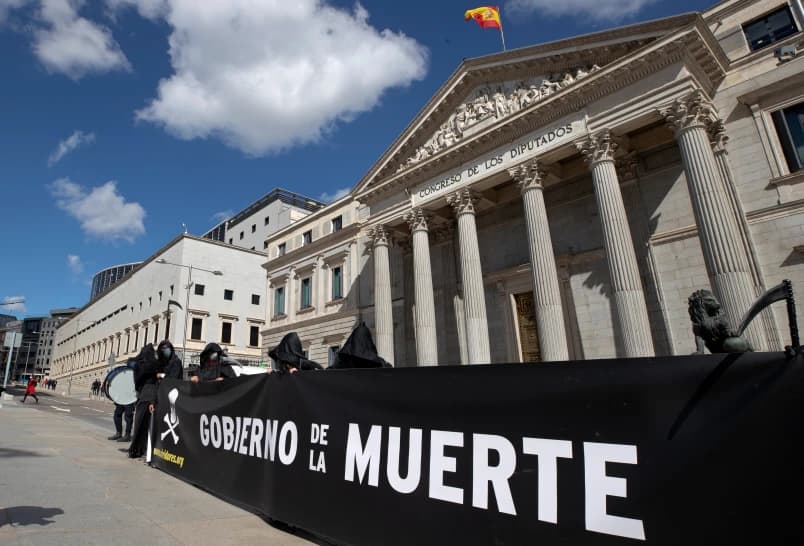
The case made its way to the Spanish parliament and Ester Muñoz, the parliamentary spokesperson of the conservative People’s Party said Spanish society should reconsider “many things” in light of Castillo’s death.
Speaking before she died, she added that the state “is going to fail this 25-year-old woman again.”
The spokesperson of Vox, Spain’s far-right party, Pepa Millán, said “it is a failure and an aberration, and it opens a dangerous path for a psychiatric illness to be used as grounds for assisted suicide, which is what this will be.”
However, the Spanish Socialist Workers’ Party (PSOE), the party of Prime Minister Pedro Sánchez, defended Castillo’s decision. PSOE’s justice spokesperson, Francisco Aranda questioned why Vox wanted to interfere with someone who wants to “die with dignity in peace.”
Her father’s legal battle
Castillo’s father had been fighting since July 2024 when the Guarantee and Evaluation Commission of Catalonia granted authorization to Castillo after she requested euthanasia.
He exhausted all legal avenues in Spain, eventually taking the case to the European Court of Human Rights (ECHR) which rejected his attempts to stop the euthanasia, although the court said judges would analyze the case at a later date.
He and the Christian Lawyers Foundation argued that she requires psychiatric support and that her psychological disorders gave her a disability of 67 percent, which went up to 74 percent following her suicide attempt.
On Wednesday, they made a last-ditch attempt to suspend the euthanasia by asking a Barcelona judge to require her to undergo psychiatric treatment before granting her access to the service, which was denied.