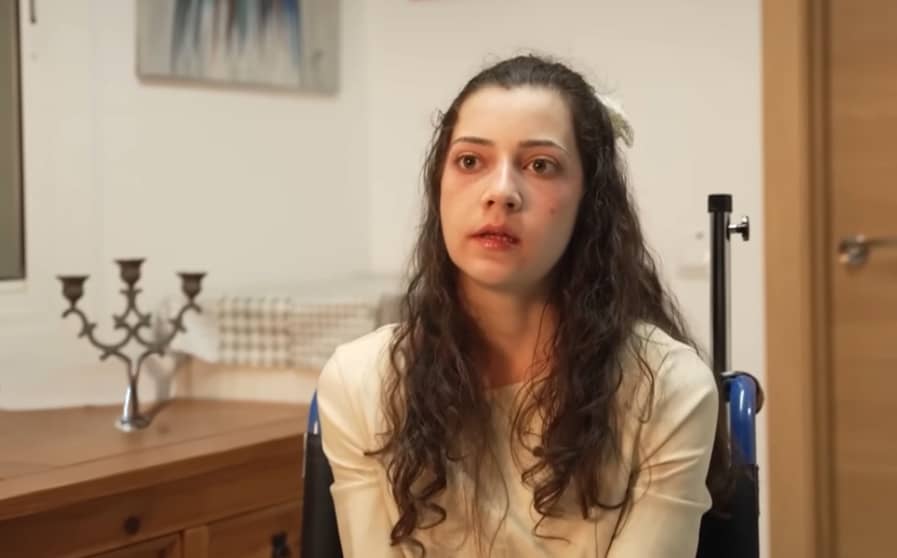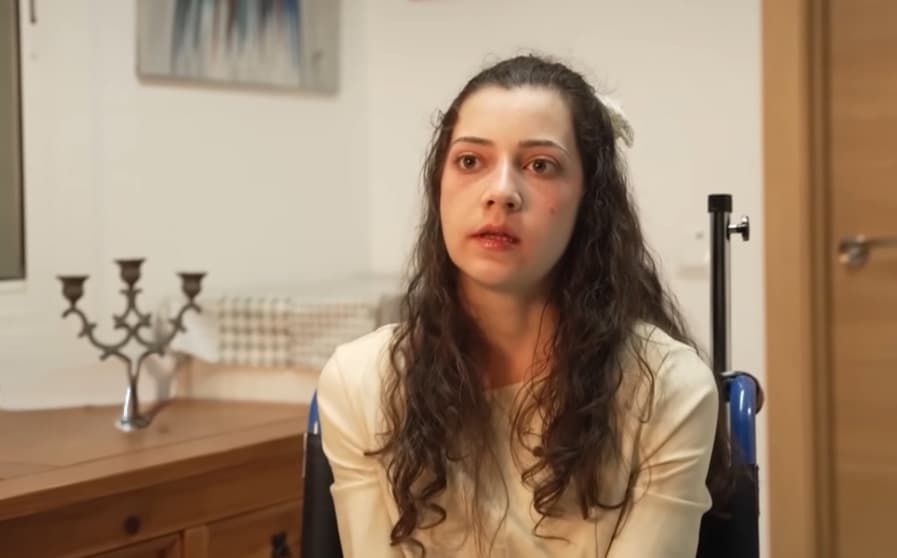
A young woman who has been paraplegic since 2022 after a failed suicide attempt is due to be euthanised on Thursday in Spain after her father unsuccessfully fought several legal battles to try to prevent it from taking place.
Noelia Castillo, who is from Barcelona, confirmed in an interview with Spanish TV station Antena 3 that on Thursday she will undergo euthanasia against the wishes of both her father and her mother.
“I’m having euthanasia on the 26th. No one in my family is in favor, but a parent’s happiness shouldn’t come before a daughter’s life. I simply want to go in peace and stop suffering,” she stated in a preview of the interview.
“The happiness of a father, a mother, or a sister cannot take precedence over the happiness of a daughter,” she added.
Castillo entered foster care when she was 13 and attempted suicide by jumping off a balcony in 2022 after being sexually assaulted, with some reports calling it a gang rape. She has been in a wheelchair ever since and is paralyzed from the waist down.
“Today in Spain, death is presented as a solution to suffering. An infinite dignity driven toward death by a ‘welfare society’ incapable of caring and loving. In the face of this, the hope that springs from the encounter with Life. #Noelia,” said a statement on Thursday from the Information Office of the Spanish Episcopal Conference, which was posted on X – formerly known as Twitter.
Yolanda Ramos, Castillo’s mother, was present during this interview and outlined her opposition to her daughter’s decision. “I’m not happy about it, but I’ll always be by her side,” she said.
This interview followed a decision earlier this month by the European Court of Human Rights (ECHR) to reject her father’s attempts to stop the euthanasia after he had exhausted all legal avenues in Spain. However, the judges will still analyze the argument at a later date.
With the help of the Christian Lawyers Foundation, Noelia’s father has been trying to stop the euthanasia since July 2024 when the Guarantee and Evaluation Commission of Catalonia granted authorization to Castillo after she requested euthanasia.
This was immediately suspended as a precautionary measure after her father argued it would cause “irreparable harm.”
His arguments rested on the fact that she has been diagnosed with borderline personality disorder, obsessive compulsive disorder, and has long suffered from suicidal ideation, thus influencing her decision-making capabilities.
He and the Christian Lawyers Foundation have argued that she requires psychiatric support and that her psychological disorders gave her a disability of 67 percent, which went up to 74 percent following her suicide attempt.
However, the court argued that her father lacked the standing to appeal as she was of legal age and not mentally incapacitated. Furthermore, the court said she had full capacity to request euthanasia and all the conditions were met.
Castillo’s father appealed this decision to the High Court of Justice of Catalonia, which recognised his right to appeal but rejected it, arguing he hadn’t demonstrated his daughter’s lack of capacity.
Facing this, her father took the case to the Supreme Court, and when this failed, the Constitutional Court. His last attempt was the ECHR, which also failed.
On Wednesday, they made a last-ditch attempt to suspend the euthanasia by asking a Barcelona judge to require her to undergo psychiatric treatment before granting her access to the service, which was denied.
The Christian Lawyers Foundation has said it will continue fighting Castillo’s case in Strasbourg as it is not fully closed, but is assuming that her euthanasia will take place on Thursday.
José María Fernández Abril, the lawyer from Christian Lawyers (AC) representing Noelia’s father, told El Debate that the Generalitat – the local government of Catalonia – bears a lot of responsibility for her case, particularly as there is video footage of her being able to walk.
“The Generalitat helped a young woman who had terrible injuries, operated on her several times, took her to rehabilitation, helped her to climb stairs… and now they will kill her,” he said.
Archbishop Luis Argüello of Valladolid, president of the Spanish Episcopal Conference (CEE), said that offering euthanasia in a case like Castillo’s shows that “everything is permitted.”
“If provoked death is the solution to problems, then everything is permitted. A doctor cannot be the executing arm of a death sentence, no matter how legal, empowered, or compassionate it may seem. Let us pray for Noelia; her suffering is heart-wrenching, but her true relief is not suicide,” he said.
Bishop José Ignacio Munilla of Orihuela-Alicante also offered some reflections on the case on social media. “Some people confuse accompaniment with endorsement,” he said, and “when the law supports taking a life, something essential in the law has been broken.”
“And most importantly: while people argue on social media, Jesus Christ draws near to everyone and offers his mercy. It is up to us to receive it and to pray that it will be received,” he added.
Euthanasia in Spain
Euthanasia has been legal in Spain since 2021. The law allows adults with “serious and incurable” diseases that cause “unbearable suffering” to choose to end their lives, provided they are a Spanish national or legal resident.
Further, the person must be “fully aware and conscious” when they make the request, which needs to be submitted twice in writing, 15 days apart.
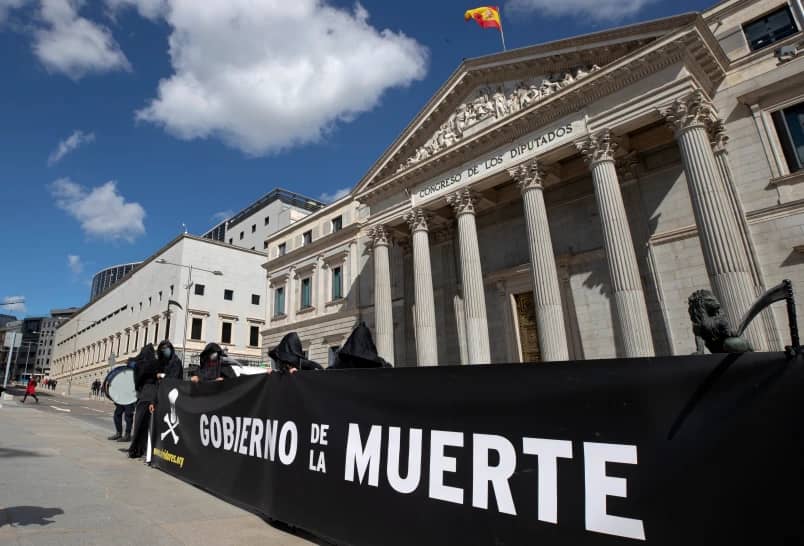
“Today we have become a country that is more humane, fairer and freer,” Spanish Prime Minister Pedro Sánchez said on social media after the law was passed. “The euthanasia law, widely demanded by society, has finally become a reality.”
Spain allows for both euthanasia and assisted suicide. Euthanasia is the intentional ending of someone’s life to relieve suffering, while in assisted suicide the act is undertaken by the person themselves with help.