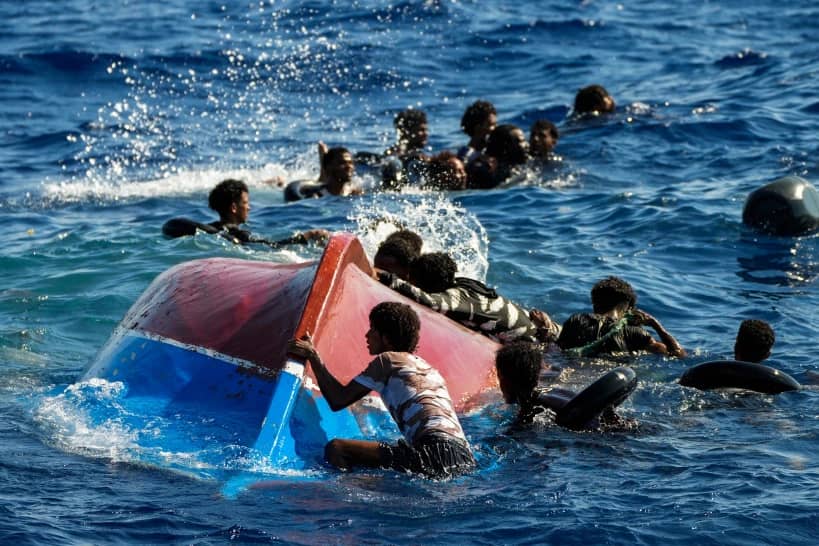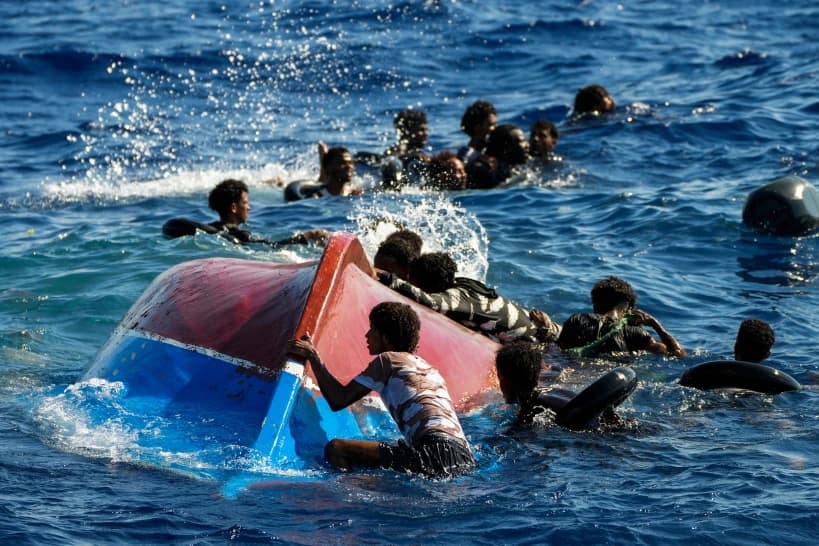
The International Organization for Migration (IOM) released a report on Tuesday that found approximately 7,900 migrants died or went missing in 2025, bringing the total since 2014 to over 80,000 deaths.
“With more than 80,000 deaths and disappearances documented during migration worldwide since 2014, the nearly 8,000 deaths documented in 2025 mark a continuation and escalation of a global failure to end these preventable deaths,” the UN agency stated in the report which is released annually.
“While these figures represent only the lowest boundary of the true number of affected people, they nonetheless underscore the need for urgent action to end migrant deaths and address the complex needs of families left behind,” the IOM added.
“2025 was marked by an unprecedented level of aid cuts and restriction of information on dangerous irregular routes, rendering more and more missing migrants invisible,” the report also said.
Bishop Paul McAleenan, Lead Bishop for Refugees and Migrants at the Catholic Bishops’ Conference of England and Wales, told Crux Now that the report’s findings were “nothing short of a tragedy.”
“The fact that almost 8,000 migrants died or went missing on journeys that were undertaken to flee conflict or to search for a better life is nothing short of a tragedy,” McAleenan said.
“As Catholics, we are often reminded that every migrant has a name, a face and a story. When that story comes to an abrupt and tragic end, it is a stark reminder of the dangers people are driven to endure: Unsafe sea crossings, exploitation, hostility, loss of dignity,” he added.
In 2024, the number of deaths was 9,200 and the IOM attributed the reduction in numbers to a marked decline in people wanting to use “irregular and dangerous migration routes.”
“But it is also explained by the financial restrictions imposed on humanitarian actors who document migrant deaths on the main migration routes,” the agency added.
For McAleenan, the IOM’s report was a timely reminder of the need for safe and legal routes for migrants.
“Safe and accessible routes remain limited across both the UK and Europe, leaving many migrants with no real choice but to risk their lives. This serves as a solemn reminder of the urgent need for safe and legal pathways for those in need,” he told Crux Now.
This point was also made in the report’s conclusion. “When safe pathways are out of reach, people are forced into dangerous, irregular journeys. This irregularity means that when things go wrong, families are too often left without any information about their loved ones,” the report said.
The report also focused on the impact on families, estimating that 342,488 people are the family members of dead or missing migrants.
“With so few missing migrants ever identified, families face enduring grief and complex social, legal and economic hardships that come with having a relative who disappeared without a trace,” the report said.
Spain presses on with regularization of 500,000 migrants
After the Spanish government announced in January a plan to regularize the status of 500,000 migrants living in the country, last week the government approved a royal decree to make it happen.
Prime Minister Pedro Sánchez posted an open letter to X (formerly Twitter), explaining why the progressive coalition that makes up the government made the decision.
“Spain, like other European countries, is growing older. If we do not take in new people to work and contribute to the social security system, our prosperity will slow, our capacity to innovate will decline, and our public services—health care, pension, education—will suffer,” he wrote.
Any unauthorized immigrant who can prove that they have lived in Spain for at least five months before January 1, 2026, can apply.
The move has been praised by the Catholic Church in Spain and the Migration Department of the Spanish bishops’ conference, as well as Caritas and the Spanish Conference of Religious, which released a statement in January.
“The time has come to take a decisive step toward a more just and inclusive society, where no one is relegated to invisibility and exclusion,” the statement read.

![The Pelourinho Novo (lit. 'New Pillory'), also known as Hath Katro Khamb[b] (lit. 'Hand-Cutting Pillar'), in Old Goa. (Credit: Wikimedia.)](https://cruxnow.com/cdn-cgi/image/width=1920,quality=70/https://wp.cruxnow.com/wp-content/uploads/2026/04/pillar-in-india.jpg)