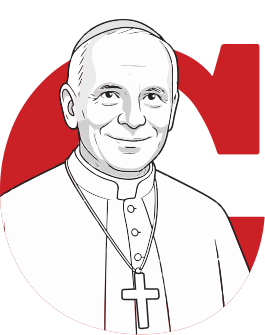
MANILA, Philippines – It was the prophetic voice of Cardinal Jaime Sin, the archbishop of Manila, that heralded the end of one of Asia’s longest dictatorships back then.
Forty years ago, on Feb. 22, 1986, the cardinal made a historic radio broadcast calling on Filipinos to gather at Camp Crame, then the headquarters of the Philippine Constabulary, to protect “two good friends” who had defected from dictator Ferdinand E. Marcos. The defectors were defense minister Juan Ponce Enrile and military vice chief of staff Fidel V. Ramos.
Heeding the politically influential prelate, around two million Filipinos filled the Epifanio de los Santos Avenue (EDSA), where Camp Crame was located, bringing crucifixes, rosaries, and images of the Virgin Mary. Shielded by religious sisters and seminarians arm in arm against military tanks, Filipinos handed flowers to soldiers who eventually defected from Marcos as well.
The four-day People Power Revolution ended the 14-year Marcos dictatorship on Feb. 25, 1986, and, with the help of the US government, forced the Marcos family into exile in Hawaii.
Celebrating the 40th anniversary of People Power on Wednesday, Filipinos remembered the legacy of Sin, who died of renal failure in 2005 at the age of 76.
“We want the young people to know Cardinal Sin. Perhaps, there wouldn’t be People Power in 1986 if not for his steadfast and moral leadership that guided the nation in those tumultuous years of dictatorship,” said Father Jerome Secillano, spokesperson of the Archdiocese of Manila and rector of EDSA Shrine, which was built to commemorate the 1986 uprising.
This year, the People Power anniversary took place in a context that, according to EDSA veterans, was unimaginable in 1986: After decades of rebranding the Marcos family name, the dictator’s son Ferdinand Marcos Jr. is now the country’s president. The Philippines is also facing its worst corruption scandal since the Marcos dictatorship.
The current political crisis, under the second Marcos presidency, has prompted many Filipinos to look for clergymen in the mold of Cardinal Sin.
“The late Jaime Cardinal Sin in 1986 named the first Marcos regime as corrupt and tyrannical. He identified the real and continuing threat then, and that was moral clarity, not partisanship,” wrote veteran journalist Herbie Gomez in a column on Thursday for the Filipino news website Rappler.
“Contrast that with a Church that now prefers the soporific lullaby of ambiguity. It is more content blessing those in power than confronting them. The Church helped give birth to EDSA, and then orphaned it,” Gomez continued, referring to the EDSA highway where the People Power uprising took place.
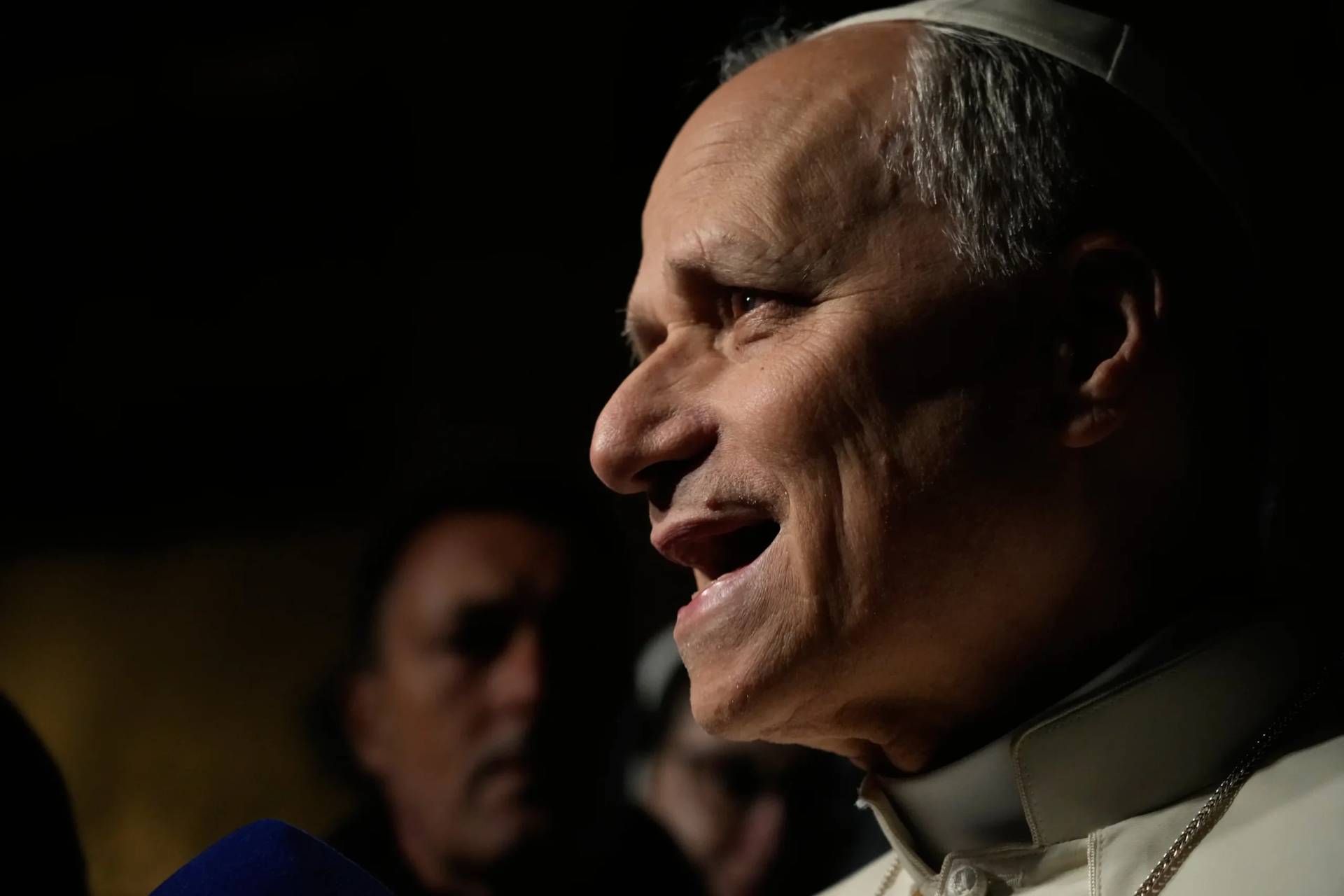
The current archbishop of Manila, the 73-year-old Cardinal Jose Advincula, has long said that he is no Cardinal Sin.
“Cardinal Sin is Cardinal Sin, and I am afraid I could not be as vocal as Cardinal Sin,” said Advincula in an interview with the Archdiocese of Capiz, his former episcopal see, in 2021, two months before he moved to Manila.
Advincula, a canon lawyer educated at the Angelicum in Rome, has often been described as a quiet yet skilled administrator — not a politically outspoken bishop like Sin or a charismatic preacher like his immediate predecessor, Cardinal Luis Antonio Tagle. He is known for establishing “mission stations” or makeshift churches in far-flung communities.
Unlike other bishops, his opportunities to spontaneously comment on politics are scarce. This is because, according to his close associates, he prefers scripted speeches that can even contain notes for delivery, such as which words to emphasize or accentuate. He has also shied away from media interviews in his nearly five years as Manila archbishop.
One of the few times he wrote a statement on politics, however, was after Vice President Sara Duterte threatened to assassinate President Ferdinand Marcos Jr. in a video filled with curse words in Nov. 2024. He urged Filipinos to pray for the country’s leaders “so that sobriety may prevail in our land and that political issues and personal interests may not divide the nation.”
In an interview with Crux Now, Secillano said that Sin and Advincula “have two different approaches,” but their love for priests connects the two prelates. He said that their love for priests translates into “letting their priests do their work in taking care of the pastoral needs of the people,” including sociopolitical work.
Referring to Advincula’s way of addressing sociopolitical issues, Secillano said: “He is very prudent. He listens, he discerns, and at the same time, he also makes his thoughts known through his pastoral letters.”
Secillano added that the cardinal “is very synodal,” following a consultative model of governance, “in terms of not writing letters or pastoral messages outright, but he listens to people, especially his priests.” His consultations result in a collective position, not merely a personal stance as Manila archbishop.
When asked whether the Philippines needs a new Cardinal Sin, Secillano said, “What we need are prophets.”
“He may not be in the mold of Cardinal Sin, but at least, he does something prophetic. And by saying that, it means that we need a pastor who is not afraid to speak. We need a pastor who is not afraid to lead. We need a pastor who is not afraid to actually do something to change existing systems,” Secillano said.
The challenge for laypersons, he added, is “to look past Cardinal Sin.”
“We are not looking anymore for somebody in the mold of Cardinal Sin, but the challenge for our lay leaders is to really work with their pastors,” Secillano said, emphasizing that pastors and laypersons can no longer work separately on their own. “It’s not just the individual works that matter here.”
Aisa Hermeno, a 45-year-old lector at EDA Shrine, said that “there is nobody else like Cardinal Sin,” but many religious leaders have imbibed his values.
Priscilla Caro, 74, who has served at EDSA Shrine since 1995, said the country needs a new Cardinal Sin, but the Church already has clergymen following in his footsteps.
She said that among them are Cardinal Pablo Virgilio David, the episcopal conference president Archbishop Gilbert Garcera, and Sin’s former secretary Archbishop Socrates Villegas. She also mentioned their shrine rector, Secillano.
“If the politicians won’t take a stand, then perhaps church leaders should speak out,” Caro told Crux Now.
Sister Elizabeth of the Little Sisters of Jesus, in an interview with Crux Now, said the Philippines no longer needs a Cardinal Sin today.
“But we need Filipinos who would really speak the truth,” she said. “We need people similar to Cardinal Sin, but maybe not only one person.”