SÃO PAULO – Across Latin America, where soccer is the most popular sport, people have been eagerly following the World Cup.
Collecting stickers is a central part of the excitement for millions of children – and even many adults. This year, however, it has become more difficult for fans to complete their albums.
Not only does it feature special stickers throughout, but the number of national teams participating in the tournament has also increased to 48. Since 1998, 32 countries have taken part in the World Cup; before that, the number was 24.
According to Panini, the Italy-based publisher that holds the exclusive rights to produce the FIFA World Cup sticker album, the 2026 edition contains 980 stickers. Across the region, each seven-sticker pack is officially sold for $1.40. The minimum cost to complete the album would therefore be $196, but duplicate stickers drive the final cost much higher.
National economic difficulties make the situation even worse. In Argentina, for instance, the price of the album itself rose from 50 pesos during the 2018 World Cup in Russia to 150 pesos during the 2022 World Cup in Qatar, and now stands at 15,000 pesos, according to Spanish-language news portal Infobae. The increase reflects the severe inflation that has affected the Argentine economy in recent years.
That poses a challenge for millions of Latin American children, as unemployment and low wages remain widespread throughout much of the region. In Brazil, for instance, the monthly minimum wage is about $320. In Argentina, it is about $260.
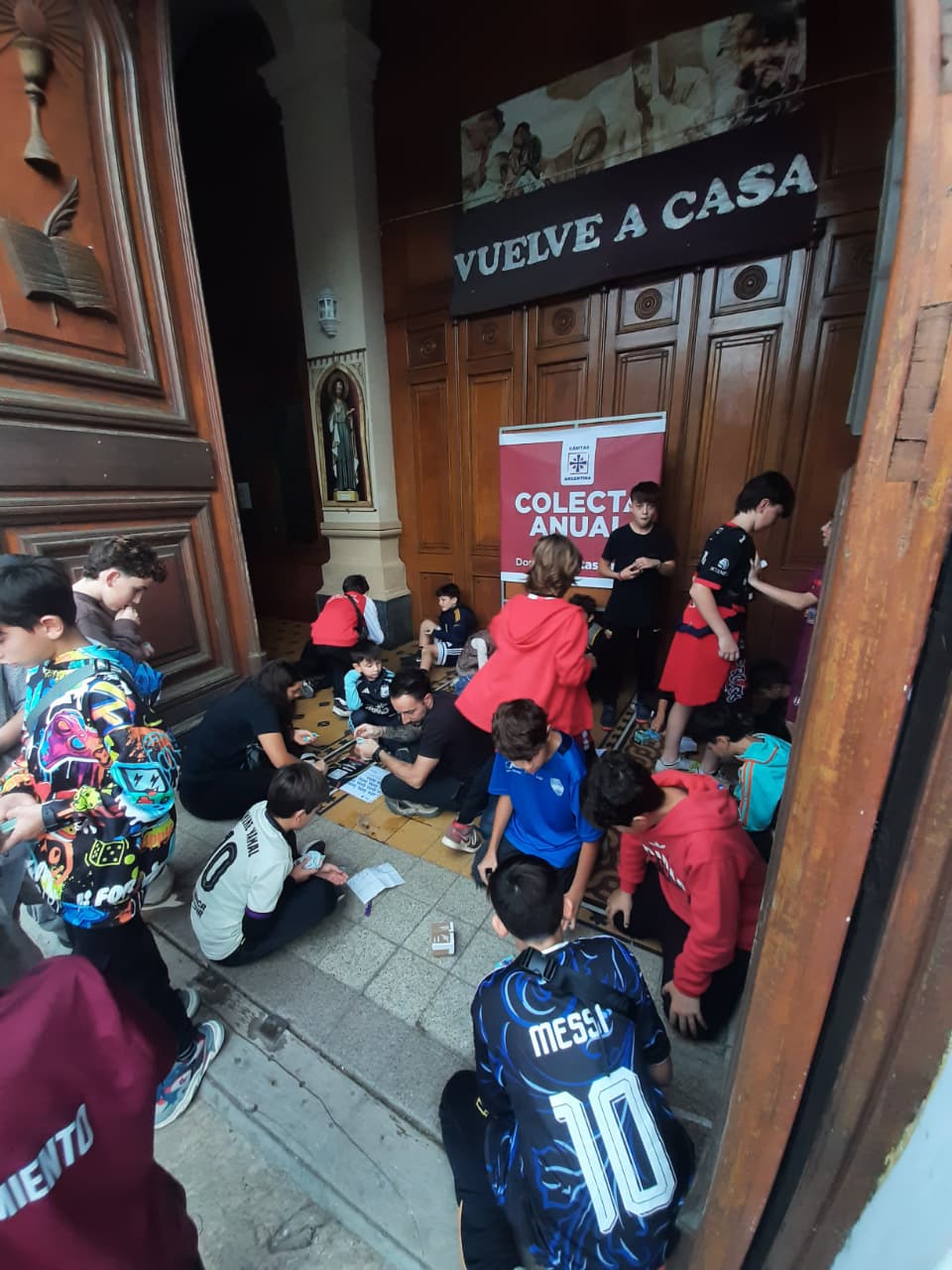
In such a scenario, people and organizations in different Latin American countries have been promoting initiatives to increase children’s access to stickers they do not yet have. Groups are asking people to donate duplicate stickers, which are then distributed among poor children, while sticker-swapping events are being organized in numerous communities.
Ecclesial movements and parishes have joined those efforts in several countries. For them, it is not only a matter of attracting children and teenagers to the Church, but also a valuable opportunity to encourage values such as fraternity and solidarity.
Several parishes in Mexico, one of the World Cup’s host countries, have been using the tournament and the sticker craze to promote Church activities. Sticker-swapping events, for example, were organized by the youth group Jóvenes con Xto (Youth with Christ) at Saint Augustine Parish in Jonacatepec, in the state of Morelos. At Our Lady of the Sacred Heart Parish in Mexico City, a similar event was promoted.
The Sacred Heart of Jesus Parish in Ciudad Juárez, in the state of Chihuahua, has also been organizing such activities. According to lay Catholic Gerardo Alvarado, who oversees the parish’s digital culture ministry, altar servers and neighborhood children have been gathering at the church on Sundays to trade stickers.
“We noticed that people were not buying as many stickers because of their high cost, especially when purchasing them in large quantities,” Alvarado told Crux Now.
The parish will celebrate its 90th anniversary next January, and Alvarado has been working on several social media campaigns. With the World Cup underway, he decided to create a version of the sticker album featuring members of the parish community. It quickly became a local hit.
“Initially, the idea was to spread the word about our patronal feast. But people liked it so much that we are planning to produce a printed version for the 90th anniversary, one that will tell our history,” Alvarado said.
In Brazil, the World Cup has coincided with the traditional June festivities honoring Saint Anthony, Saint John the Baptist, and Saint Peter. Throughout the month, parishes across the country host fairs featuring food stalls, games, and live music.
In many communities, exhibitions of Brazil’s matches on large screens and sticker-swapping gatherings have become part of the celebrations.
Recently ordained Father Pedro Mocelin of the Archdiocese of Curitiba recorded and posted a video on social media inviting children to take part in a sticker-swapping event.
“The stickers are a real craze. We saw an opportunity to draw more children and teenagers to the Church. Through these encounters, we grow closer to one another and to God,” Mocelin told Crux Now.
He said that “spiritual life is the most important dimension of human existence, but the Church goes beyond that, embracing other aspects of our reality as well.”
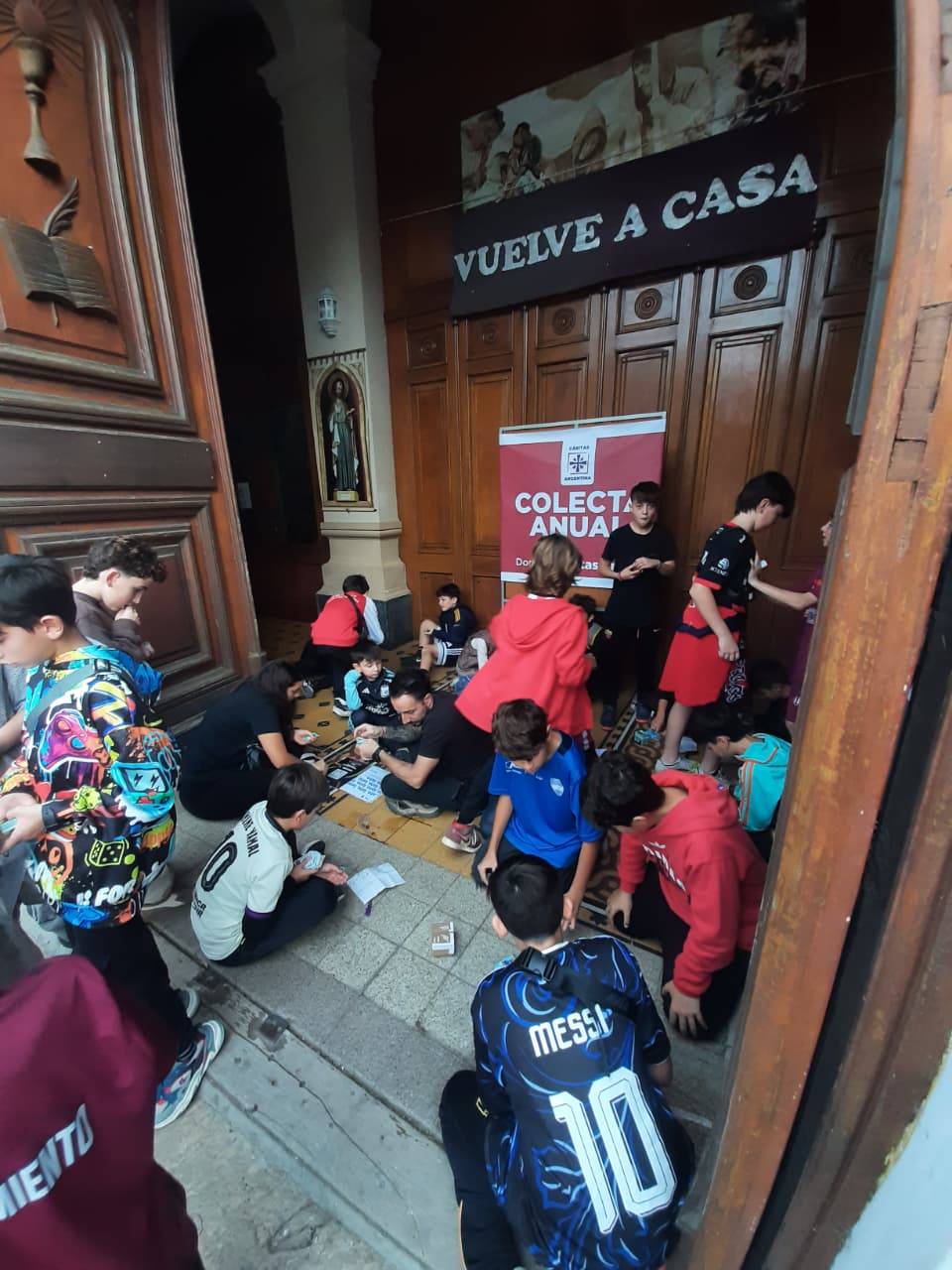
That was also the spirit at Saint Paul Parish in the city of Villa Constitución, Argentina. Father Diego Bulfoni invited children and their families to attend a large sticker-swapping event at the church on June 6. The turnout far exceeded expectations.
Bulfoni said that Villa Constitución has a sizeable middle class, so the financial challenges associated with completing the album were not his primary concern.
“It was a beautiful event. It’s a way of helping children and young people feel that the Church is part of their lives, that they can enjoy within the parish many of the same things they enjoy elsewhere,” Bulfoni told Crux Now.
He said that, for most of the children who attended, the event was not only a way to get out of their rooms and stop playing video games, but also an opportunity to understand that “God is present in everyday life, not only at Mass or during religious celebrations.”
One of the most memorable moments of the gathering occurred when a boy announced that all of his stickers had disappeared.
“A 10-year-old said his stickers had been stolen. As a community, we decided that each child would give him one or two stickers. It was beautiful, because every child came to him and offered a couple of stickers,” Bulfoni recalled.
“Everybody learned about solidarity and community spirit,” he said.