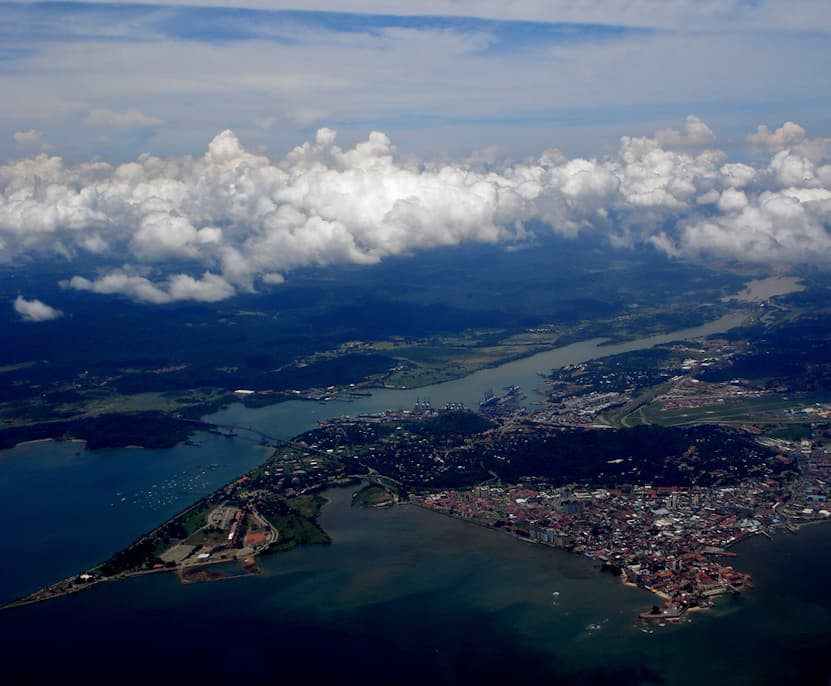
SÃO PAULO, Brazil – Panama’s Catholic bishops have questions about a controversial river dam project that could disrupt the lives of thousands in the Central American country.
The project proposes to expand the availability of water for both human consumption and the operation of the Panama Canal.
Advanced by the Panama Canal Authority (ACP) and fully backed by the government, the plan will result in the displacement of several communities in the region, affecting around 7,000 people – most of them very poor.
Many families, who have lived in the area for several generations, are refusing to leave their land and accuse the ACP of attempting to impose the project against their will.
Bishop Edgardo Cedeño of the Diocese of Penonomé told Crux Now many people are suspicious of the ACP and fear it will not fulfill its promises.
“The peasants fear they will be displaced and scattered. But they want to remain together as communities,” Cedeño said.
The prelate also told Crux Now the need for additional water for the Panama Canal and for a reliable water supply for the population have become intertwined.
“Indeed, intervention is necessary because Panama is growing and more water must be made available. At the same time, natural phenomena such as El Niño have been affecting the country,” Cedeño said.
Most locals do not want the dam project to be imposed on them, as they have a strong attachment to their land. The Church has been calling for genuine dialogue.
“The authorities have been conducting studies for years in order to adequately compensate those people. The Church wants to mediate a dialogue between them and the peasants,” Cedeño said.
Bishop Manuel Ochogavía of the Diocese of Colón-Kuna Yala, which includes part of the Indio River basin, criticized the ACP during a Mass celebrated in the Limón de Chagres community on the banks of the river, according to a story published on Jul. 13 by the Panamanian news website En Segundos.
Ochogavía said that most local communities are concerned about the impoundment of the Indio River and their future, and rejected the ACP’s claim that 70 percent of the region’s peasant families have accepted its compensation plan, a figure recently announced by an ACP official.
The prelate also criticized the growing presence of security forces in the Indio River Valley, saying it has created an atmosphere of intimidation among people who oppose the project.
The issue was also addressed in a letter released on Jul. 3 after the Bishops’ Conference’s general assembly. In the document, the bishops expressed concern over the growing water shortages affecting an increasing number of Panamanians.
“Water is a gift from God, a fundamental human right, and a common good that must be protected and guaranteed for all. As Pope Francis reminded us: ‘Access to safe, potable water is a basic, fundamental, and universal human right’ (Laudato Si’, 30). Concrete and urgent solutions must be sought,” the letter read.
The bishops also referred to the Indio River dam project. ACP officials and community leaders were invited to present their views during the assembly.
“We reaffirm that sincere and respectful dialogue is the only path to building lasting solutions. […] Any development process must balance the national interest with respect for the rights of communities, their meaningful participation in decisions that affect them, and responsible stewardship of creation,” the document continued.
Francisco Espino, who heads the Laudato Si’ Movement in Panama, explained that the megaproject is not new. Previous governments chose to shelve it in order to avoid controversy. The ACP revived the plan because of climate change and the growing volume of vessel traffic through the canal.
“The canal is Panama’s largest source of income, so the impoundment has been under discussion for several years. The problem is that the communities along the Indio River do not want it. And there is still no clarity regarding their relocation,” he told Crux Now.
The Church has been encouraging communities to organize themselves so they can gain access to more information and engage in transparent dialogue with the authorities, Espino said.
According to environmental organizations that oppose the dam project, the issue of supplying water to the population is not necessarily linked to the canal’s needs.
“They have demonstrated that, with the necessary investments, Lake Bayano could play a key role in expanding the country’s water supply,” Espino said.
Dilubino Agraje, who heads a community organization in the Indio River basin, said that most peasants are willing to hold discussions with the authorities about the megaproject.
“Even people who oppose the plan are willing to discuss it. But there is a group that has taken a more radical stance and refuses to talk to the authorities,” Agraje told Crux Now.
He said the ACP has been offering vocational training to some members of the peasant communities, including classes in breadmaking.
“Many institutions have been participating in that process, including the Church,” Agraje added.
Bishop Cedeño and other prelates want to ensure that solutions emerge through dialogue so that violence can be avoided. He fears the potential consequences of a social crisis involving the canal.
“U.S. President Donald Trump has already expressed his intention of taking over the canal. A conflict linked to the Indio River project could become a trigger. As a Church, we need to defend life and human dignity,” he concluded.